MiniMax H3 small-hop prompt: show both feet leave and return
Plan one small hop and inspect takeoff, a visible two-foot gap and landing with the full prompt and in-page phase checks.
Brief one small hop in a fixed view. Both shoes must visibly leave the floor and then return; a floating torso above permanently planted feet or a cut between standing poses cannot complete the task.
Original practice illustrations and an untested method. No H3 task has been submitted and no generated result is included.
1. Establish the authored starting state
The page example shows a fictional adult as a simple full-body side-view illustration. Two differently colored shoe profiles are separated enough to read, both meet one horizontal floor line, and the frame leaves open space above the head. There is no chair, step, obstacle or support prop. The three-panel guide suggests planted, airborne and planted observations; those silhouettes are authored diagrams, not sampled video frames.
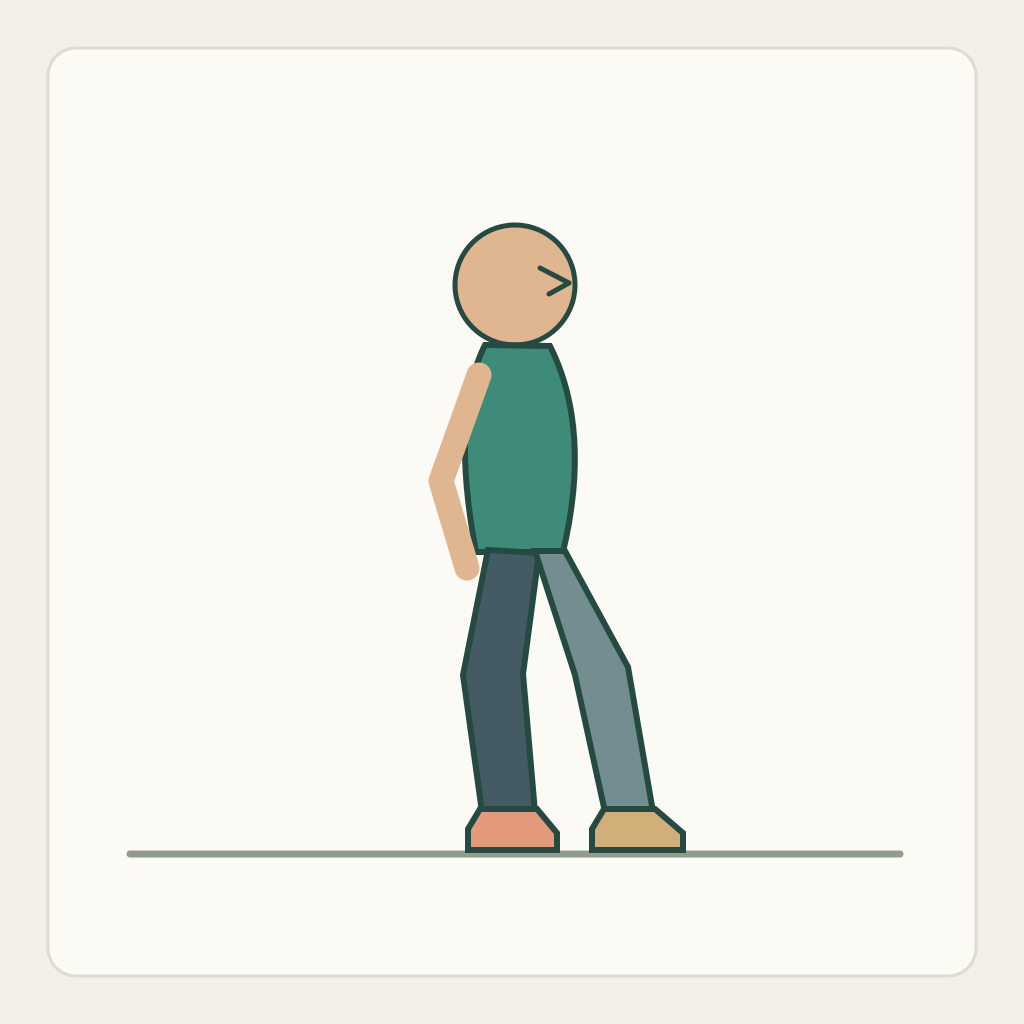
Original authored illustration for reading and comparison; not a generated result.
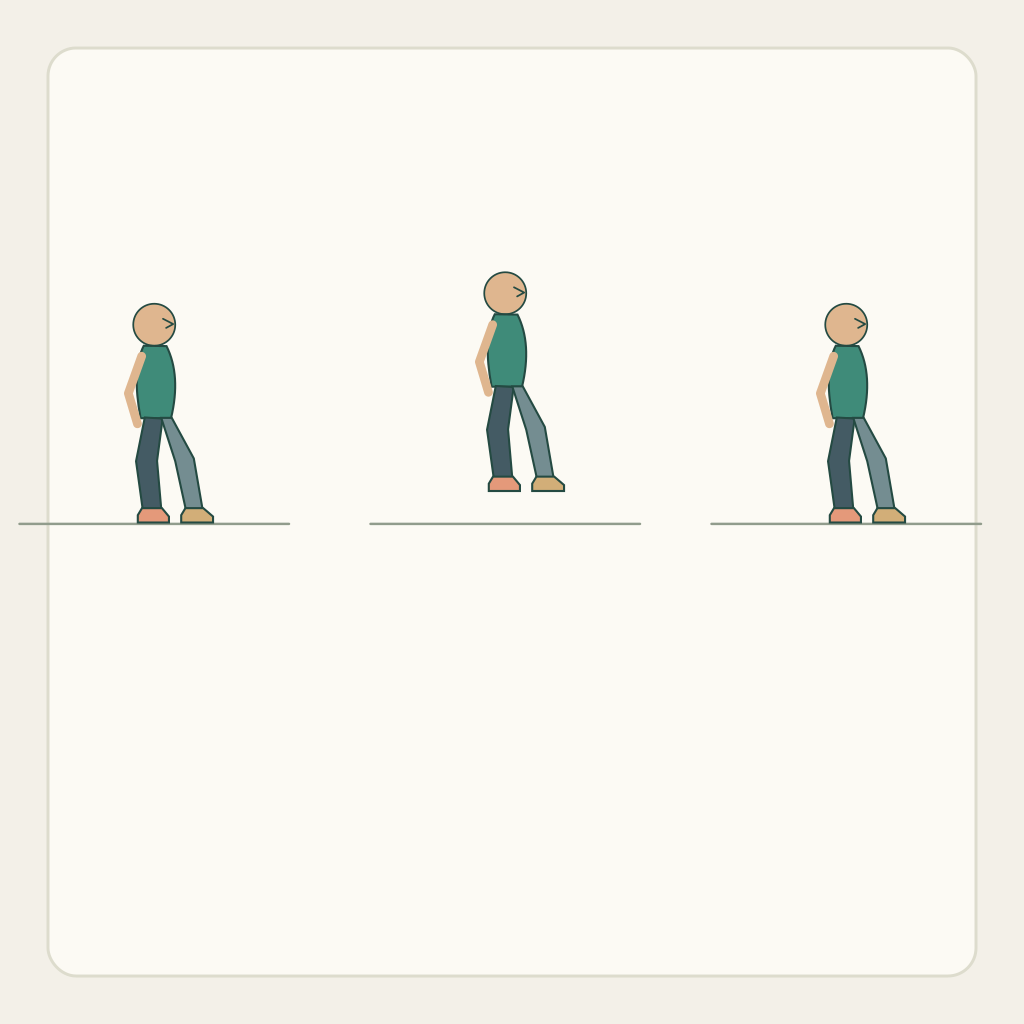
Original authored illustration for reading and comparison; not a generated result.
2. Assign the moving and fixed roles
Track both shoe soles, the floor line, the body outline and the fixed camera. Feet are allowed and required to lose contact during the airborne phase, unlike a sit-to-stand exercise. The picture does not prescribe measured joint angles or a safe exercise technique.
- Check that both shoes meet the original floor and remain individually visible. Reject a crop that hides a sole or puts the head against the top border before adding movement.
- Request a slight preparatory bend, one small upward hop, a brief clear two-foot gap, and a return to the same floor. Keep it one continuous camera shot without an obstacle or a second hop.
- After any future generation, inspect takeoff separately from landing. Find a visible phase in which neither shoe touches the floor, rather than assuming the body rose because its head moved upward.
- Review the landing and settled pose. Floor penetration, suspended shoes, repeated bouncing or an elongated body attached to one planted foot should be recorded as failures, even if the ending looks upright.
3. Prepare one manual generation attempt
Prepare one authorized full-body adult side view with two distinct shoes touching a single horizontal floor. Show both soles and leave clear space above the head, without a chair, obstacle or support prop.
Open the image-to-video workspace and select MiniMax H3 base mode if available. If First Frame is hidden and the interface offers Add end frame, enable it to reveal the frame roles. Upload only your prepared authorized image to First Frame, leaving the optional Last Frame empty. Copy the full prompt from this page manually and match its appearance details to your image. Inspect current controls and the actual estimate; stop if the mode or first-frame role is unavailable or a second image is required. The link does not upload an image or insert a prompt. Keep annotated review diagrams out of the input slots.
4. Use the complete original draft
The full prompt below describes the page example. For your own image, match appearance, colors and role names to the actual visible source while retaining the action order and review goal. The example is not automatically supplied to the workspace.
Begin from the supplied original full-body fictional-adult illustration, with both distinct shoes contacting the visible horizontal floor line and clear space above the head. Keep the camera and floor fixed. The same adult makes a slight preparatory knee bend, performs one small upward hop, visibly lifts both feet clear of the floor for a brief readable airborne phase, then lands back on the same floor and settles. Keep the whole body and both shoe outlines inside the frame. Do not hold one foot on the floor while stretching the body upward, levitate without takeoff, cut between planted poses, sink through the floor or repeat a second jump. Do not add a step, obstacle, acrobatics, new prop or camera move. End with both shoes back in contact and the body quiet. This is an untested visual support-phase request, not a measured jump, biomechanics assessment or physical exercise instruction.
5. Inspect the actual result in sequence
Do not fill a pass from the input or from the intended ending. Enter observations only after examining actual result frames. The in-page observation and outcome cells start empty.
| Check | Actual timecode | Outcome | Notes |
|---|---|---|---|
| Both distinct shoe soles contact the original floor before movement. | |||
| A visible small preparation precedes takeoff rather than a cut directly to a raised pose. | |||
| A readable middle phase shows both shoes clear of the floor. | |||
| The same body remains coherent; no stretching from one pinned foot substitutes for the gap. | |||
| Both shoes return to the same floor without penetration or continued hovering. | |||
| The adult settles once, with no second hop and no moving camera or floor. |
Use these in-page rows or copy them into your own notes. Enter actual observations only after reviewing a result; use pass, fail or not-observable. Keep the image you actually submitted, complete prompt, selected settings, real task reference and result location with those observations. Hidden or blurred contact remains not-observable.
6. Repair one failure without changing the task
- If the torso floats while one foot stays planted, change only the support clause to require both soles clear during the middle phase.
- If takeoff is replaced by a cut, emphasize only the continuous shot and inspect the last planted and first airborne intervals.
- If the head leaves the image, reduce only the hop size or prepare a taller crop; do not infer a complete jump from hidden parts.
- If landing becomes repeated bouncing, change only the one-hop settle ending and review the return contact again.
7. Save the ending and choose the right next task
Store separate notes for initial contact, takeoff, two-foot clearance and final contact. A standing last frame cannot prove that a hop occurred in between.
No generated action, jump height, hang time, joint measurement or real-person ability was verified. This illustrated prompting task is not exercise, medical or safety advice.
The existing seated-rise task keeps the feet on the floor while the hips leave a chair. This task temporarily removes both supports and restores them, with no chair; a free falling slice also lacks the same articulated body and takeoff phase.