One fruit-slice drop: keep the slice singular and land on the plate
Describe one low-height ingredient drop with one clear landing and a settled ending.
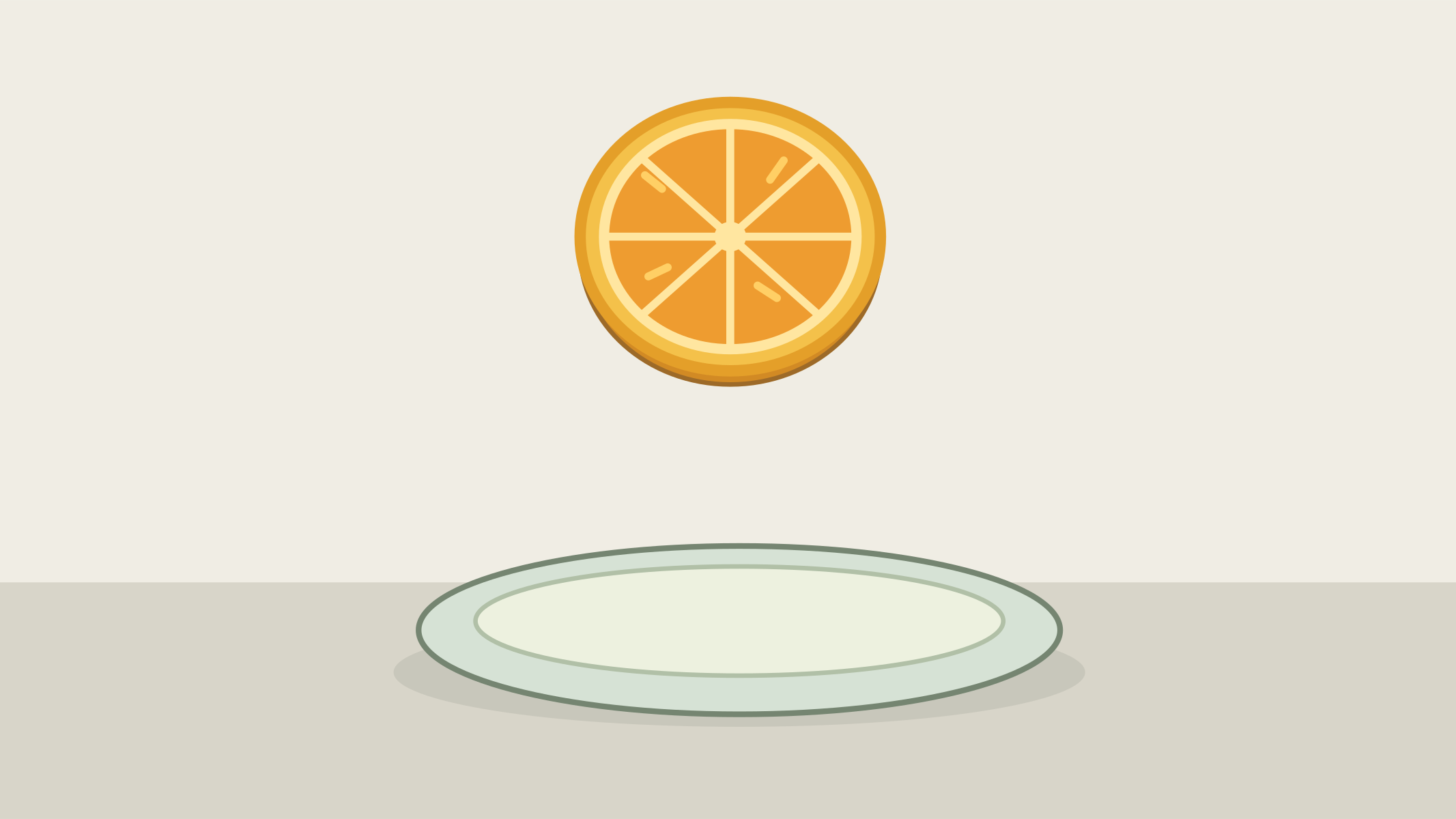
Task and boundary
Describe one low-height ingredient drop with one clear landing and a settled ending. The original still is a staged practice input; it does not demonstrate a tested H3 drop or physically measured impact.
Prepare your own input
For an actual attempt, prepare a photo or drawing you own or have permission to use. Match the visible starting arrangement, contact gaps, fixed supports and identifying marks described below. Adapt the prompt’s object, color and style names to your image. If a necessary contact or movement space is missing, fix the input before submitting. The on-page illustration is a reading example; you can plan the action without running a generation.
- Use your own authorized image of one orange slice above a plain plate, with a clear visible gap between slice and plate. No knife or cutting action is part of this task.
- Keep the intended landing region visible and empty. A patterned plate or a pile of fruit can hide duplication and the first contact.
- Choose a short downward path with the slice face visible. Large spins expose a hidden back and complicate segment-pattern checks.
- Decide on a soft landing without a visible rebound. If real food behavior or exact material impact matters, use captured footage rather than treating this as simulation.
Set up one image task
Use MiniMax H3 base image-to-video with your prepared image. If needed, enable Add end frame to expose First Frame, put only that image in First Frame and leave Last Frame empty. Check the actual available settings and current credit estimate before manual submission. The prompt is text you can copy; it does not upload your image or start a task. No exact duration, resolution, endpoint or successful result is guaranteed by these instructions.
Complete prompt
Begin from your prepared, authorized image of the single orange slice suspended a short distance above the empty plate. The camera and plate remain still. The one slice descends straight down a short distance onto the open center of the plate, keeping its round outline, rind thickness and visible segment pattern coherent. It makes one clear gentle contact with the plate and comes to rest there without bouncing up, splitting or cloning. Keep the slice face largely visible during the fall. The plate remains intact and the slice does not pass through its surface. End on the single settled slice. No cutting, no extra fruit, no splash or added text.
Operating sequence
1. Check the object count at the start
Count one rind outline and one segment pattern, and confirm a visible air gap above the plate. Remove extra ingredients from the input rather than relying on a negative list.
2. Write descent and rest together
Specify straight down, one contact, then rest. Avoid slow-motion explosion, dynamic toss or looping drop language that requests additional behaviors.
3. Locate the first contact
Advance around the moment the lower rind reaches the plate. There should be no gap after rest, no penetration through the plate and no second slice replacing the falling one.
4. Compare the food structure
Check rind thickness and segment arrangement before and after landing. If the slice becomes a wedge or spreads flat, reduce only the requested drop height and keep the final rest condition.
Inspect an actual result
For each criterion below, record the time or frame, visible observation and judgment in your own notes: pass, fail or inconclusive. Fill observed values only after inspecting an actual output; the intended ending is not evidence that the transition occurred.
- There is exactly one fruit slice at the start, during descent and at rest.
- The slice travels down toward the plate rather than sideways out of frame.
- The visible rind and segment layout remain coherent.
- The slice keeps plausible thickness instead of flattening into a painted disc.
- First contact occurs on the visible plate surface inside its rim.
- The slice neither penetrates the plate nor rebounds into a second landing.
- The final shot holds one resting slice and an unchanged plate.
Change one failure at a time
- A second slice appears on landing Change only the object-role sentence to the same single slice throughout; keep the landing target unchanged.
- The slice falls through the plate Reduce only the fall distance and emphasize a final surface contact; inspect the first-contact frames again.
- The slice spins and changes its cut pattern Remove only the spin/toss wording and keep the face largely visible during a straight descent.
- It bounces repeatedly Change only the ending to one gentle contact and rest; remove elastic or looping motion language.
Ending and next step
Finish with one slice visibly supported inside the plate rim. Retain the frame immediately before contact and the first resting frame as evidence for the contact check.