Task template
Ratchet animation prompt: advance past one tooth and hold against reverse motion
Make one-way engagement readable in a small mechanism close-up. Continuous spinning says little about whether a pawl can lift over a sloping tooth and then meet a blocking face. The requested output is one advance-and-hold event, not a running machine.
MiniMax-H3 · image-to-video · Original task method; generation has not been independently verified.
Start generating video →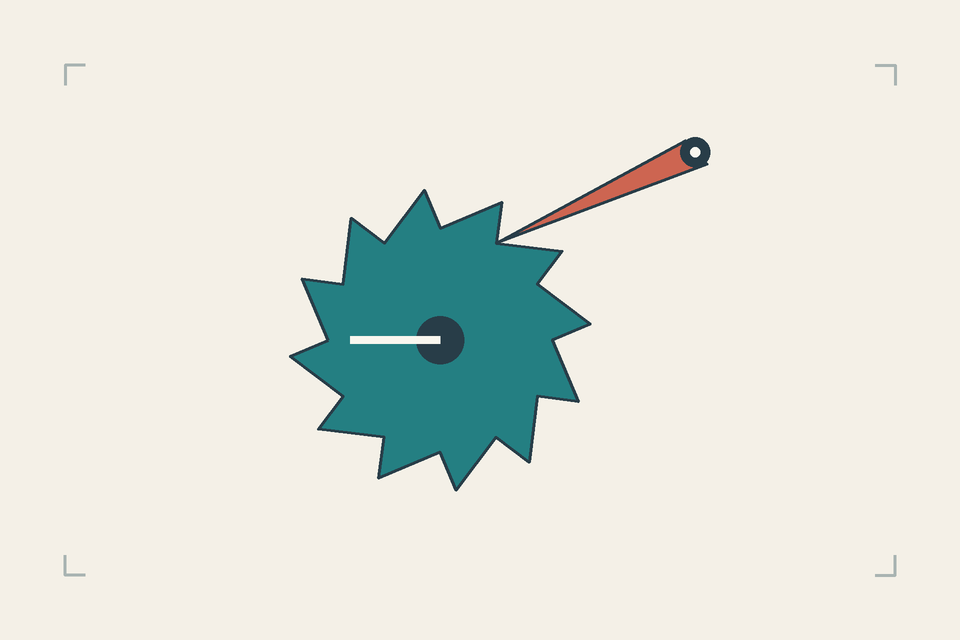
Ratchet animation prompt: advance past one tooth and hold against reverse motion
Original deterministic practice input; generation method untested. No H3 call or generated output is included.
Task and boundary
Make one-way engagement readable in a small mechanism close-up. Continuous spinning says little about whether a pawl can lift over a sloping tooth and then meet a blocking face. The requested output is one advance-and-hold event, not a running machine.
Read the first frame and fixed roles
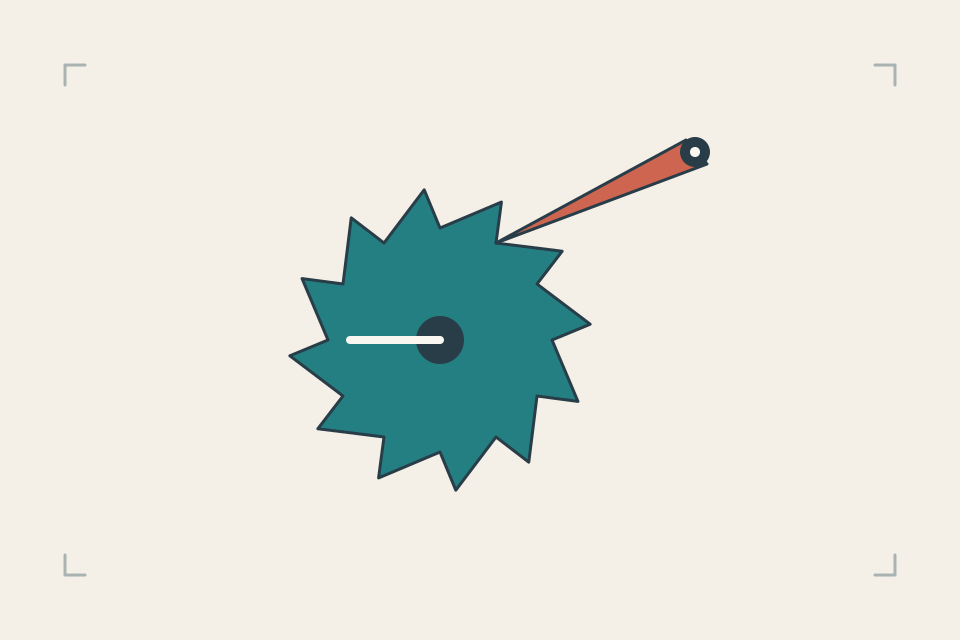
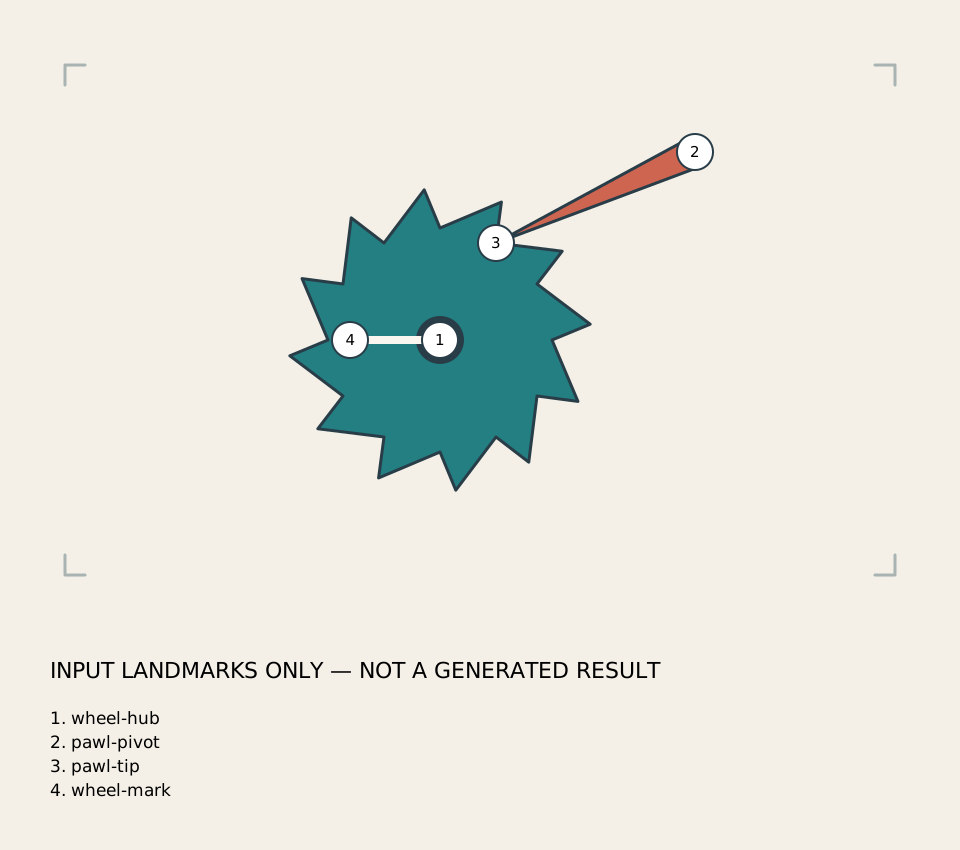
A teal saw-tooth wheel is centered on a dark axle. Above its upper-right sector, one coral pawl extends from a visible fixed pivot toward a tooth valley. One pale wheel mark lets you distinguish wheel rotation from the pawl changing angle. The parts are simplified silhouettes with open background around their contact.
Track the wheel axle, the pawl pivot, its free tip and the pale wheel mark. The pawl is a separate hinged part, not a second gear. Tooth slopes define the permitted advance direction in this fictional schematic; confirm that direction from the drawing before using a replacement input.
Download and prepare one attempt
Use the PNG as the uploadable first frame. Keep the SVG and numbered inspection guide local for editing and review. The kit also contains both prompt languages, a blank CSV with bilingual criteria and source notes. Follow the site’s single-first-frame base image-to-video workflow: select MiniMax H3 base, put first-frame.png in the supported First Frame slot and leave Last Frame empty. If Add end frame is needed to expose that slot, enable it but do not supply an ending image. Do not select a Fast flow that requires paired inputs. Check the controls, offered settings and credit estimate before any later submission. The link prepares text only; it does not upload or submit. No paid generation was used to make this package.
PNG · SVG · ZIP · CSV · Review guide
Open prompt draft
Prompt and operating sequence
Start with the supplied original saw-tooth wheel and single coral pawl. Keep the wheel axle, pawl pivot and camera fixed. Turn the wheel slowly counterclockwise in the drawing so the nearest sloping tooth face lifts the pawl tip around its pivot. After that tooth passes, lower the same pawl into the next valley. Attempt a very small clockwise reverse rotation; the adjacent steep tooth face meets the pawl tip and the wheel stops there. Keep the wheel and pawl rigid, distinct and at the same scale, with the pale mark attached to the wheel. No tooth passing through the pawl, extra gear, detached pivot or sustained reverse spin. End with the tip visibly engaged against the blocking face. One small advance and one blocked reverse attempt in one continuous shot.- Identify the sloping approach face and steep blocking face next to the pawl tip. A symmetric decorative cog is unsuitable because it does not show the two different contacts.
- Request a short advance in the direction that lifts the pawl over the sloping face, then let it settle in the next valley. Include only a tiny reverse attempt to expose the blocking contact.
- Review the tip lifting, settling and meeting the steep face. Follow the pale mark during the reverse attempt; the wheel must stop at contact rather than continue through the pawl.
Inspect an actual result
Fill timestamps, observations and pass/fail only after inspecting an actual result. The sheet contains no prefilled passes. Mark an obscured contact inconclusive instead of substituting the intended ending for evidence of the transition.
- The wheel axle and pawl pivot stay fixed and separate.
- The pawl lifts by rotating around its pivot as the sloping tooth face arrives.
- The same tip settles into the next existing valley without a new tooth appearing.
- A small reverse attempt brings the steep face into tip contact before the wheel stops.
- The pale mark does not continue rotating backward through the blocking contact.
- The final image retains one wheel and one engaged pawl, without fused silhouettes.
Repair one failure at a time
- Pawl becomes another gear: describe the fixed pivot and free tip, then remove machine or gearbox shorthand.
- Reverse motion continues through the pawl: shorten that attempted motion and inspect the steep face. A static endpoint is insufficient if intersection occurred beforehand.
- Wheel teeth deform to make clearance: preserve the original tooth silhouette and reduce the advance to the nearest valley.
Save the ending and choose related tasks
Save the lift, reseat and blocked-contact observations separately. The illustration establishes no rated holding torque, tooth profile standard, wear life or real anti-reverse reliability. This is an untested visual brief.
Two gears continuously coordinate opposite rotations; a crank-slider keeps a connecting rod joined at both ends. This task instead uses intermittent separation and reseating of one free pawl tip, followed by a blocked reverse attempt. Neither old acceptance set checks this directional gate.
Source: the illustration, geometry, prompt and checklist were authored for this package. No third-party image, bundled font, trademark or person is used. They are teaching schematics, not real-product performance evidence or H3 output. The download includes a source and rights declaration; independent review remains pending.
Related files
- ratchet-pawl-advance-hold-README-en-md
- ratchet-pawl-advance-hold-README-zh-md
- ratchet-pawl-advance-hold-RIGHTS-txt
- ratchet-pawl-advance-hold-acceptance-blank-csv
- ratchet-pawl-advance-hold-first-frame-png
- ratchet-pawl-advance-hold-first-frame-svg
- ratchet-pawl-advance-hold-landmarks-json
- ratchet-pawl-advance-hold-package-files-json
- ratchet-pawl-advance-hold-practice-kit-zip
- ratchet-pawl-advance-hold-prompt-en-txt
- ratchet-pawl-advance-hold-prompt-zh-txt
- ratchet-pawl-advance-hold-review-guide-svg
- ratchet-pawl-advance-hold-source-geometry-json
- ratchet-pawl-advance-hold-task-definition-json