Task template
MiniMax H3 threading prompt: keep one cord continuous through a fixed eyelet
Use an original partly threaded cord to plan a short pull through an eyelet. Check entry, occluded passage and the emerging tip without treating hidden cord as a second object.
MiniMax-H3 · image-to-video · Original task method; generation has not been independently verified.
Start generating video →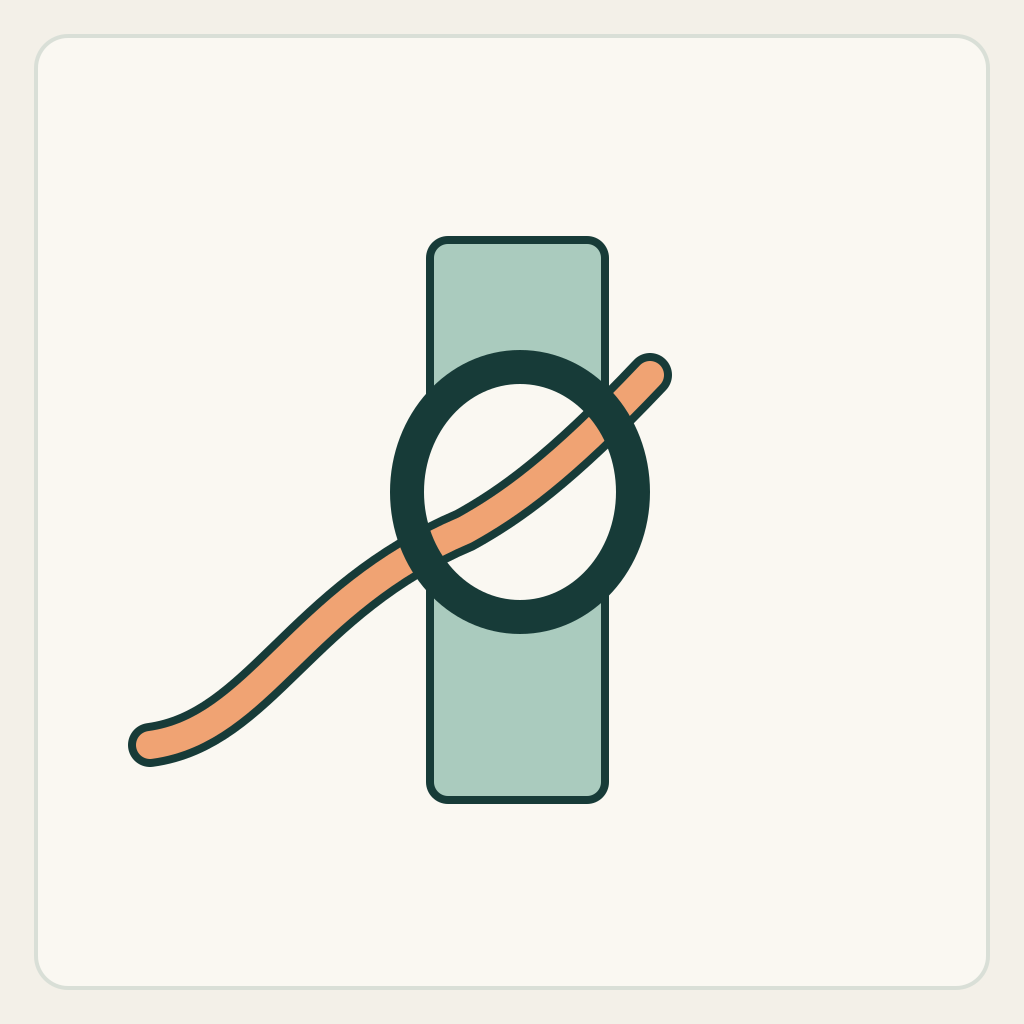
MiniMax H3 threading prompt: keep one cord continuous through a fixed eyelet
Advance a cord that is already partly threaded through one large eyelet. Judge the relationship between the near segment, the covered passage and the emerging end.
Original illustrated practice input; method not independently tested. No H3 generation or model output is supplied. A result, if you later generate one, still needs the checks below.
!Original illustrated practice input, not a model result
Read the starting input
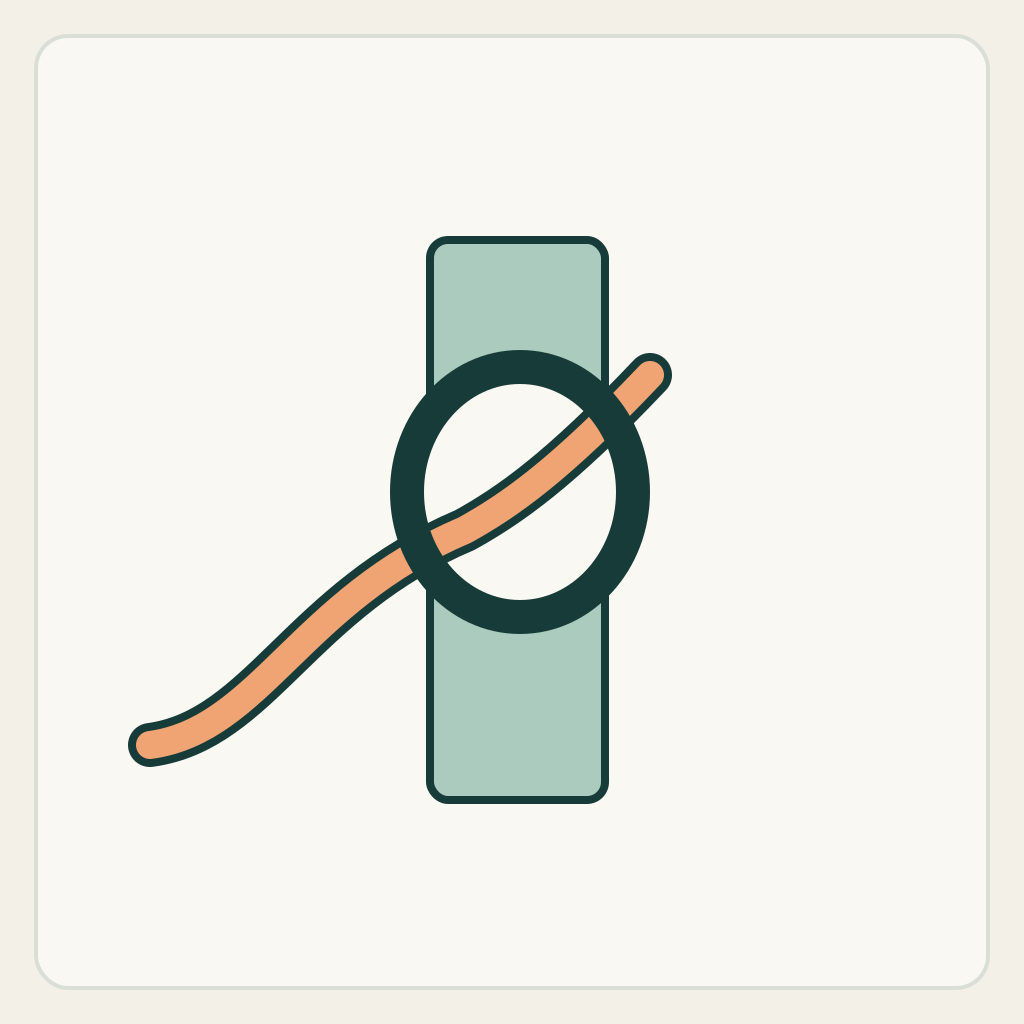
A thick orange cord approaches a fixed teal eyelet from the lower left and a short end emerges at the upper right. The hole is large and empty enough for the crossing to remain visible; no knot or hand is present.
Keep the eyelet center and rim fixed. At both edges of the hole, the visible cord should meet the same passage. Do not infer the exact shape of the hidden segment from pixels that are not visible.
Set up the current generator
Select MiniMax H3 base in image-to-video. Enable Add end frame so the current interface exposes the First Frame slot. Upload only first-frame.png to First Frame and leave Last Frame empty. This is not the Fast workflow: Fast requires both frames. Select a duration and ratio actually offered by the interface; these notes promise no exact motion timing. Opening a generator does not submit a task. The SVG is a design/inspection source, not an upload instruction.
Download practice kit · PNG first frame · Blank acceptance sheet
Copy the original prompt
Start from this original illustrated first frame, fixed close camera. Keep the single teal eyelet and its mount still. Slowly pull the already emerging orange cord end farther toward the upper right, feeding the same continuous cord through the existing hole. The near-side cord shortens slightly as the emerging side lengthens. Preserve one cord thickness and keep both visible segments aligned with the hole. No new holes, knots, duplicated ends or cord crossing through the solid rim. Finish with a longer emerged end and stop before the near end disappears. No cuts or camera movement.Work through one attempt
- Identify the two visible segments and the one hole they share. Use a partly threaded starting state to avoid asking the model to invent an entire hidden threading procedure.
- Request a small feed and stop with cord visible on both sides. Do not combine threading with tying a knot or looping around a second object.
- Inspect frames around the hole edges. A long emerged end is insufficient if it appears from the solid mount or the near segment stays completely unchanged.
Inspect the result
Record an observation for each item in the blank sheet. The sheet starts with empty results: none is a pre-existing pass.
- The eyelet center, rim and mount remain fixed.
- Both visible cord segments meet the same hole without passing through its solid rim.
- The emerging side grows while the near visible segment feeds toward the hole.
- One continuous cord remains visible on both sides in the final hold.
Change one failure at a time
- An extra end appears: request one continuous cord and reduce the feed distance.
- The cord crosses the rim: make the hole-edge relationship the main constraint and remove decorative motion.
- A knot forms: delete loop and tie language; this task ends before knotting.
Ending, limits and related tasks
The eyelet is unchanged; one cord has a longer upper-right end and a shorter but still visible lower-left segment.
Only visible routing continuity is assessed. The exercise does not prove tensile strength, friction or the hidden cord's exact three-dimensional path.
A person walking behind a column tests identity across occlusion. This task additionally couples two visible segments of one flexible object through a fixed aperture.