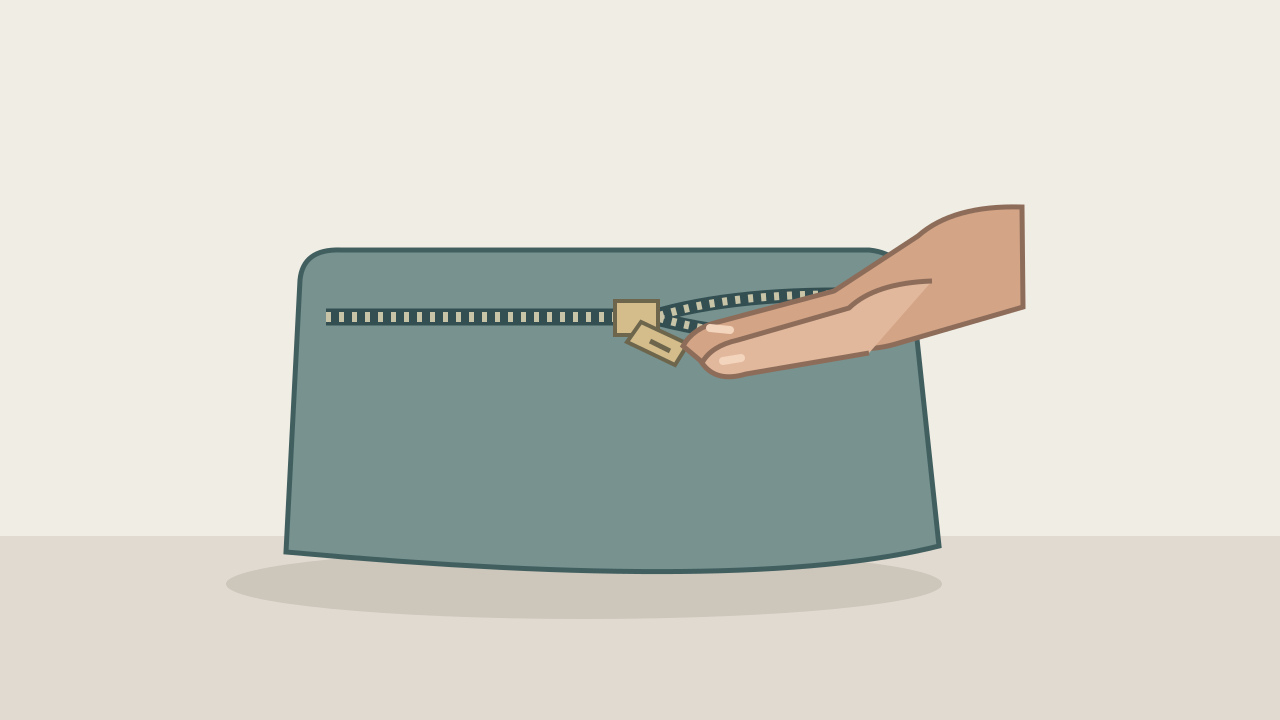
Fingers lose the tab then grab it again
Change only the contact phrase to a continuous pinch from the existing start; remove any pick-up or regrasp instruction.
Task template
Create one short zipper closure on a stationary pouch with a visible pinch throughout. The original illustration supports a planning exercise; this is not an independently tested H3 hand-contact result.
Includes original practice inputs and a review checklist. This prompt has not been independently tested with the generation model.
Download the input image below and upload it manually in the generator; the button carries the prompt.
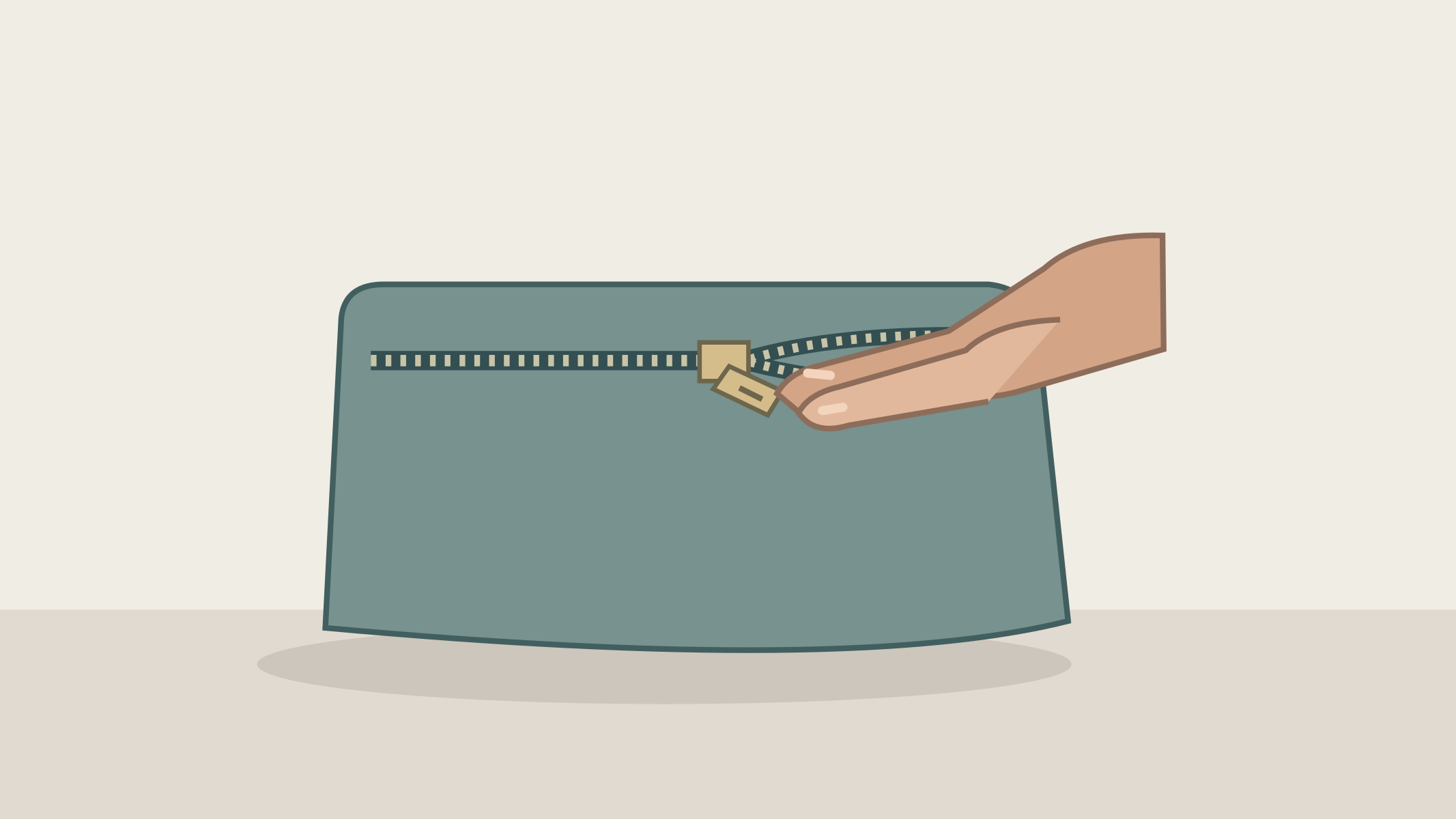
Use the uploaded close-up as the start. The pouch remains supported and still on the table. The visible thumb and index finger keep a gentle pinch on the same zipper pull tab. Together the hand, tab and single slider move slowly a short distance to the right along the horizontal track, closing the small section immediately behind the slider. The two tooth rows join progressively at the slider; the remaining opening stays ahead of it. Keep the pinch visible, the tab connected and the pouch outline stable. Stop with the fingers still holding the tab. Fixed camera, no release and regrasp, no second hand, no long fabric stretch.
Read the joined teeth on the left and separated rows on the right in the starting image. If your source is reversed, change the direction consistently before asking for closure.
Name the thumb/index pinch on the same tab as the contact. Do not request picking up the tab first when the source already begins in a grasp; that adds a new contact transition.
Pause just after movement begins and near the stop. The joined/open boundary should follow the slider, with joined teeth left behind rather than a painted line simply sliding over the pouch.
Stop while the fingers still grip the tab. Compare finger count, tab shape and pouch outline with the start, then change only the failed contact or travel variable on the next attempt.
Change only the contact phrase to a continuous pinch from the existing start; remove any pick-up or regrasp instruction.
Change only the seam description to rows joining immediately behind the slider; inspect that local boundary before altering speed.
Reduce only the pull distance and recheck the pouch-to-table relationship.
Change only the source crop or hand pose so the thumb/index pinch is unobstructed; retain the short action for comparison.
Finish on the short closed segment with fingers still holding the tab. Save close crops of the pinch and tooth boundary at start, mid-pull and hold; both must pass.