Task template
MiniMax H3 card-slide prompt: separate one top card and retain the two-card stack
Move one rigid unbonded top card from a visible three-card stack into an empty outline. Original overhead PNG and identity checks make the three-to-one-plus-two separation inspectable.
MiniMax-H3 · image-to-video · Original task method; generation has not been independently verified.
Start generating video →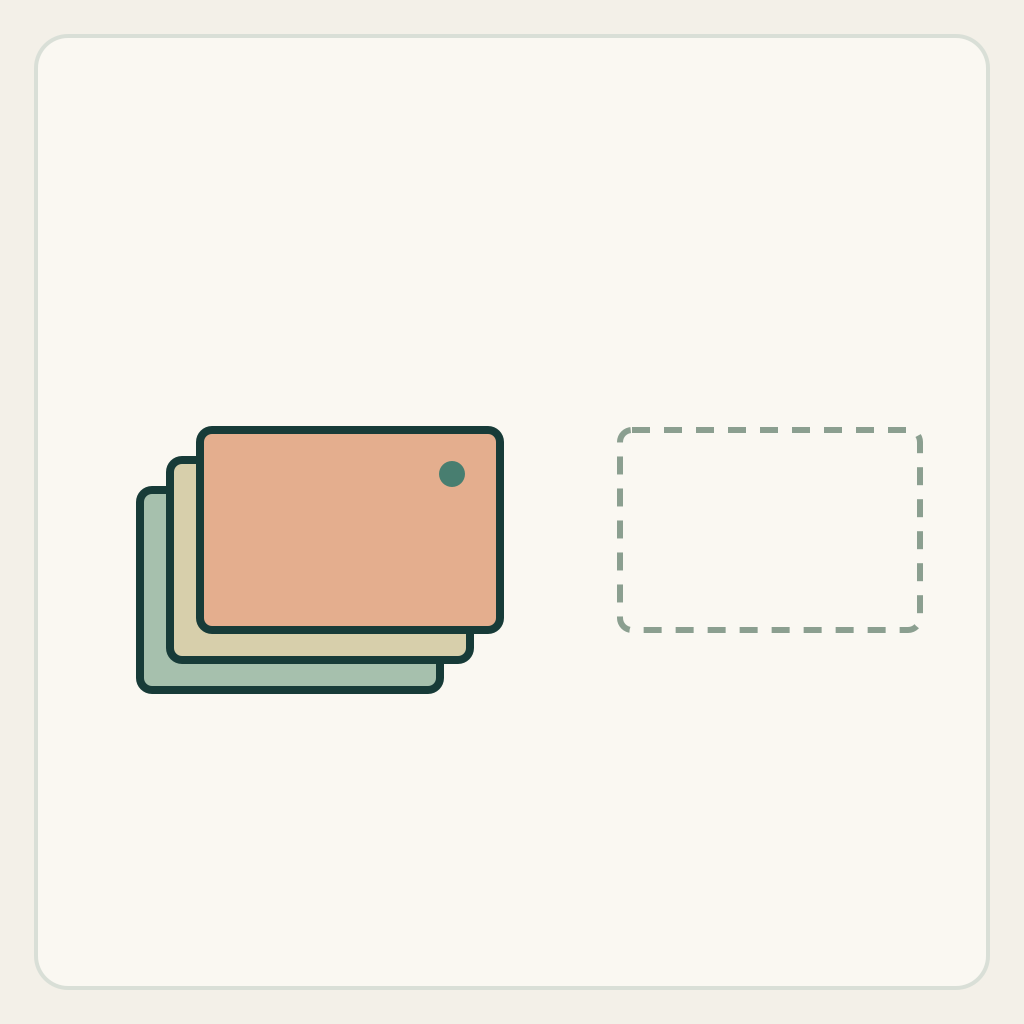
MiniMax H3 card-slide prompt: separate one top card and retain the two-card stack
Separate a single unbonded layer without changing the material or hiding a reveal. The whole exercise is a visible three-card system becoming one separate card and an unchanged two-card remainder.
Original illustrated practice input; method not independently tested. No H3 generation or model output is supplied. A result, if you later generate one, still needs the checks below.
!Original illustrated practice input, not a model result
Read the starting input
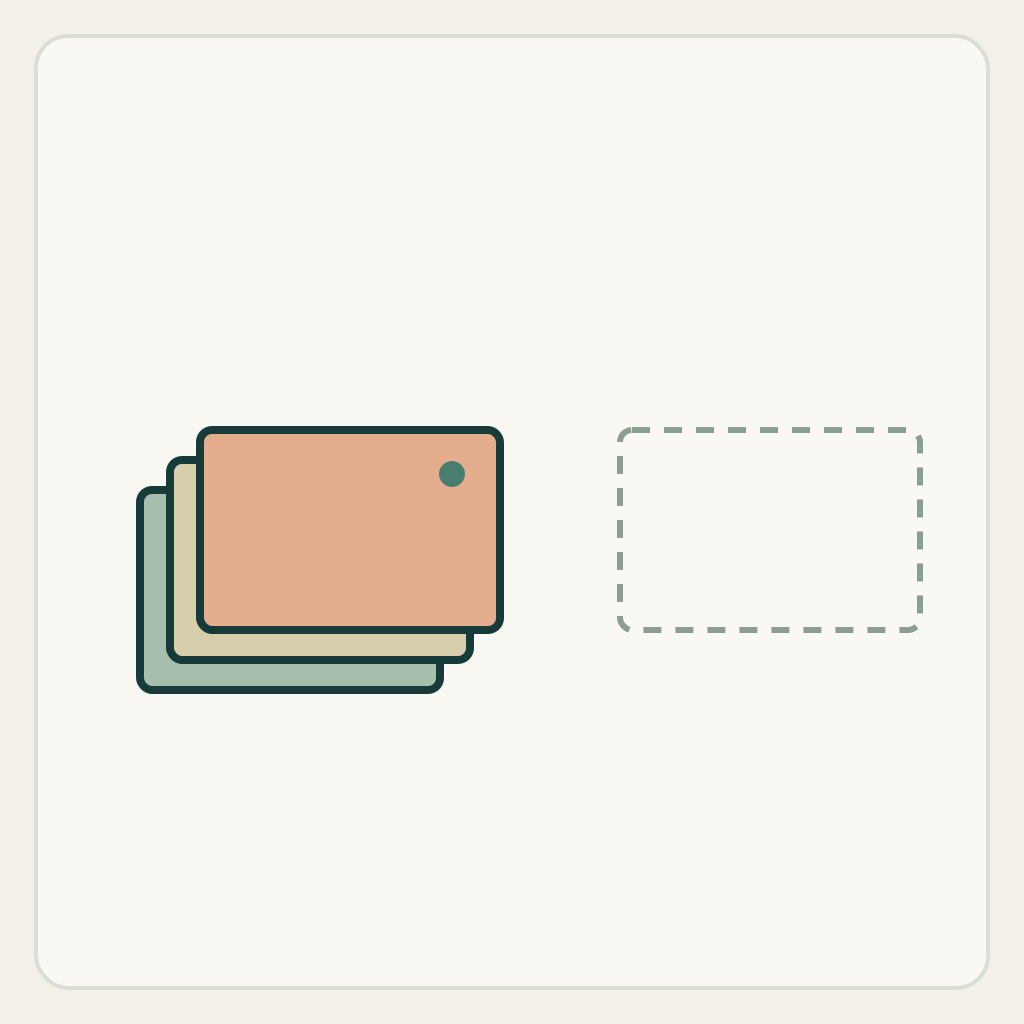
The overhead illustration shows three blank stiff cards offset enough to expose their left and bottom edges. The top card starts slightly farther right and carries a small plain corner marker for tracking. A dashed empty destination of the same card size sits to its right on the same surface.
Track all four corners of the top card and the exposed edges of the two lower cards. Keep the destination outline and tabletop fixed. Only visible offsets establish the starting stack; hidden artwork or hidden extra cards are not supplied.
Set up the current generator
Select MiniMax H3 base in image-to-video. Enable Add end frame so the current interface exposes the First Frame slot. Upload only first-frame.png to First Frame and leave Last Frame empty. This is not the Fast workflow: Fast requires both frames. Select a duration and ratio actually offered by the interface; these notes promise no exact motion timing. Opening a generator does not submit a task. Provider availability and generated outcomes are not promised. The SVG is a design/inspection source, not an upload instruction.
Download practice kit · PNG first frame · Blank acceptance sheet
Copy the original prompt
Start from the supplied overhead first frame. Locked camera over the same flat surface. Slide only the original top card to the right into the empty dashed destination outline. Keep that card approximately flat and retain its four corners and small plain marker. The other two original offset cards remain in place as a two-card stack. As the top card uncovers them, reveal only the existing blank card surfaces, with no artwork or extra layer invented. Do not bend the card around a spine, peel an adhesive corner, drag all three cards together or duplicate a new card. End with one separate original card at the destination and the same two-card remainder at the start position, then hold. No hand, cut or camera move.Work through one attempt
- Use the exposed offset edges to identify the original three cards before submitting. A single rectangle with no layer cues cannot establish this starting condition.
- Request the top card only, preserving its flat shape. Avoid turning, shuffling, flipping or a deck reveal, because each would create a different visibility question.
- For a later result, pause while separation is partly complete. Trace the top-card corners through that overlap change, then count one separated card plus the two original remaining edge layers at the ending.
Inspect the result
Record an observation for each item in the blank sheet. The sheet starts with empty results: none is a pre-existing pass.
- The surface, destination outline and the two lower-card positions remain fixed.
- The same top card moves right with coherent corners and a flat unbonded shape.
- Uncovering shows only the existing blank remainder; no new card or invented hidden artwork appears.
- The ending is one separate card plus the original two-card remainder, with no fused stack or reset.
Change one failure at a time
- If the whole stack slides, specify the two lower cards as fixed and shorten the top-card travel for diagnosis.
- If the card bends like a book page or peeling sticker, state that it is stiff and unbonded, and follow its whole flat outline.
- If extra layers appear, simplify the blank source and inspect the partially exposed stage; do not ask for more detailed deck artwork.
Ending, limits and related tasks
The original top card stops inside the destination outline. The other two cards remain as the original offset stack, giving a visible one-plus-two ending.
This is an untested visual identity and occlusion exercise. It does not reconstruct hidden deck contents, prove exact card handling or include a generated output.
Use page-turning for an attached leaf and peeling for an adhered sheet. Use this exercise when a loose top layer must detach while the visible remainder stays put.
- page turn with post composited text
- silent unboxing three beats
- peel label progressive contact boundary