Task template
Sieve animation prompt: let small beads pass while large discs stay above
Make a size-dependent separation visible in one shot. The same fixed openings must admit the small beads and retain the large discs. The useful result is a readable classification by passage, not a shower of particles or a liquid draining effect.
MiniMax-H3 · image-to-video · Original task method; generation has not been independently verified.
Start generating video →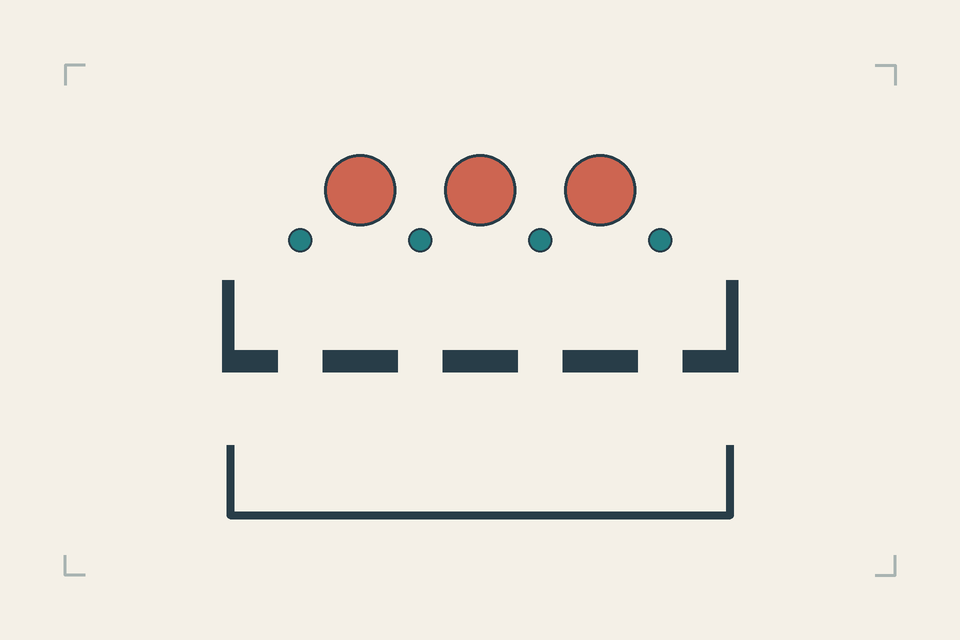
Sieve animation prompt: let small beads pass while large discs stay above
Original deterministic practice input; generation method untested. No H3 call or generated output is included.
Task and boundary
Make a size-dependent separation visible in one shot. The same fixed openings must admit the small beads and retain the large discs. The useful result is a readable classification by passage, not a shower of particles or a liquid draining effect.
Read the first frame and fixed roles
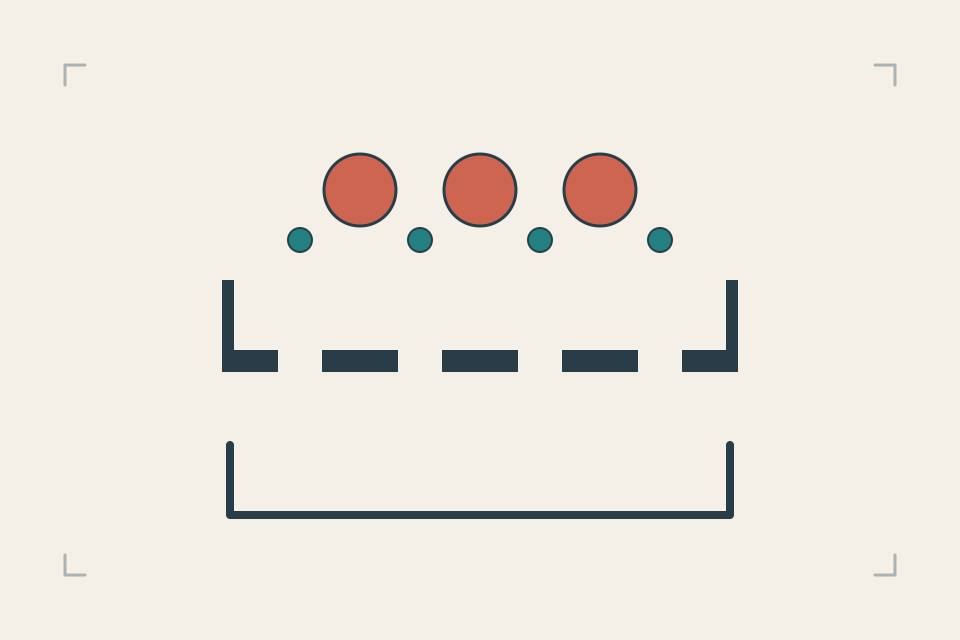
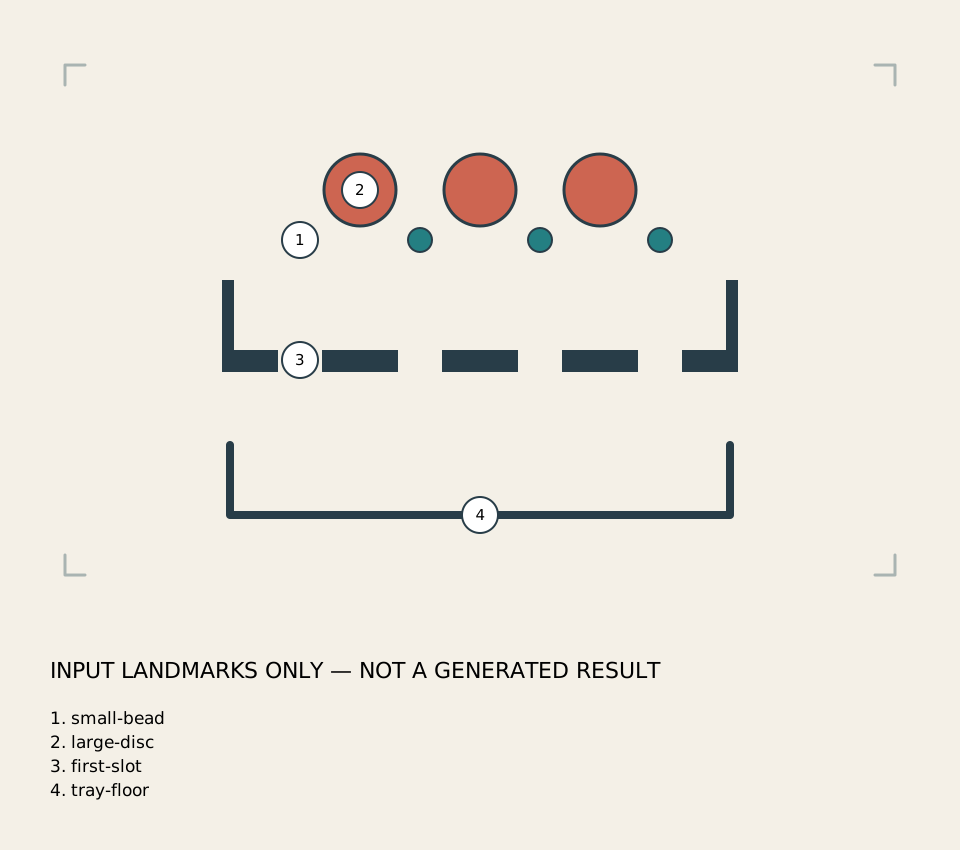
The front-view schematic contains a fixed horizontal sieve plate with four open slots and a clear lower tray. Four small teal beads start above the slots, with one larger coral disc above each solid bridge between slots. There are three large discs. A low outer rail keeps the exercise within the upper working area. None of the seven pieces starts below the plate.
Use the four slot edges, sieve ends and tray corners as fixed anchors. Track the small and large classes separately: four teal beads and three coral discs. The authored slot width lies between their visible diameters. This is an illustration designed for visual comparison, not a calibrated particle-size instrument.
Download and prepare one attempt
Use the PNG as the uploadable first frame. Keep the SVG and numbered inspection guide local for editing and review. The kit also contains both prompt languages, a blank CSV with bilingual criteria and source notes. Follow the site’s single-first-frame base image-to-video workflow: select MiniMax H3 base, put first-frame.png in the supported First Frame slot and leave Last Frame empty. If Add end frame is needed to expose that slot, enable it but do not supply an ending image. Do not select a Fast flow that requires paired inputs. Check the controls, offered settings and credit estimate before any later submission. The link prepares text only; it does not upload or submit. No paid generation was used to make this package.
PNG · SVG · ZIP · CSV · Review guide
Open prompt draft
Prompt and operating sequence
Begin with the original sieve illustration: four small teal beads, three larger coral discs, four fixed open slots and an empty lower tray. Lock the camera, sieve plate and tray. Let the small beads settle downward through the existing slots and land inside the tray. The three large discs settle onto the solid plate and remain above because their visible diameter exceeds a slot. Preserve each piece size and the slot widths. Keep exactly four small beads and three large discs throughout; no shrinking a large disc to fit, growing an opening, passing through solid bridges, merging into liquid or adding particles. Finish with four teal beads in the lower tray and three coral discs retained above, then hold.- Count the seven source pieces and compare their diameters with the slot width. Keep all four slots and the lower tray visible when cropping; otherwise you cannot tell passage from off-screen disappearance.
- Request a slight settling movement that lets the already aligned small beads fall through. Do not add a shaking camera, new particles or a moving sieve to make the scene energetic.
- After a future generation, follow each small bead through a specific slot and count both classes in the ending. If a bead is hidden, mark that observation inconclusive rather than inventing its route.
Inspect an actual result
Fill timestamps, observations and pass/fail only after inspecting an actual result. The sheet contains no prefilled passes. Mark an obscured contact inconclusive instead of substituting the intended ending for evidence of the transition.
- The plate, four openings and tray remain fixed in shape and position.
- Exactly four small teal beads and three large coral discs can be accounted for.
- Each small bead crosses the plane at a real slot, not a solid bridge.
- No large disc crosses a slot or changes diameter to pass it.
- The lower tray receives the small class; the large class remains above the plate.
- The final seven pieces remain separate, without liquid, duplicates or an off-screen exit.
Repair one failure at a time
- All pieces pass: compare source sizes first, then restate the large-class retention without enlarging the slots.
- A bead vanishes at the plate: inspect the specific slot and reduce the number moving simultaneously for diagnosis; the full seven-piece task remains the acceptance target.
- Sieve shakes with the camera: fix its corners and ask only for bead settling.
Save the ending and choose related tasks
Record the route and final location of all seven pieces. No screening efficiency, grain distribution, throughput or physical separation test is claimed. No H3 output was generated.
Connected vessels couple liquid levels through an opened tube; a connector inserts one rigid plug into one recess. This task provides two size classes and multiple fixed apertures, with a class-specific pass/retain outcome. It is also different from an hourglass, which transfers one class through a bottleneck without sorting it.
Source: the illustration, geometry, prompt and checklist were authored for this package. No third-party image, bundled font, trademark or person is used. They are teaching schematics, not real-product performance evidence or H3 output. The download includes a source and rights declaration; independent review remains pending.
Related files
- sieve-two-size-particle-separation-README-en-md
- sieve-two-size-particle-separation-README-zh-md
- sieve-two-size-particle-separation-RIGHTS-txt
- sieve-two-size-particle-separation-acceptance-blank-csv
- sieve-two-size-particle-separation-first-frame-png
- sieve-two-size-particle-separation-first-frame-svg
- sieve-two-size-particle-separation-landmarks-json
- sieve-two-size-particle-separation-package-files-json
- sieve-two-size-particle-separation-practice-kit-zip
- sieve-two-size-particle-separation-prompt-en-txt
- sieve-two-size-particle-separation-prompt-zh-txt
- sieve-two-size-particle-separation-review-guide-svg
- sieve-two-size-particle-separation-source-geometry-json
- sieve-two-size-particle-separation-task-definition-json