Task template
Perforated-sheet prompt: advance one tear front along the existing seam
Make the moving tear front, rather than a cut transition, explain separation. The starting sheet already has a short open split and a visible perforation line. The task is to continue that split through the remaining bridges until two pieces exist.
MiniMax-H3 · image-to-video · Original task method; generation has not been independently verified.
Start generating video →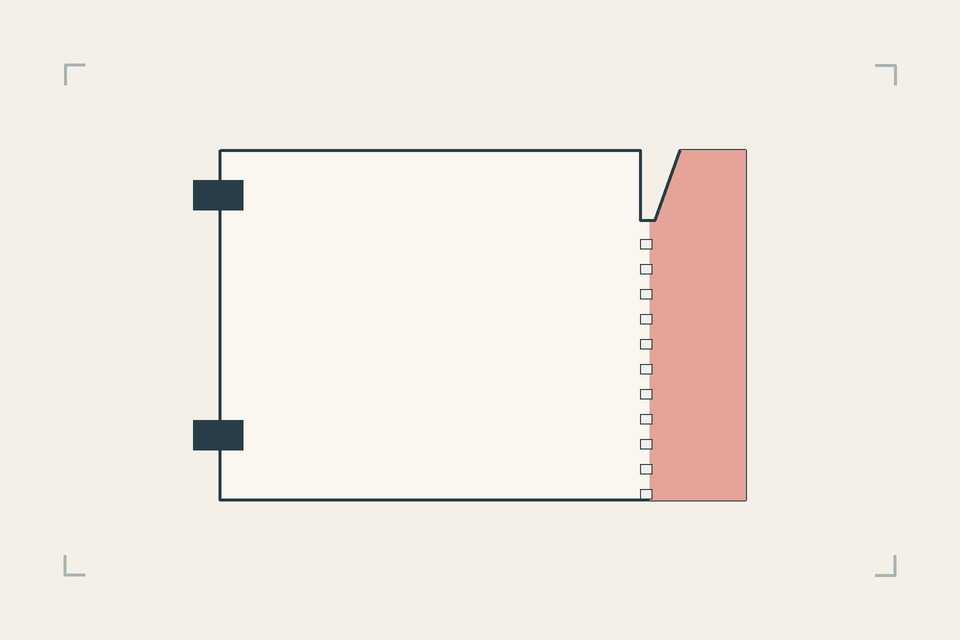
Perforated-sheet prompt: advance one tear front along the existing seam
Original deterministic practice input; generation method untested. No H3 call or generated output is included.
Task and boundary
Make the moving tear front, rather than a cut transition, explain separation. The starting sheet already has a short open split and a visible perforation line. The task is to continue that split through the remaining bridges until two pieces exist.
Read the first frame and fixed roles
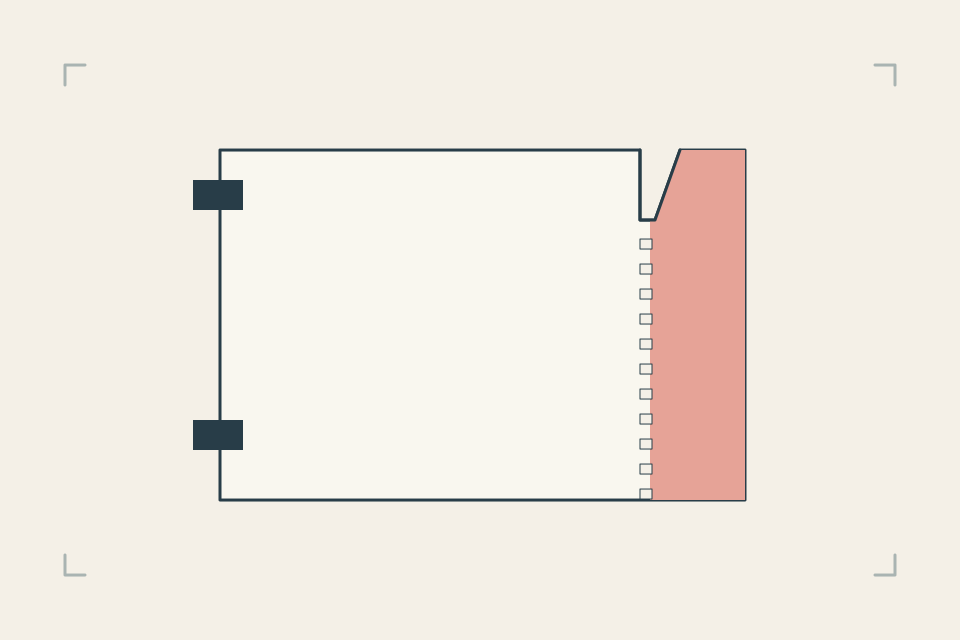
A pale rectangular sheet is held at its left edge by two dark clamps. Small punched gaps form a vertical line near the right edge. At the top, a short split already separates a narrow coral-tinted tab from the main sheet. Below the split, visible bridges still connect both sides; the tab is not a separate sticker on a backing.
Keep the left clamps and broad sheet region fixed. Follow the lowest point of the existing split and the next intact bridge below it. The narrow right tab moves sideways as the front progresses down. Color tint identifies the tab, not a second layer or printed tear effect.
Download and prepare one attempt
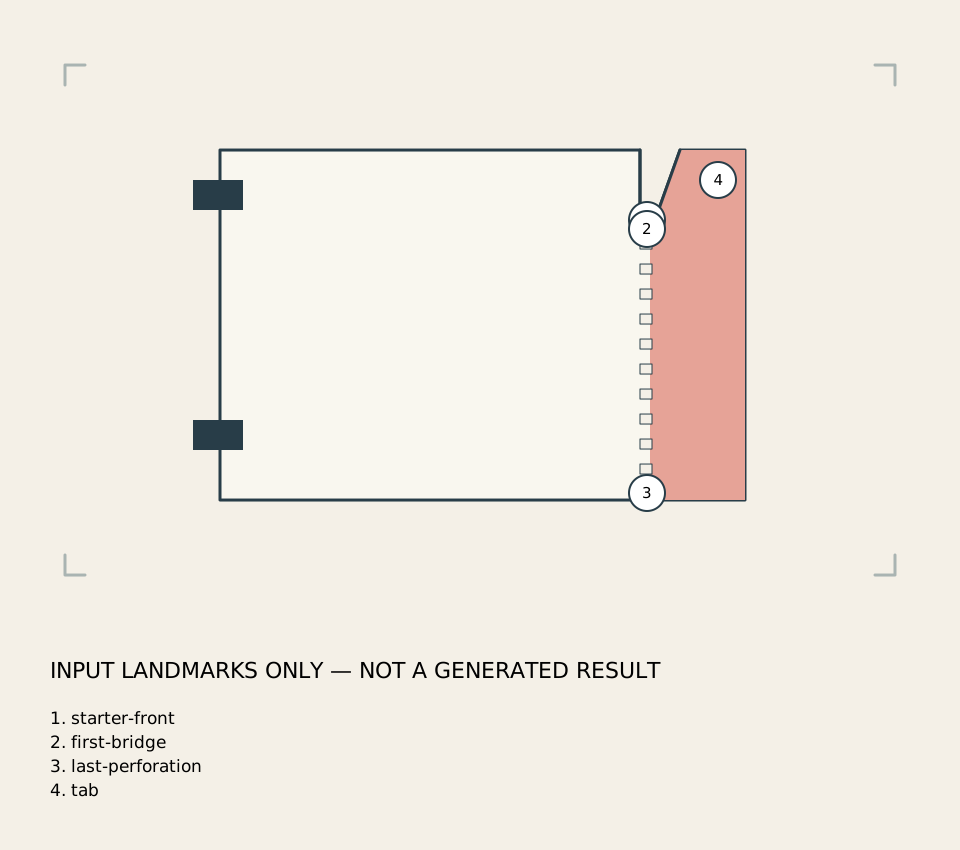
Use the PNG as the uploadable first frame. Keep the SVG and numbered inspection guide local for editing and review. The kit also contains both prompt languages, a blank CSV with bilingual criteria and source notes. Follow the site’s single-first-frame base image-to-video workflow: select MiniMax H3 base, put first-frame.png in the supported First Frame slot and leave Last Frame empty. If Add end frame is needed to expose that slot, enable it but do not supply an ending image. Do not select a Fast flow that requires paired inputs. Check the controls, offered settings and credit estimate before any later submission. The link prepares text only; it does not upload or submit. No paid generation was used to make this package.
PNG · SVG · ZIP · CSV · Review guide
Open prompt draft
Prompt and operating sequence
Use the supplied original perforated-sheet illustration. Fixed front camera and fixed left clamps. Pull the existing narrow right tab gently to the right. Continue the short starter split downward along the already visible perforation line: the next intact bridge separates at the advancing tear front, followed by the next. Keep the broad left sheet in place. Let the two new edges open behind that front while material ahead remains connected until reached. Finish with exactly two paper pieces and the original perforation route visible on their facing edges. No scissors, adhesive backing, third strip, confetti, crossfade or instant full-length cut. Keep the tab recognizable and all separation inside the frame.- Inspect the first intact bridge immediately below the starter split. The input must show both the opened segment and the connected remainder; a fully detached strip has no tear left to demonstrate.
- Request one continuous rightward pull with the split extending downward along the perforation. Keep the central sheet in place and exclude scissors, hands and adhesive peeling.
- For later review, record at least two advancing front positions before full separation. Check that each new gap appears at the current front, not simultaneously along the whole seam.
Inspect an actual result
Fill timestamps, observations and pass/fail only after inspecting an actual result. The sheet contains no prefilled passes. Mark an obscured contact inconclusive instead of substituting the intended ending for evidence of the transition.
- The broad sheet and its two left clamps remain fixed.
- The tear begins at the existing starter split and reaches consecutive bridges along the same line.
- New open edges appear behind a moving front; the entire seam does not open at once.
- Material ahead of the front stays connected until the front reaches it.
- No new off-route crack or detached fragment appears.
- The ending contains exactly two paper pieces with corresponding facing edges.
Repair one failure at a time
- The whole seam vanishes in one frame: request a shorter advance first and inspect a surviving bridge ahead of the front.
- Tab peels from a backing: state that this is one sheet with perforated bridges, not a layered label.
- Paper turns into fragments: reduce the pull and exclude branching cracks; do not accept confetti as a successful separation.
Save the ending and choose related tasks
Keep the advancing-front observations together with the final two-piece count. No tear strength, packaging certification or real fracture model was tested. The downloadable illustration is an input, not evidence that a model obeyed the requested sequence.
Scissors make a localized separation at a tool contact; label peeling preserves one sheet while its adhesion boundary moves. Here no tool or backing exists: a material crack progresses across original bridges and changes one sheet into two pieces.
Source: the illustration, geometry, prompt and checklist were authored for this package. No third-party image, bundled font, trademark or person is used. They are teaching schematics, not real-product performance evidence or H3 output. The download includes a source and rights declaration; independent review remains pending.
Related files
- perforated-sheet-progressive-tear-README-en-md
- perforated-sheet-progressive-tear-README-zh-md
- perforated-sheet-progressive-tear-RIGHTS-txt
- perforated-sheet-progressive-tear-acceptance-blank-csv
- perforated-sheet-progressive-tear-first-frame-png
- perforated-sheet-progressive-tear-first-frame-svg
- perforated-sheet-progressive-tear-landmarks-json
- perforated-sheet-progressive-tear-package-files-json
- perforated-sheet-progressive-tear-practice-kit-zip
- perforated-sheet-progressive-tear-prompt-en-txt
- perforated-sheet-progressive-tear-prompt-zh-txt
- perforated-sheet-progressive-tear-review-guide-svg
- perforated-sheet-progressive-tear-source-geometry-json
- perforated-sheet-progressive-tear-task-definition-json