Task template
MiniMax H3 scissors prompt: one snip, one separated paper tip
Plan a single craft-paper snip from an original geometric first frame. Inspect the blade pivot, cut location and two resulting paper pieces without adding a cutting montage.
MiniMax-H3 · image-to-video · Original task method; generation has not been independently verified.
Start generating video →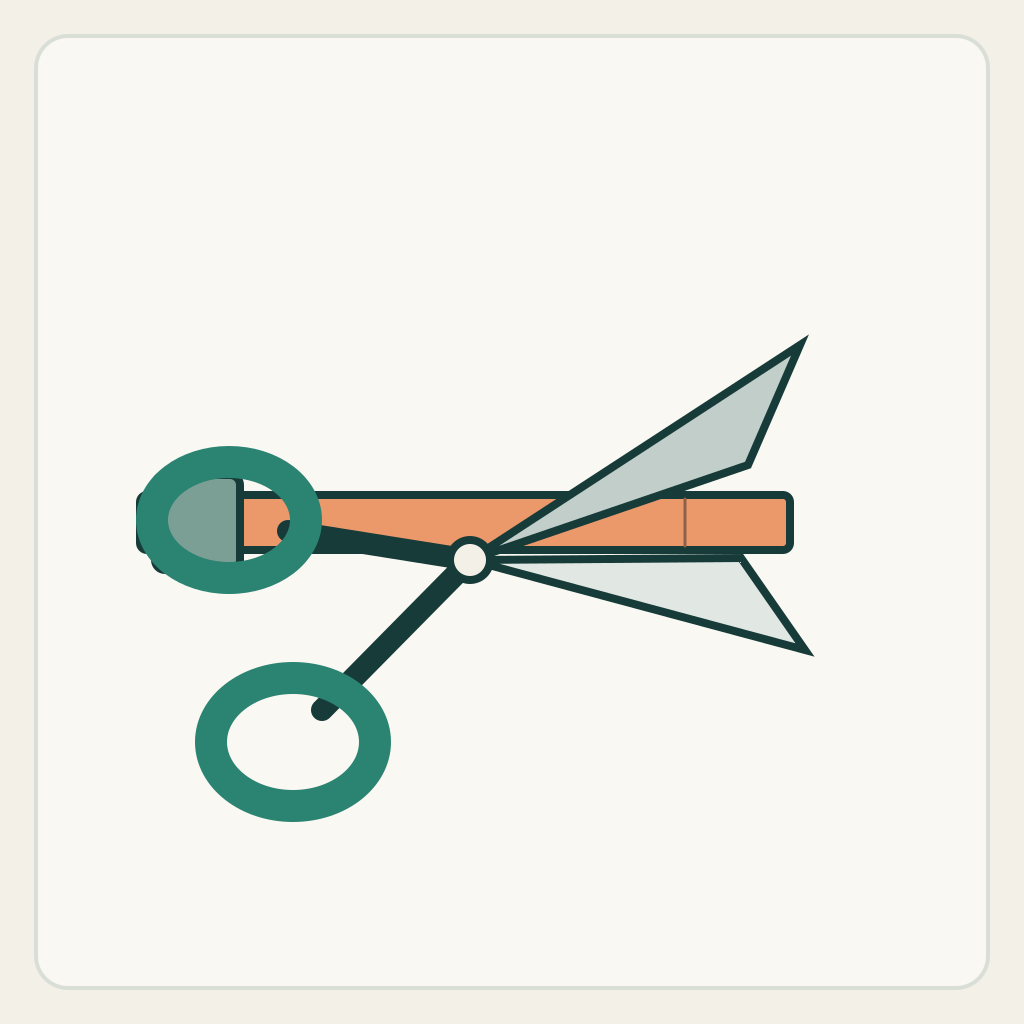
MiniMax H3 scissors prompt: one snip, one separated paper tip
Close one pair of craft scissors across a narrow paper strip once, separating a small tip. The observable task is a localized change from one sheet to two pieces.
Original illustrated practice input; method not independently tested. No H3 generation or model output is supplied. A result, if you later generate one, still needs the checks below.
!Original illustrated practice input, not a model result
Read the starting input
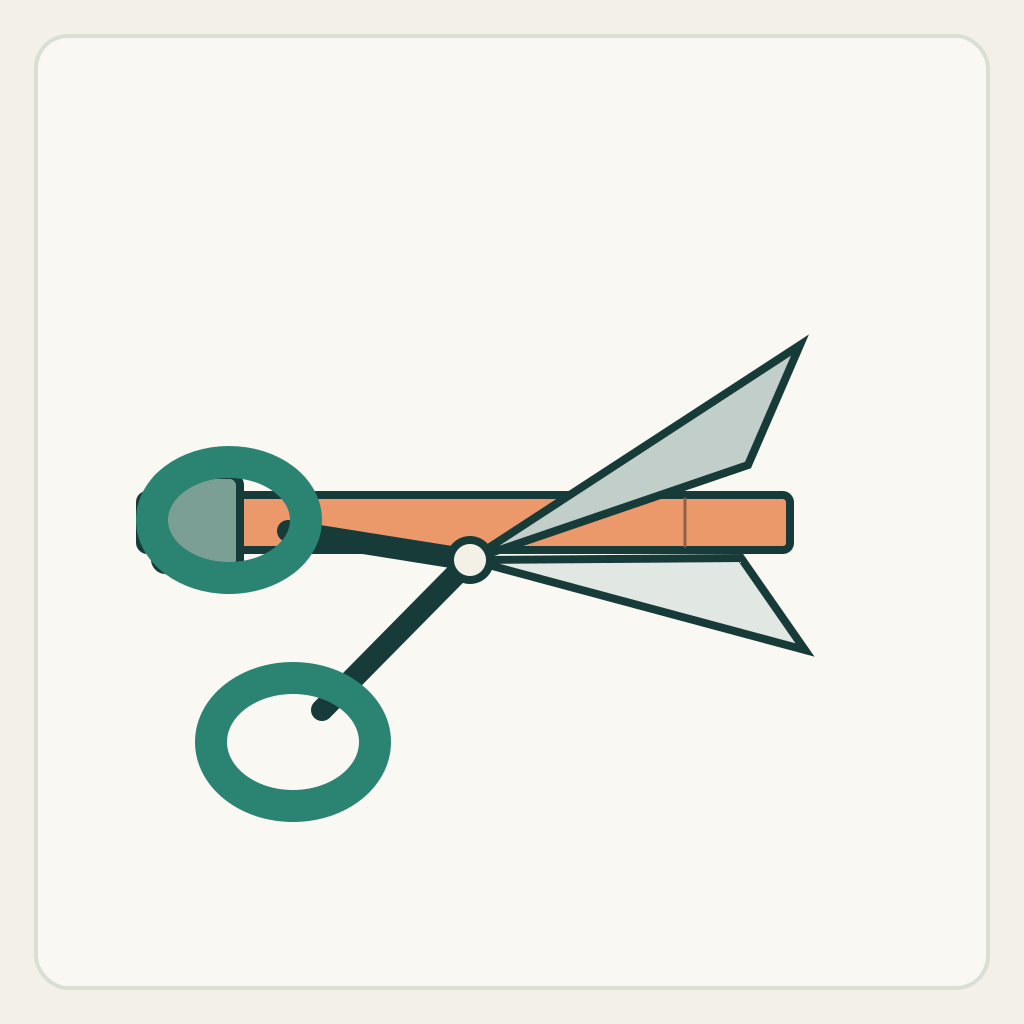
The illustration shows open scissors with a visible round pivot and a narrow orange paper strip between the blade tips. A fixed clip holds the long left portion; there is empty space below the short right tip.
Follow the pivot, the clipped end and the small exposed tip. The strip is already between the blades, so the prompt does not need an unshown feeding motion or a second cut.
Set up the current generator
Select MiniMax H3 base in image-to-video. Enable Add end frame so the current interface exposes the First Frame slot. Upload only first-frame.png to First Frame and leave Last Frame empty. This is not the Fast workflow: Fast requires both frames. Select a duration and ratio actually offered by the interface; these notes promise no exact motion timing. Opening a generator does not submit a task. The SVG is a design/inspection source, not an upload instruction.
Download practice kit · PNG first frame · Blank acceptance sheet
Copy the original prompt
Begin with this flat illustrated first frame. Keep the overhead camera and the left paper clip stationary. The two blades of the single pair of craft scissors close once around their existing pivot and cut the narrow orange paper strip at the visible blade contact. Keep the long clipped portion fixed. The short right paper tip separates only at that contact and drops a little into the clear space below. No extra scissors, hands, fragments, tearing across the whole strip or repeated cutting. End with the scissors closed and exactly two paper pieces visible, then hold.Work through one attempt
- Identify which side is held by the clip and which small tip is allowed to move. A replacement photograph must show the intended cut location rather than hide it behind a hand.
- Use one closure, not repeated snipping. Keep the released tip small enough to remain in frame; it should not turn into a pile of confetti.
- Pause just before contact, just after separation and at the ending. The cut must originate at the blade crossing, while the clipped portion remains continuous.
Inspect the result
Record an observation for each item in the blank sheet. The sheet starts with empty results: none is a pre-existing pass.
- Both blades rotate around the same visible pivot without becoming new tools.
- Separation begins at the paper-blade contact, not at an unrelated point.
- The long portion remains under its clip and the short tip becomes one separate piece.
- Exactly two paper pieces remain visible in the ending hold.
Change one failure at a time
- Paper melts into fragments: remove montage language and repeat one short snip.
- The whole strip falls: restate the fixed clip and the long supported portion.
- Closed blades pass through intact paper: specify the separated tip as the required ending rather than merely requesting blade motion.
Ending, limits and related tasks
One closed pair of scissors, one supported long paper strip and one detached short tip remain visible.
The drawing is a craft animation exercise, not a safe-use demonstration, a sharpness test or a simulation of paper fracture.
Turning a page keeps a sheet intact; opening a zipper changes a seam while retaining its parts. This exercise requires one localized separation into two pieces.