Task template
MiniMax H3 moving-blocker prompt: keep the light fixed and follow the shadow
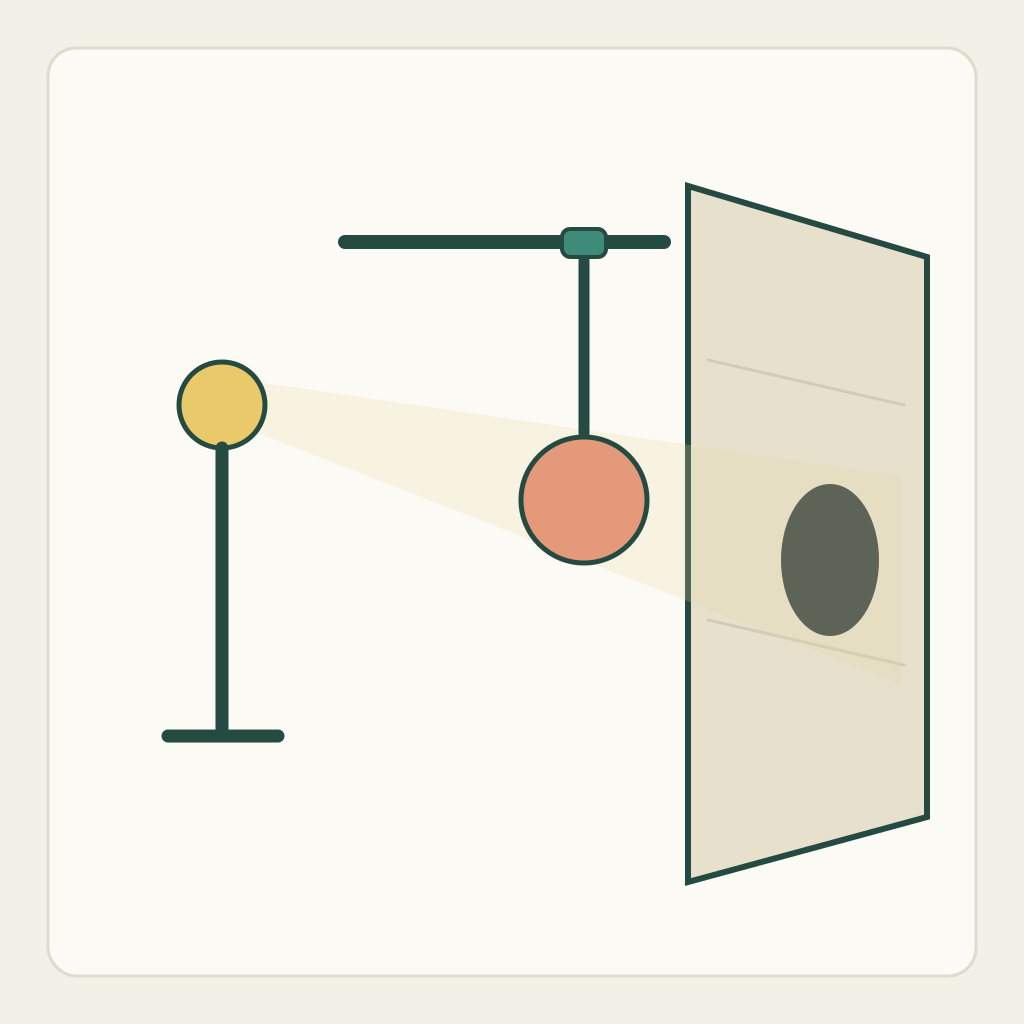
Separate a fixed lamp and wall from one suspended moving disc and its cast shadow. Original schematic input and blank checks isolate the cause; no calibrated lighting or H3 result is claimed.
MiniMax-H3 · image-to-video · Original task method; generation has not been independently verified.
Start generating video →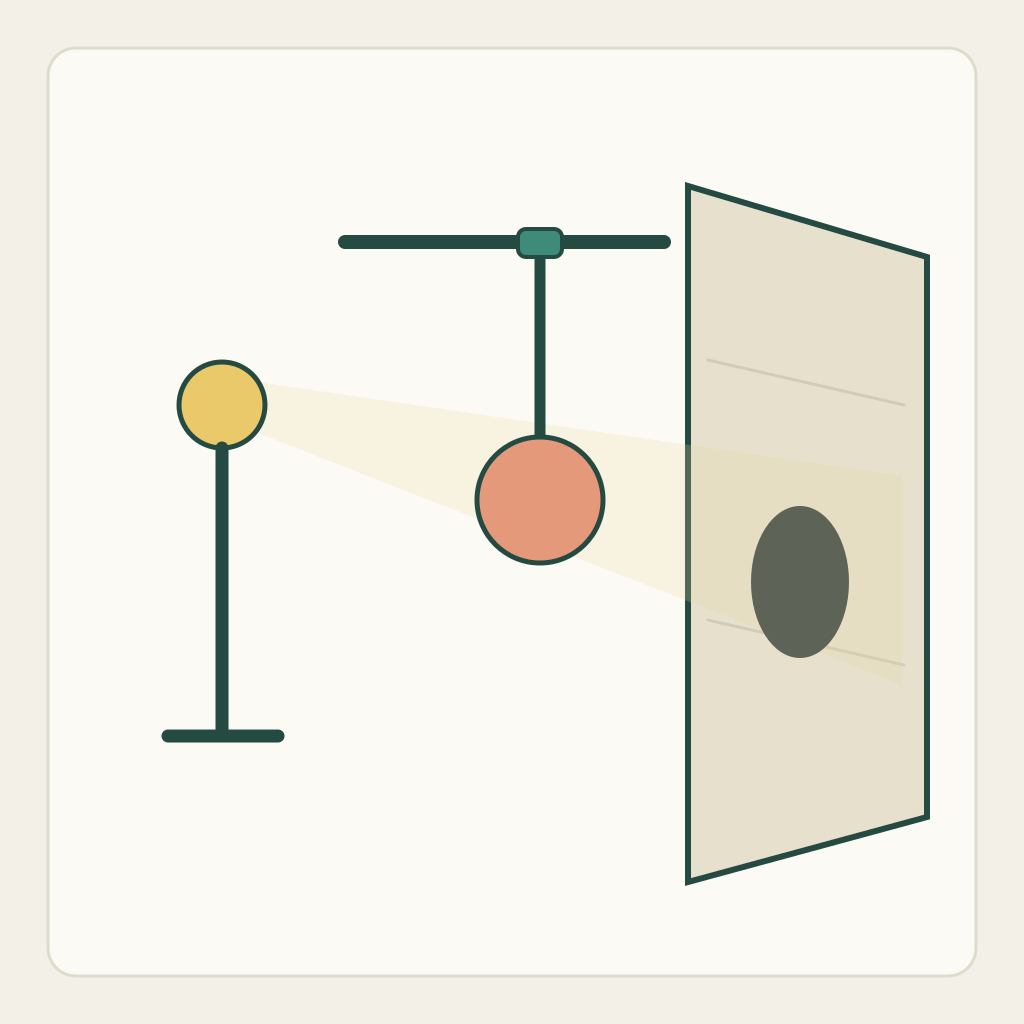
MiniMax H3 moving-blocker prompt: keep the light fixed and follow the shadow
Assign the moving cause to the occluder instead of the lamp. A shadow on a separate receiving wall is allowed to be visibly separated from the suspended object; demanding attachment to an object base would test the wrong relationship.
Original practice illustrations and an untested method. No H3 task has been submitted and no generated result is included.
Establish the authored starting state
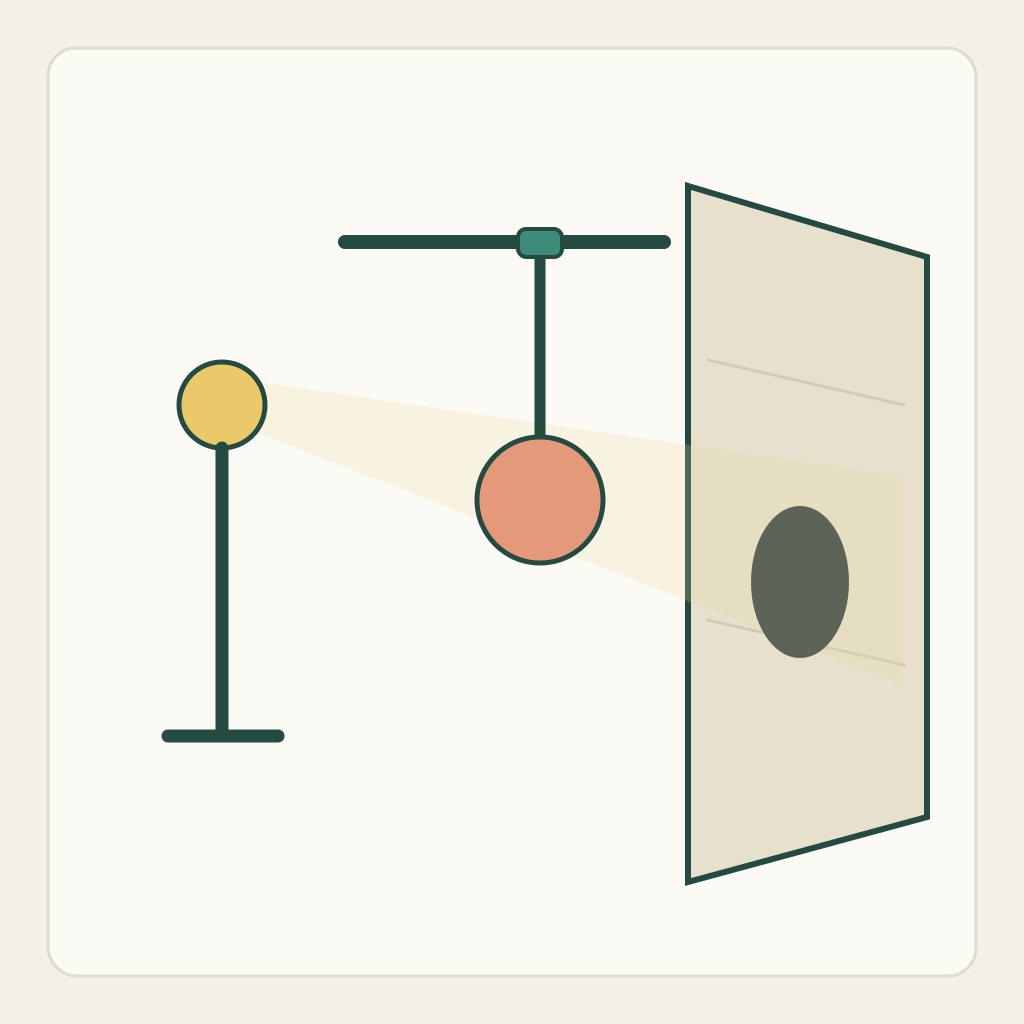
The original schematic contains a yellow lamp on a fixed stand at frame left, a coral disc hanging from its short sliding stem on a horizontal rail, and a pale receiving wall at frame right. The wall has two faint seams and exactly one darker elliptical shadow. There is clear picture space between disc and wall. light-caster-receiver-roles.json names these authored roles; it does not contain measured optical settings.
Download the actual input PNG · Editable design SVG
Assign the moving and fixed roles
Keep the lamp stand, rail, two wall seams and camera unchanged. Move only the disc with its original sliding stem a short distance along the rail. The wall shadow is the response, not another solid disc and not a mark glued to the object.
- Locate the lamp, suspended disc, empty gap and wall shadow before uploading. A replacement with the object resting on the receiving surface changes the contact assumption and should not be used for this exercise.
- Request one small disc movement toward frame right on the existing rail. Keep the lamp in place and exclude relighting, a rotating wall, camera movement or a second occluder.
- When a result is available, compare the disc and shadow during the move. The single shadow should respond continuously on the same wall, not leave the receiver as an independent dark object.
- After the disc stops, inspect whether its shadow also settles. Judge causal consistency qualitatively; a plausible-looking ellipse is not a calibrated prediction of shadow length, area or brightness.
Prepare one manual generation attempt
Use the current MiniMax H3 base image-to-video controls. Under the currently documented site workflow, enable Add end frame to expose First Frame, upload only S01-first-frame.png there and leave Last Frame empty. This draft does not use Fast, which needs a paired input. Recheck the actual available controls and credit estimate before any manual submission; these files neither upload themselves nor start generation. SVG files and the separate review guide stay local as design/review materials. No duration, resolution or endpoint capability is promised by this method.
Download the practice package · Blank observation sheet
Use the complete original draft
Use the supplied original lamp-disc-wall schematic as the first frame. Lock the camera, the yellow lamp and stand, the horizontal guide rail, and the pale wall with its two seams. Move only the original coral disc and its short attached sliding stem a small distance toward frame right along the existing rail, then stop. The disc remains suspended in front of the separate wall and does not touch or stick to it. The original single darker shadow on that wall changes continuously in response to the moving blocker and stays on the receiving wall; after the disc stops, the shadow also holds still. Keep one lamp, one coral disc and one cast shadow. Do not move the light, add another shadow, rotate the wall, make the shadow into a floating solid disc or attach it to a nonexistent floor contact. Preserve the source layout and the visible gap. This is a requested qualitative illustrated cause-and-response sequence, not a calibrated optical simulation.The copyable generator draft is the English version; the paired Chinese draft is included for review.
Inspect the actual result in sequence
Do not fill a pass from the input or from the intended ending. Enter observations only after examining actual result frames. The downloadable sheet has empty observation and result fields.
- Lamp, stand, rail, wall seams and camera remain fixed.
- The same coral disc moves with its original sliding stem; no separate unsupported disc is added.
- A visible disc-to-wall spatial gap remains; the disc does not stick to the receiving plane.
- Exactly one original shadow responds continuously on the same wall.
- The shadow neither turns into a floating solid object nor acquires a second light/shadow source.
- Disc and shadow both settle, with their intermediate relationship checked rather than only their final shapes.
Repair one failure without changing the task
- If the lamp moves instead, change only the cause assignment and restate the fixed lamp stand.
- If the shadow becomes a solid dark disc in front of the wall, change only its receiving-surface sentence and use the wall seams as comparison marks.
- If the disc sticks to the wall, reduce only the movement while preserving the visible suspended gap; do not require the shadow to attach to the disc edge.
- If a second shadow appears, simplify only the one-lamp/one-blocker assignment and inspect the entire move again.
Save the ending and choose the right next task
Retain observations of the starting gap, an intermediate disc-shadow response and the stopped pair. Record directional continuity without inventing a measured shadow displacement.
No H3 output, measured illumination, projection calibration or material-lighting experiment is provided. The diagram is an original qualitative setup rather than a rendering benchmark.
The older light-direction exercise moves a lamp above a stationary grounded object and checks an attached floor shadow. This task keeps the lamp fixed and moves a suspended blocker in front of a separate wall; its role and contact assumptions differ.