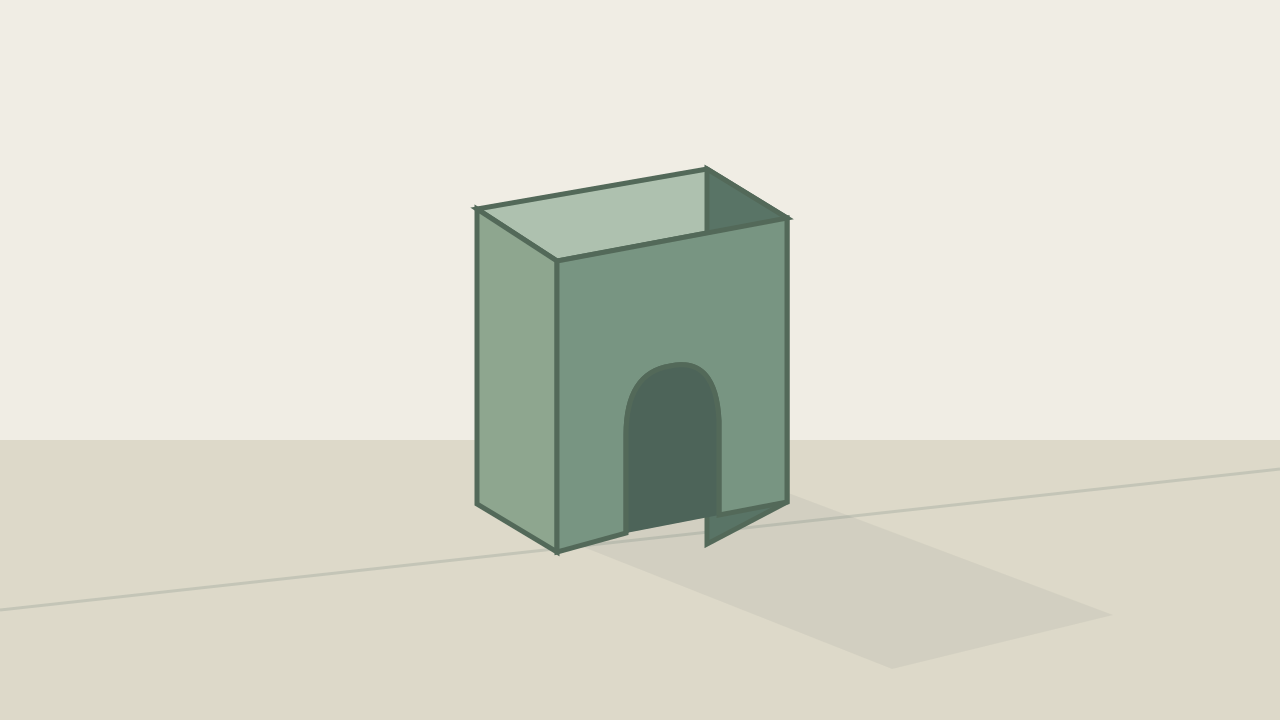
The shadow floats away from the base
Change only the shadow attachment sentence to name the base contact; leave the light path unchanged.
Task template
Plan one modest single-light shift and judge the resulting attached shadow. The original lit illustration is a qualitative exercise, not a tested H3 relighting result or a calibrated photometric setup.
Includes original practice inputs and a review checklist. This prompt has not been independently tested with the generation model.
Download the input image below and upload it manually in the generator; the button carries the prompt.
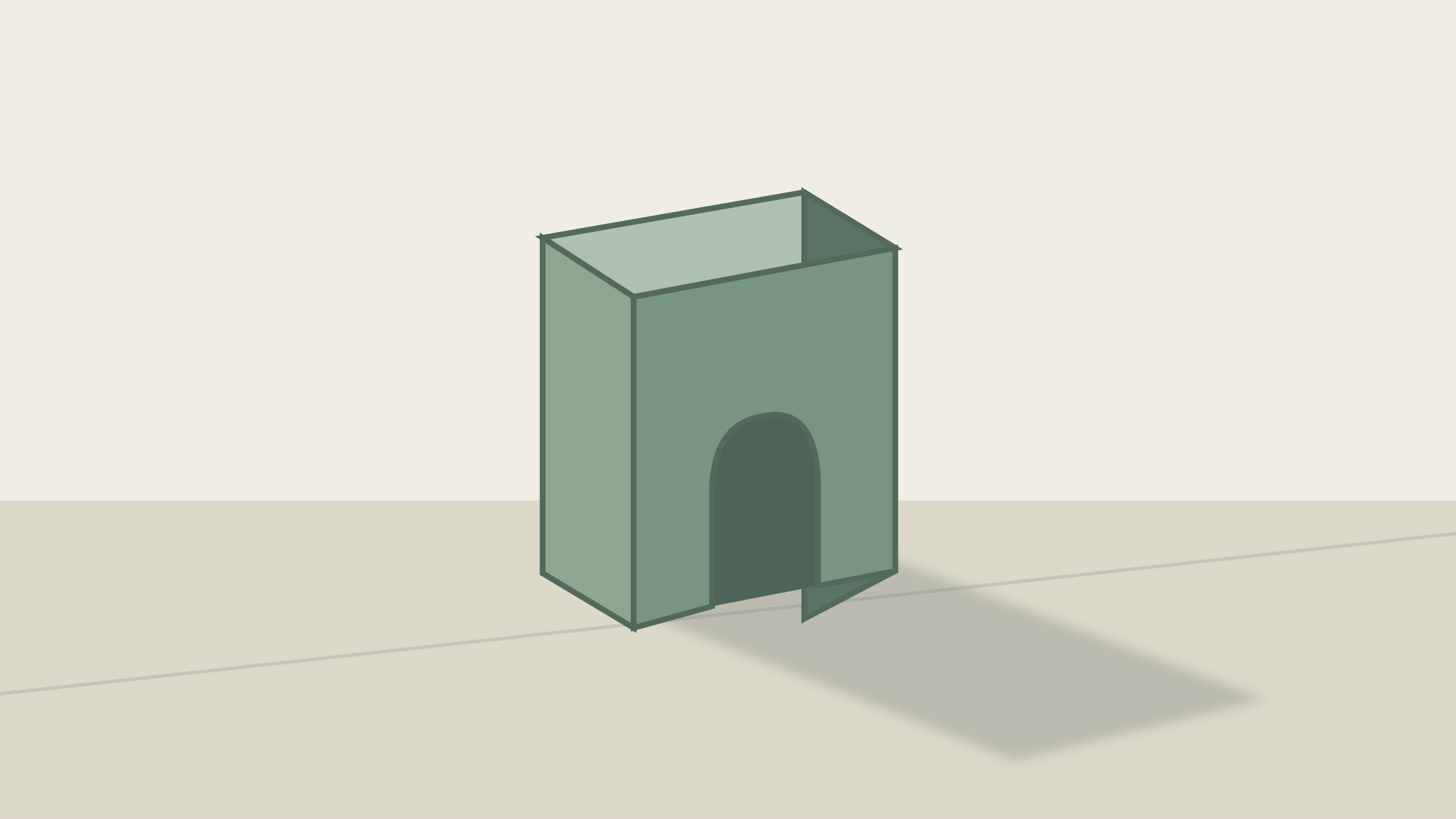
Start from the uploaded matte arch block. The block and camera remain completely fixed, with the block resting on the same tabletop contact. There is one soft key light, initially from the upper left. That one light shifts slowly a small distance toward the upper center and then stops. The single cast shadow responds smoothly, turning from lower right slightly toward lower center and becoming a little shorter, while staying attached at the block base. The lit and shaded sides change gently in agreement with that shift. Preserve the arch opening and matte surface. No second shadow, no moving object, no camera motion, no glow or extra light source.
Confirm that the bright upper-left side and lower-right floor shadow are consistent in the input. A source with several competing shadows cannot isolate a single-light test.
Describe a small shift toward the upper center while keeping object and camera fixed. Do not ask for a rotating product reveal; it changes the cause of the shadow movement.
Watch the shadow where it meets the base before judging its distant tip. It should stay anchored while its extent and direction change, rather than detach as a drifting dark shape.
Compare the block face and shadow at the start and end. If one changes in the opposite sense or a second shadow appears, simplify the light shift and inspect the same relationship again.
Change only the shadow attachment sentence to name the base contact; leave the light path unchanged.
Change only the lighting description to one soft key with no additional source; keep the small movement.
Change only the fixed-role assignment to the block orientation and ground seam; remove product-turn wording.
Reduce only the light shift so the test stays within a small directional change; compare the transition again.
End after the light stops, with one attached shadow and a stationary arch. Record the qualitative direction check rather than claiming a measured relighting solution.