Task template
MiniMax H3 drawstring prompt: gather one pouch opening without changing its body
Plan a short drawstring pull from an original open pouch. Track both cord exits, the shrinking opening and gathered hem while keeping the pouch base fixed.
MiniMax-H3 · image-to-video · Original task method; generation has not been independently verified.
Start generating video →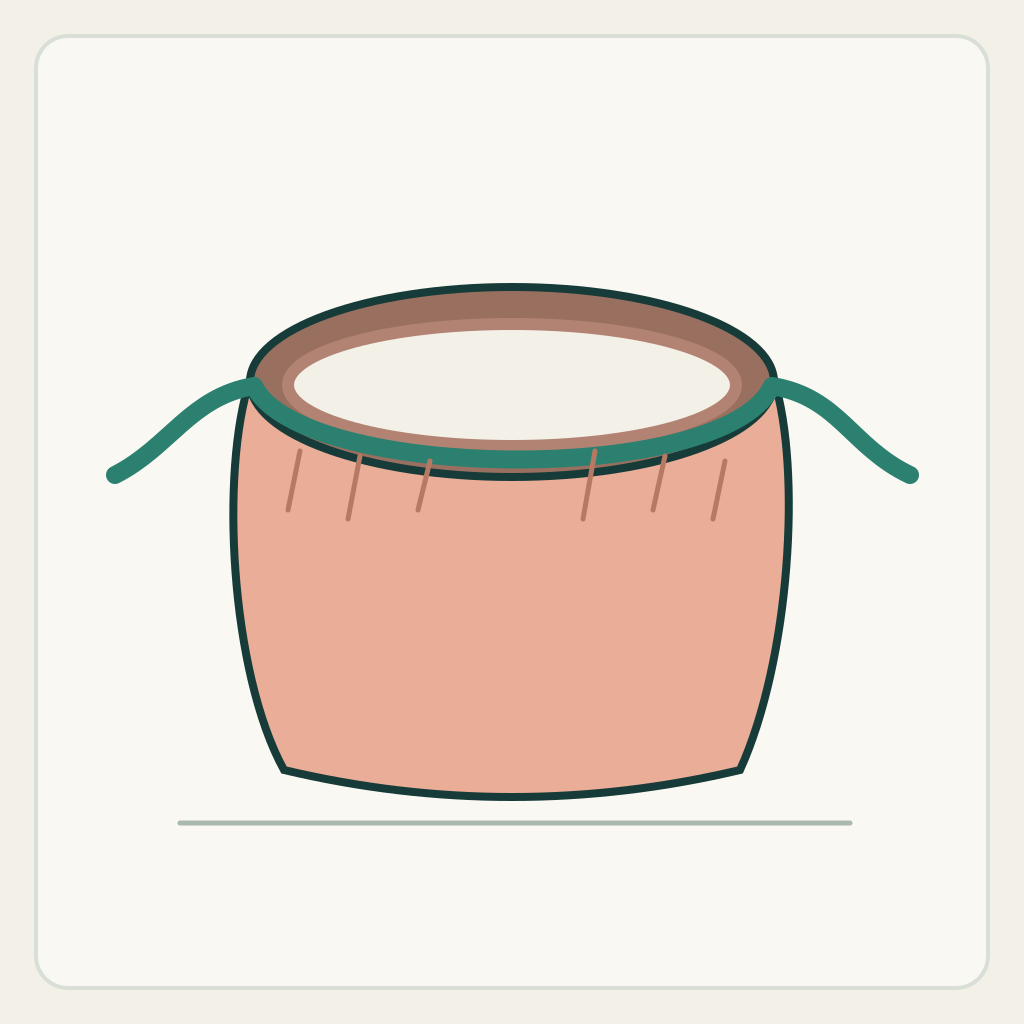
MiniMax H3 drawstring prompt: gather one pouch opening without changing its body
Pull the two visible cord ends outward a little so that the existing pouch opening gathers. Couple cord travel with a changing fabric aperture rather than simply shrinking the whole bag.
Original illustrated practice input; method not independently tested. No H3 generation or model output is supplied. A result, if you later generate one, still needs the checks below.
!Original illustrated practice input, not a model result
Read the starting input
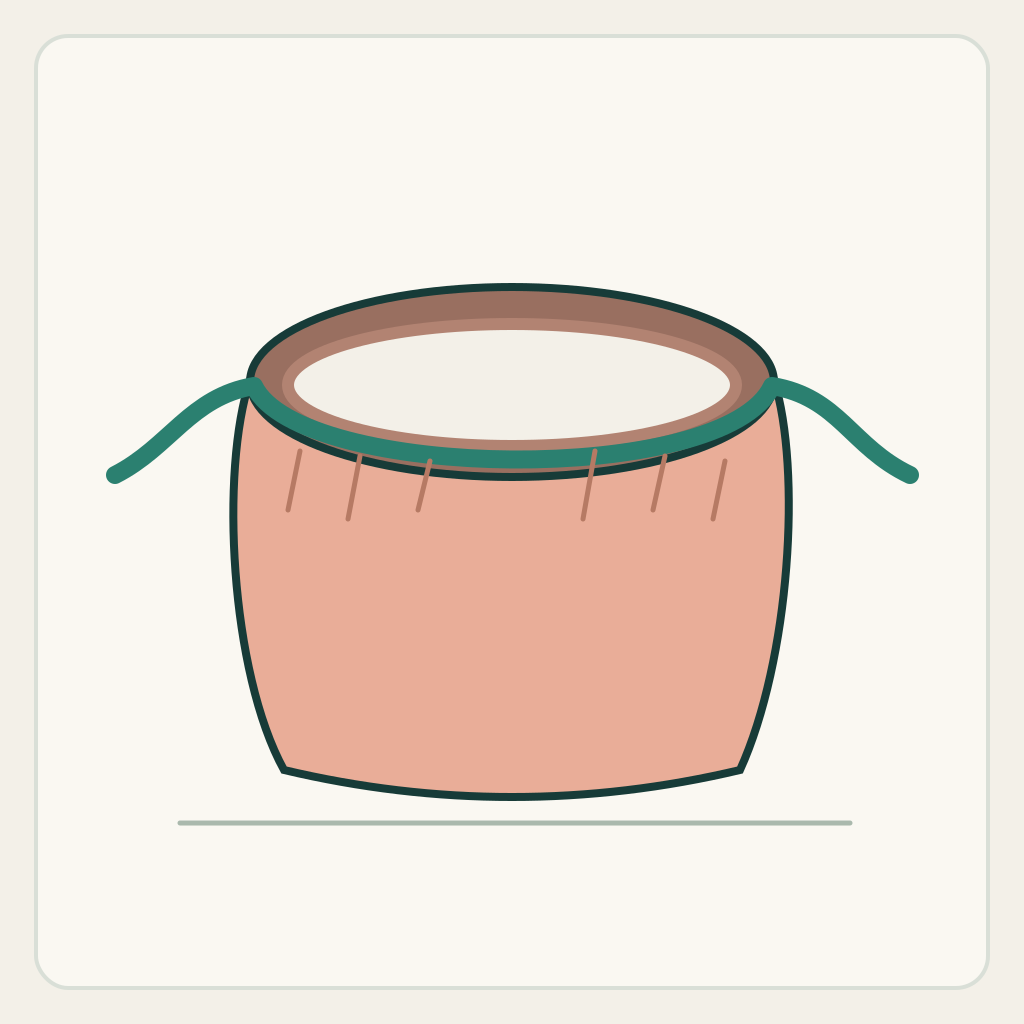
The original frontal drawing shows a coral pouch with an open oval mouth and a teal cord running through its upper hem. One cord end exits on each side; the broad lower body rests on a flat support.
Keep the bottom corners fixed and follow both cord exit points along the hem. The opening may narrow, but the pouch body and cord thickness should not scale down together.
Set up the current generator
Select MiniMax H3 base in image-to-video. Enable Add end frame so the current interface exposes the First Frame slot. Upload only first-frame.png to First Frame and leave Last Frame empty. This is not the Fast workflow: Fast requires both frames. Select a duration and ratio actually offered by the interface; these notes promise no exact motion timing. Opening a generator does not submit a task. The SVG is a design/inspection source, not an upload instruction.
Download practice kit · PNG first frame · Blank acceptance sheet
Copy the original prompt
Begin with this original illustrated first frame and a fixed front camera. Keep the pouch base resting in the same position. The two teal cord ends move slowly outward a short distance, gathering the existing upper hem toward the middle so the oval opening becomes narrower. Maintain one continuous drawstring routed through the same two hem exits, with more visible gathers around the mouth. Keep the lower pouch broad and unchanged. No zipper, knot, new holes, contents reveal, total bag shrink or camera zoom. Stop before the mouth closes completely and hold.Work through one attempt
- Locate the existing two exits and the open oval before submitting. Do not substitute a closed bag: the intended aperture change needs an observable starting opening.
- Use a short outward pull and stop while an opening remains. Tying a bow and fully sealing the pouch would add separate tasks with hidden cord paths.
- Compare the mouth, cord ends and bottom corners at the same pauses. A smaller mouth is not sufficient if it comes from scaling the whole pouch or inventing new exits.
Inspect the result
Record an observation for each item in the blank sheet. The sheet starts with empty results: none is a pre-existing pass.
- The pouch base and lower body remain the same size and position.
- Both cord ends extend outward from their original hem exits.
- The opening narrows while visible fabric gathers increase around the same hem.
- The ending still shows one opening, one continuous cord and two original exits without a knot.
Change one failure at a time
- Whole bag shrinks: fix the lower corners and describe only the upper hem gathering.
- Cord becomes a zipper: remove closure shorthand and retain two continuous cord exits.
- Ends duplicate or knot: shorten the pull and stop before tying or full closure.
Ending, limits and related tasks
The original broad pouch rests in place with a narrower but still open gathered mouth and two extended cord ends.
This is visible routing and fabric-gathering planning, not a proof of actual bag capacity, knot security or a cloth-and-cord simulation.
The zipper page moves a slider along teeth; the knit page unfolds one corner. Here two cord ends move through an existing hem while an aperture gathers.