Task template
MiniMax H3 accordion-paper prompt: close the existing creases in order
Shorten a four-panel paper accordion while retaining its three existing internal creases. Original PNG, editable design and blank checks distinguish rigid panel folding from stretchy cloth motion.
MiniMax-H3 · image-to-video · Original task method; generation has not been independently verified.
Start generating video →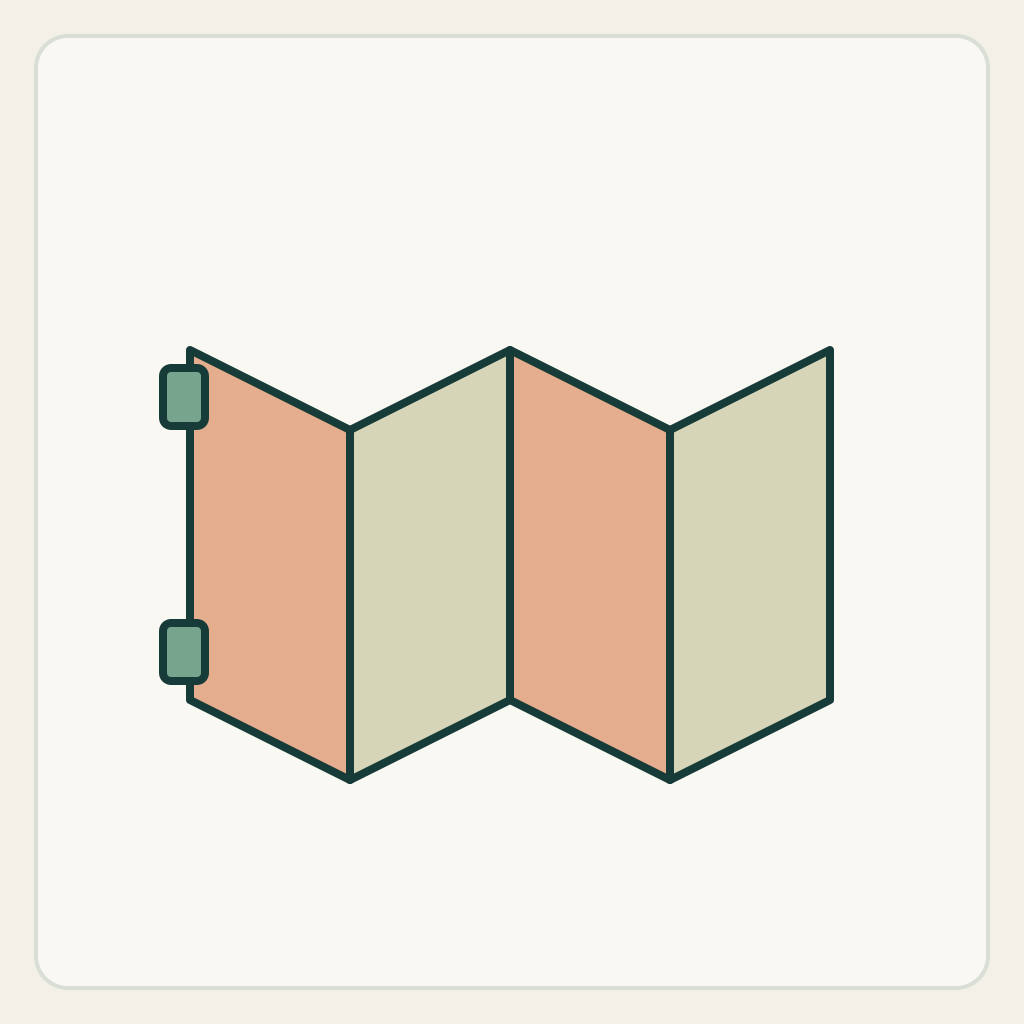
MiniMax H3 accordion-paper prompt: close the existing creases in order
Preserve the adjacency of a pre-folded strip while its panels rotate at the existing creases. The task is not to invent more folds or to crumple an otherwise flat sheet.
Original illustrated practice input; method not independently tested. No H3 generation or model output is supplied. A result, if you later generate one, still needs the checks below.
!Original illustrated practice input, not a model result
Read the starting input
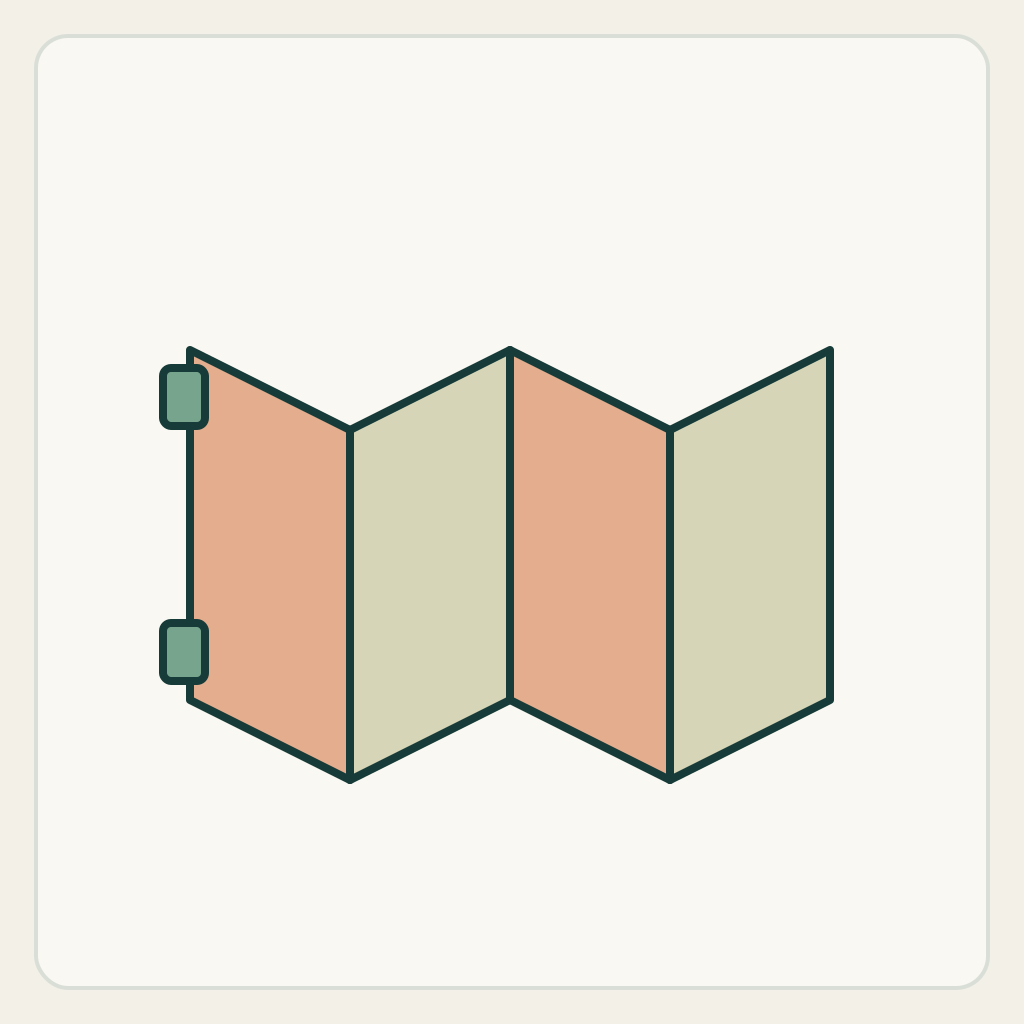
The oblique drawing shows one blank strip divided into four connected panels by three alternating internal crease lines. Adjacent panel fills alternate to make the zigzag visible. Two small clamps hold the left outer edge, while the right outer edge is free.
Track the fixed left edge, the three original internal crease lines and the right edge. Each panel must remain connected to the same neighbors. Count panels rather than every highlight or outline stroke as a separate fold.
Set up the current generator
Select MiniMax H3 base in image-to-video. Enable Add end frame so the current interface exposes the First Frame slot. Upload only first-frame.png to First Frame and leave Last Frame empty. This is not the Fast workflow: Fast requires both frames. Select a duration and ratio actually offered by the interface; these notes promise no exact motion timing. Opening a generator does not submit a task. Provider availability and generated outcomes are not promised. The SVG is a design/inspection source, not an upload instruction.
Download practice kit · PNG first frame · Blank acceptance sheet
Copy the original prompt
Begin from the supplied pre-folded paper first frame. Locked oblique camera. Keep the two left-edge clamps and the held outer edge stationary. Move the free right outer edge a little toward the left so the existing accordion closes modestly. Keep one continuous blank strip with the same four stiff panels and the same three alternating internal creases. Panels change angle at those creases instead of stretching, flowing like fabric or growing new pleats. Preserve their original adjacency and front/back appearance. Finish as a shorter still-readable accordion, not a completely flattened stack, then hold. No tearing, extra fold, hand entering or camera move.Work through one attempt
- Count four panels and three internal creases in the PNG before submitting. If replacing it, start with actual visible pre-folds; asking a flat sheet to invent the whole structure is a different task.
- Request only partial closing from the free right edge. Keep the held edge fixed and avoid flattening the strip into an unreadable pile.
- For a later result, follow each crease over time. Compare the order of panel regions at the start and ending, rather than treating any shorter paper silhouette as a pass.
Inspect the result
Record an observation for each item in the blank sheet. The sheet starts with empty results: none is a pre-existing pass.
- The clamps and held left edge stay fixed relative to the shot.
- One strip retains exactly four connected panel regions and three original internal creases.
- Shortening is explained by changed panel angles, without stretching, new pleats or detached pieces.
- The ending remains a compact readable zigzag, with the same alternating panel order.
Change one failure at a time
- If the paper acts like elastic fabric, name the stiff panels and existing crease hinges and shorten the requested closing.
- If new folds appear, refer to the three visible internal creases rather than asking for more detailed paper texture.
- If the panels become an opaque lump, stop earlier so their adjacency remains inspectable.
Ending, limits and related tasks
One shorter four-panel accordion remains attached to its fixed left edge, with the original crease order still readable.
This is a qualitative visual exercise without a model run. It does not measure paper stiffness, fold angles, clamp loads or a manufacturing process.
Use the textile task for a flexible drape or corner. Use this task when existing discrete fold lines must explain the shape change.