The rock drifts with the water
Change only the fixed-solid sentence and retain the same ripple request. Compare the rock corners rather than the changing reflection.
Task template
Animate gentle ripples on the shallow water while the large rock and the curved bank remain in place. Separate changing highlights from moving solid geometry; the shot is a fictional visual exercise, not a hydrology record.
Includes original practice inputs and a review checklist. This prompt has not been independently tested with the generation model.
Download the input image below and upload it manually in the generator; the button carries the prompt.
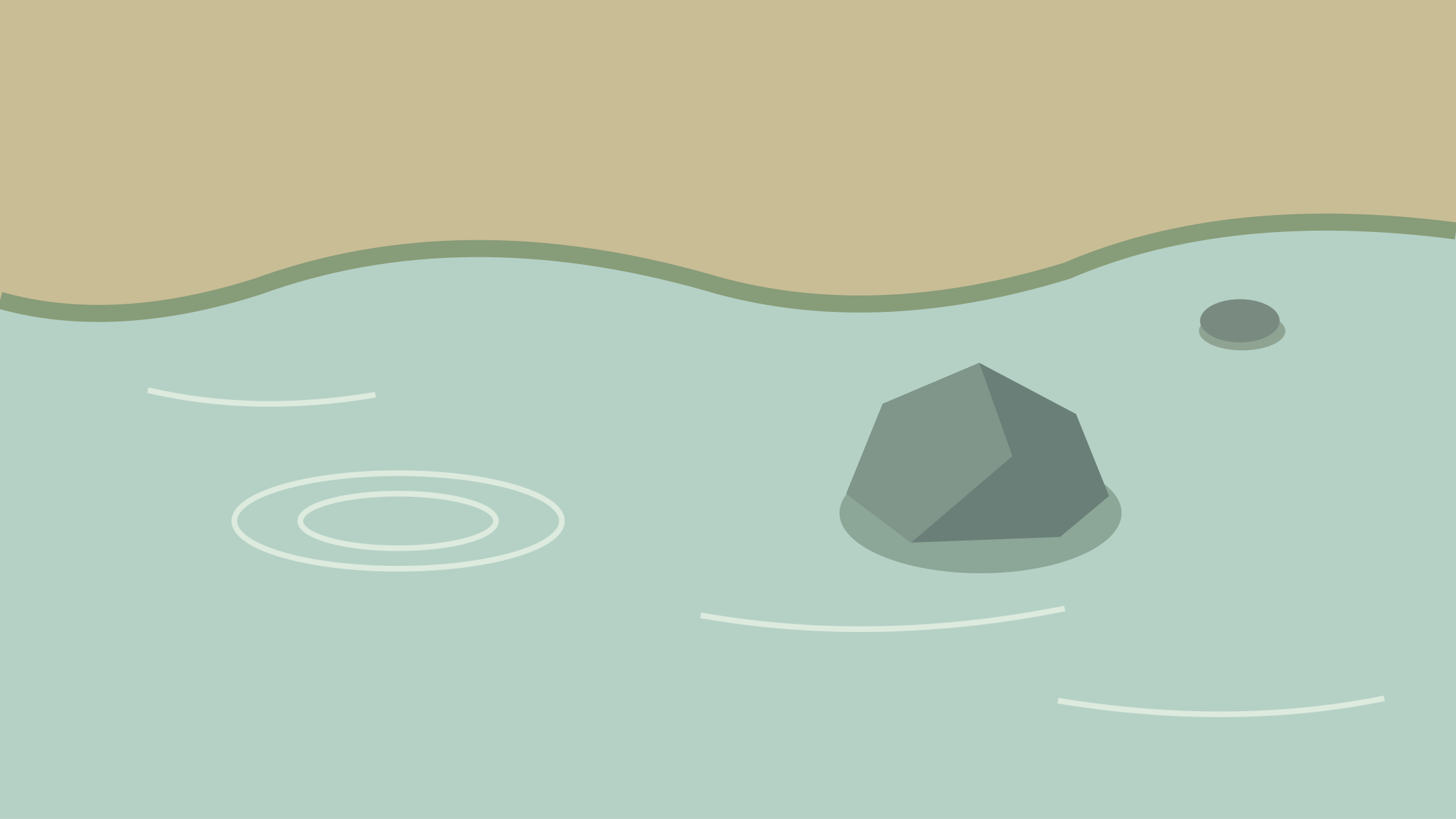
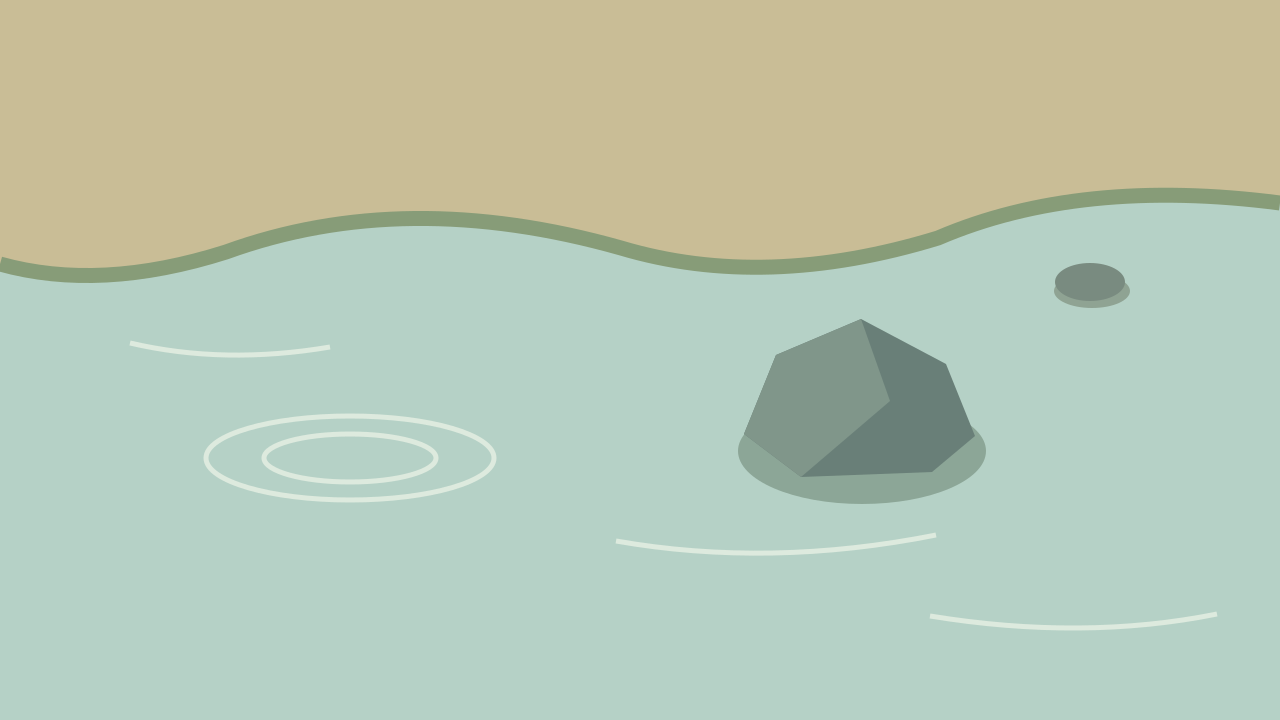
Use the uploaded shallow-water scene as the first frame. Small gentle ripples travel across the water surface and around the fixed large rock. Let only the surface highlights and soft wavelet lines change. Keep the rock’s angular outline, position and exposed area unchanged; keep the curved bank and water level stationary. The camera stays fixed and the daylight remains steady. Do not add a splash, a falling object, animals or a strong current. End with the same shallow pool and quiet ripples continuing.
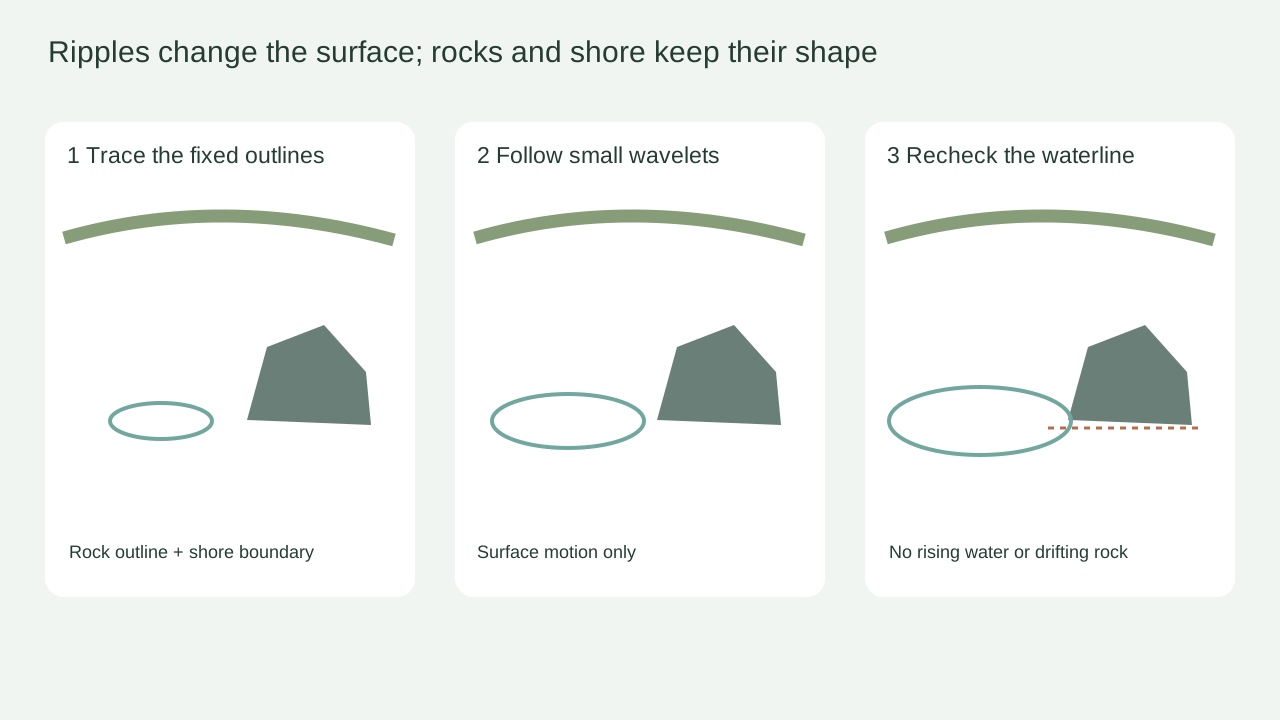
Trace the main rock corners and the bank curve in the observation sheet. Do this before assessing the ripple pattern so moving highlights are not mistaken for moving stones.
Request wavelets on the existing surface while keeping the exposed rock area stable. A waterline climbing the rock would be a different action with different checks.
Watch a ripple meet the rock’s visible boundary. The wavelet may break into highlights, but the solid corner must not soften, flow downstream or produce a duplicate rock.
Compare the final bank and waterline to the source, then replay for sudden surges. Continued ripples do not automatically make the clip a seamless loop.
Change only the fixed-solid sentence and retain the same ripple request. Compare the rock corners rather than the changing reflection.
Replace only surge-like wording with small surface wavelets at the existing level. Recheck the rock waterline across the full shot.
Reduce only the motion amplitude and remove current-speed language. Keep the same pool and inspect whether solid boundaries remain visible.
End with ongoing quiet ripples and unchanged solid boundaries. Save separate surface and waterline observations; this scene does not prove conditions at any real location.