The whole curtain panel slides on the rod
Change only the attachment sentence to fixed top points, then inspect the top edge during the widest billow.
Task template
Move only the curtain cloth in a light inward breeze while the rod, upper attachments, window frame and room remain fixed. This is a local fabric-motion brief, not a wind simulation.
Includes original practice inputs and a review checklist. This prompt has not been independently tested with the generation model.
Download the input image below and upload it manually in the generator; the button carries the prompt.
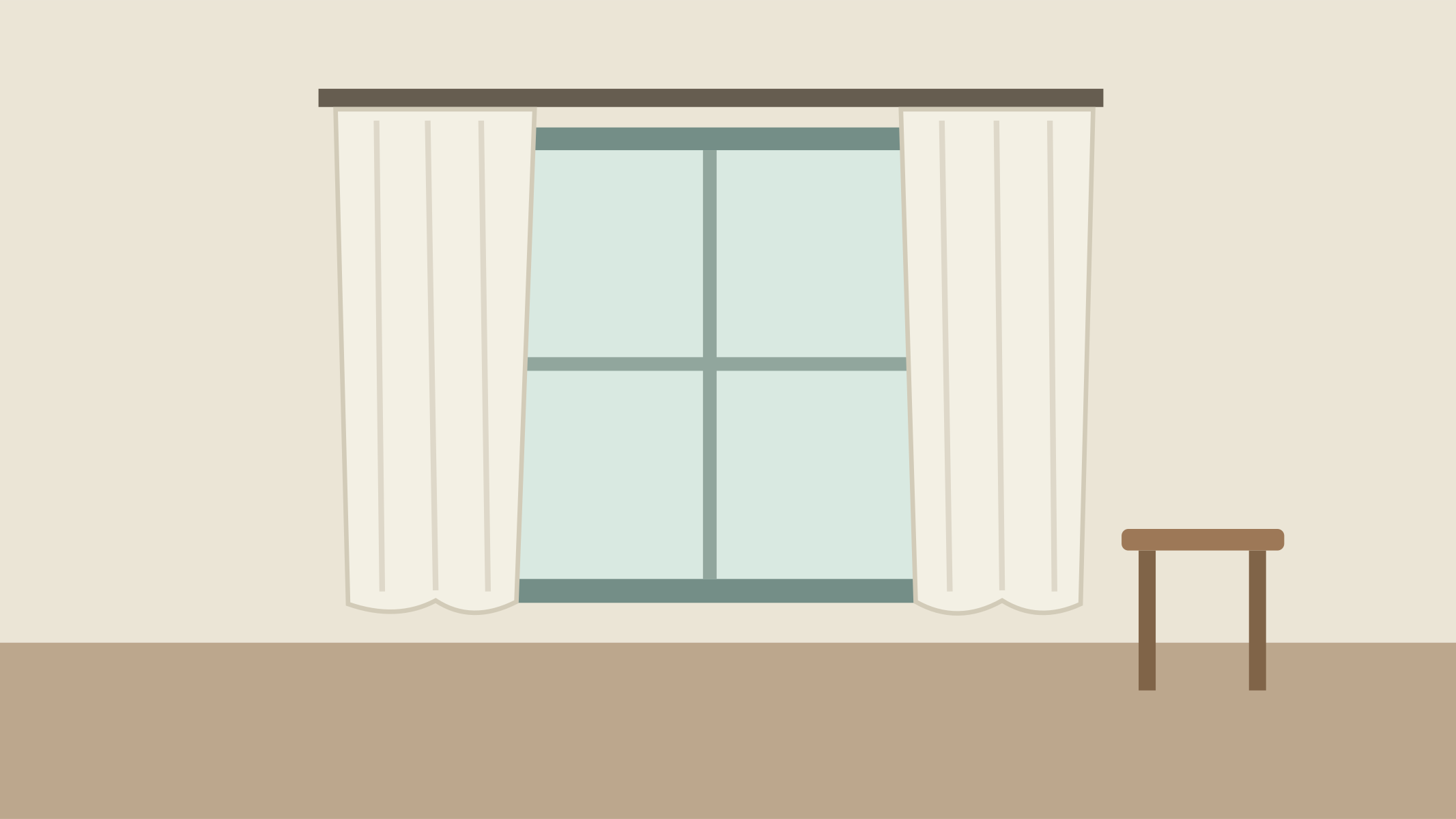
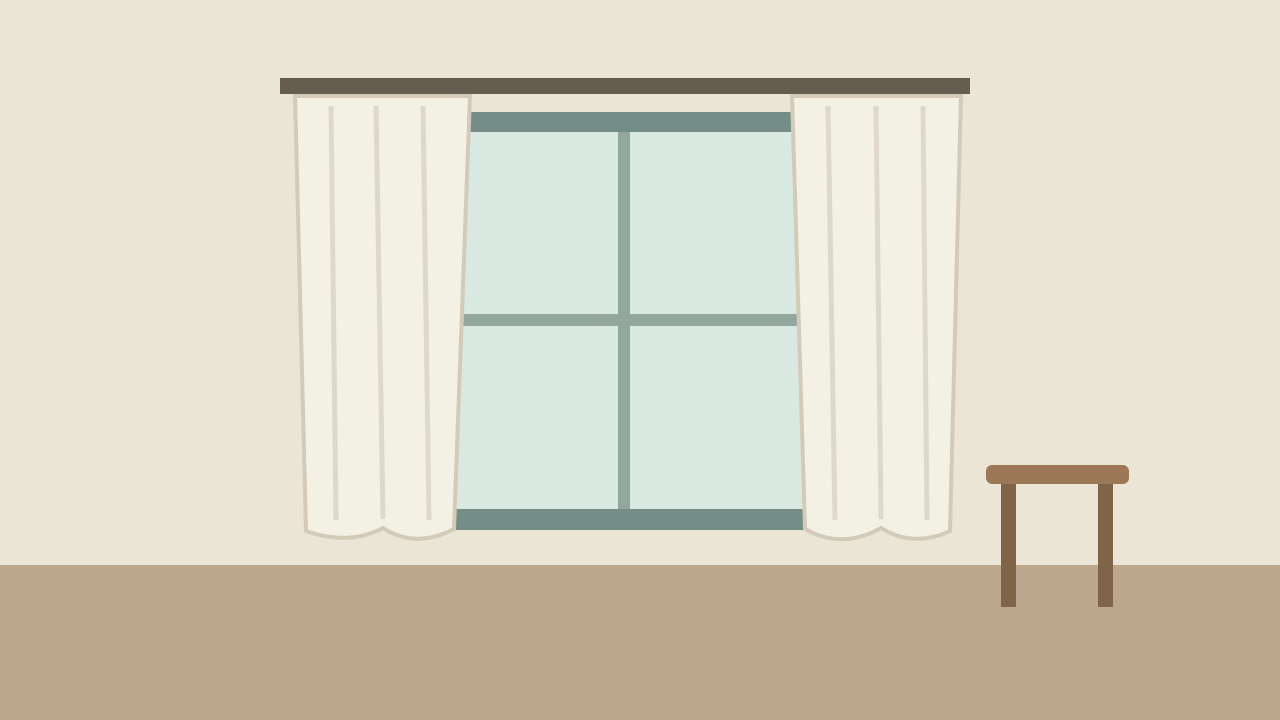
Use the uploaded window scene as the first frame. A light indoor breeze makes the lower portions of the two curtains billow gently inward once, with small changes in their folds. The top attachment points stay on the same fixed rod. The rod, closed window frame, window divisions, sill, table and camera remain stationary, and the daylight stays steady. Keep the curtain fabric length and color consistent. Let the lower hems ease back close to their starting positions, ending with a small quiet residual sway rather than a repeated large flap.
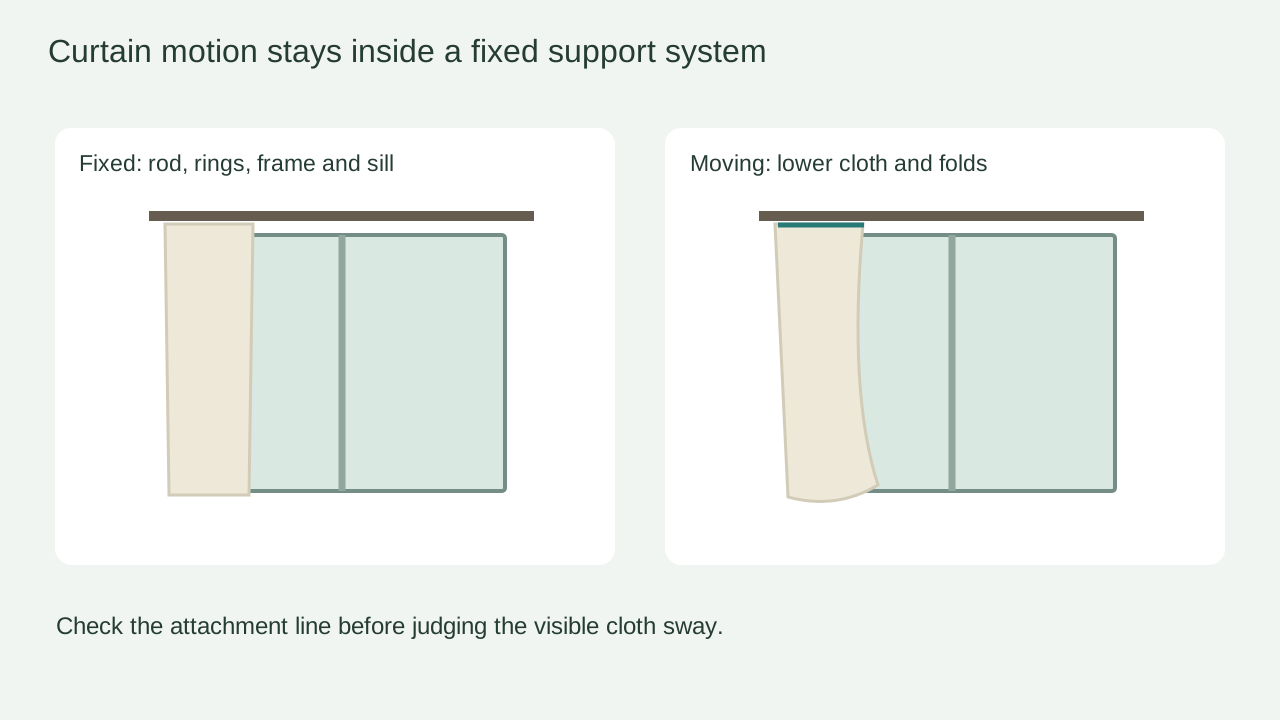
Trace the top of each curtain along the rod. The top is fixed; a fabric wave should begin below the attachments instead of carrying the entire panel across the window.
Ask for a small inward billow, not a full lift. Keep the hem within the visible space so its movement can be compared to the sill and table.
At the widest billow, check the frame and rod before admiring the folds. A bending window is a structural failure even if the fabric looks fluid.
Follow the hems as they ease back. Look for unchanged length, retained attachments and no duplicated cloth; do not label the result a seamless loop without an actual join check.
Change only the attachment sentence to fixed top points, then inspect the top edge during the widest billow.
Keep the camera fixed and strengthen only the rigid window-frame role. Retain the same breeze amplitude for a clean comparison.
Reduce only the billow amplitude to lower-cloth movement. Recheck cloth length and the settling interval before adding stronger wind.
Finish near the original hanging shape with only a quiet residual sway. Save separate attachment, window and hem observations; a loop requires additional start-to-end verification.