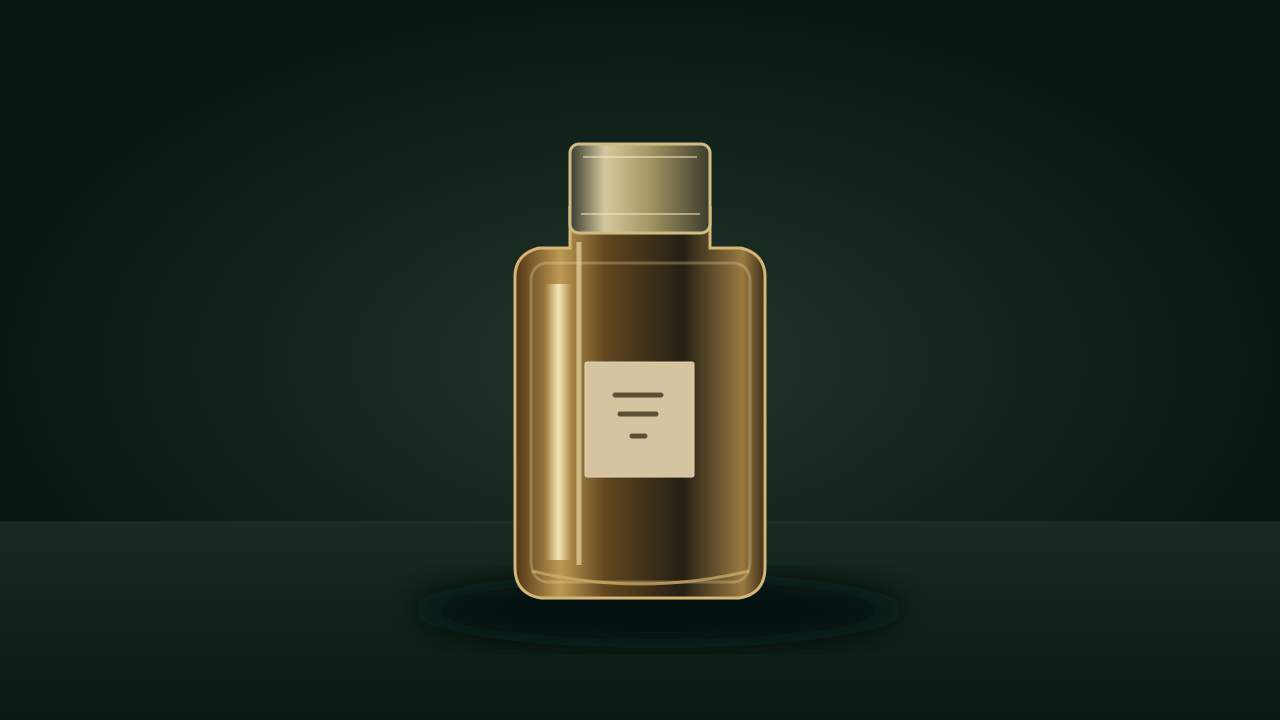
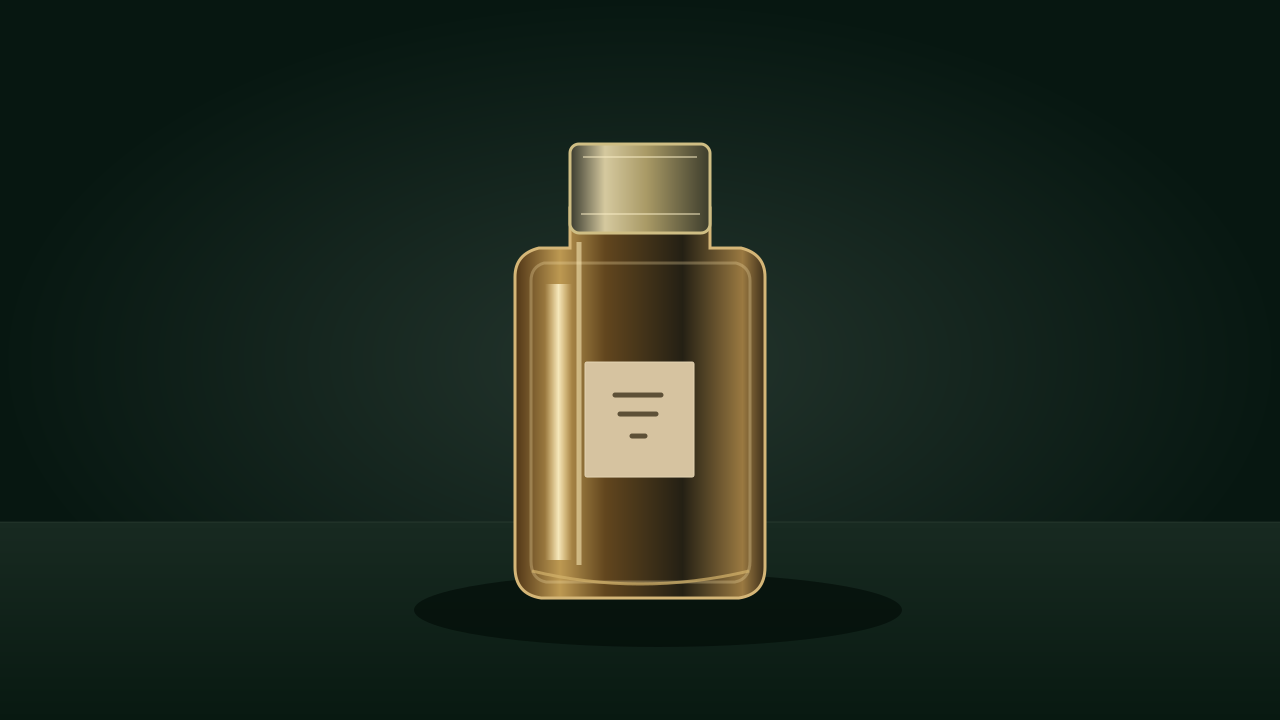
The bottle rotates as the highlight moves
Replace words such as rotating reflection or orbiting light with a narrow light band crossing a stationary bottle. Keep the camera instruction stationary and retry without adding more object details.
MiniMax H3 · Original practice template
An image-to-video practice brief for a stationary reflective bottle. Separate a moving light band from bottle movement, then check the cap, contour and shadow against the first frame.
Create one restrained light sweep across a bottle without asking it to rotate. This is an original teaching method with an illustrated practice input; it has not been independently tested on MiniMax H3.

Use the uploaded image as the starting composition. Keep the bottle, cap and camera stationary. A single narrow soft light band moves slowly from the left side of the bottle to the right, changing the reflection on the glass while the bottle keeps its original silhouette and position. Keep the background and contact shadow steady. The band passes once and settles into a quiet final reflection. No bottle rotation, no additional objects, no added lettering.Download the prompt text
Inspect the first frame and note the cap width, the shoulder curve and the two lower bottle corners. These checkpoints let you distinguish a reflection changing from the object actually moving. Do not ask the model to lock a logo or infer hidden product geometry.
Start with one left-to-right light band and a stationary camera. Avoid combining a light sweep, bottle spin and camera orbit in the same attempt: you would lose the ability to identify which request changed the contour.
Compare the beginning, the moment the highlight reaches an edge and the ending. Watch the shoulder and cap at the bright transition; a moving white edge can hide a shape change that is less obvious during normal playback.
If the cap or outline drifts, first simplify or soften the light instruction while retaining the same input. Once the object motion is acceptable, place any exact label or campaign text in the editor and check its alignment throughout the clip.
Replace words such as rotating reflection or orbiting light with a narrow light band crossing a stationary bottle. Keep the camera instruction stationary and retry without adding more object details.
Use a softer, lower-contrast sweep and a starting image whose cap edges are visible. Compare the cap at the same moments; a brighter sweep is not a fix for missing geometry.
Make the band narrower and remove requests for sparkling reflections or multiple glints. Check the original outline separately from the interior reflected stripe.
Keep generated text out of the acceptance decision. Replace or composite the permitted label in an editor and inspect every point where the highlight crosses it.
End with the light resting to one side and the bottle still in its starting position. Save the accepted brief and the checkpoint list with your input so the next change has a clear baseline.
This page provides an original prompt, input illustration and review method. A corresponding generated result has not been independently produced. The illustration is a practice input.