One short pour: check the stream, rim and rising liquid level
Create a single small pour from a jug into a glass with visible liquid-level continuity.
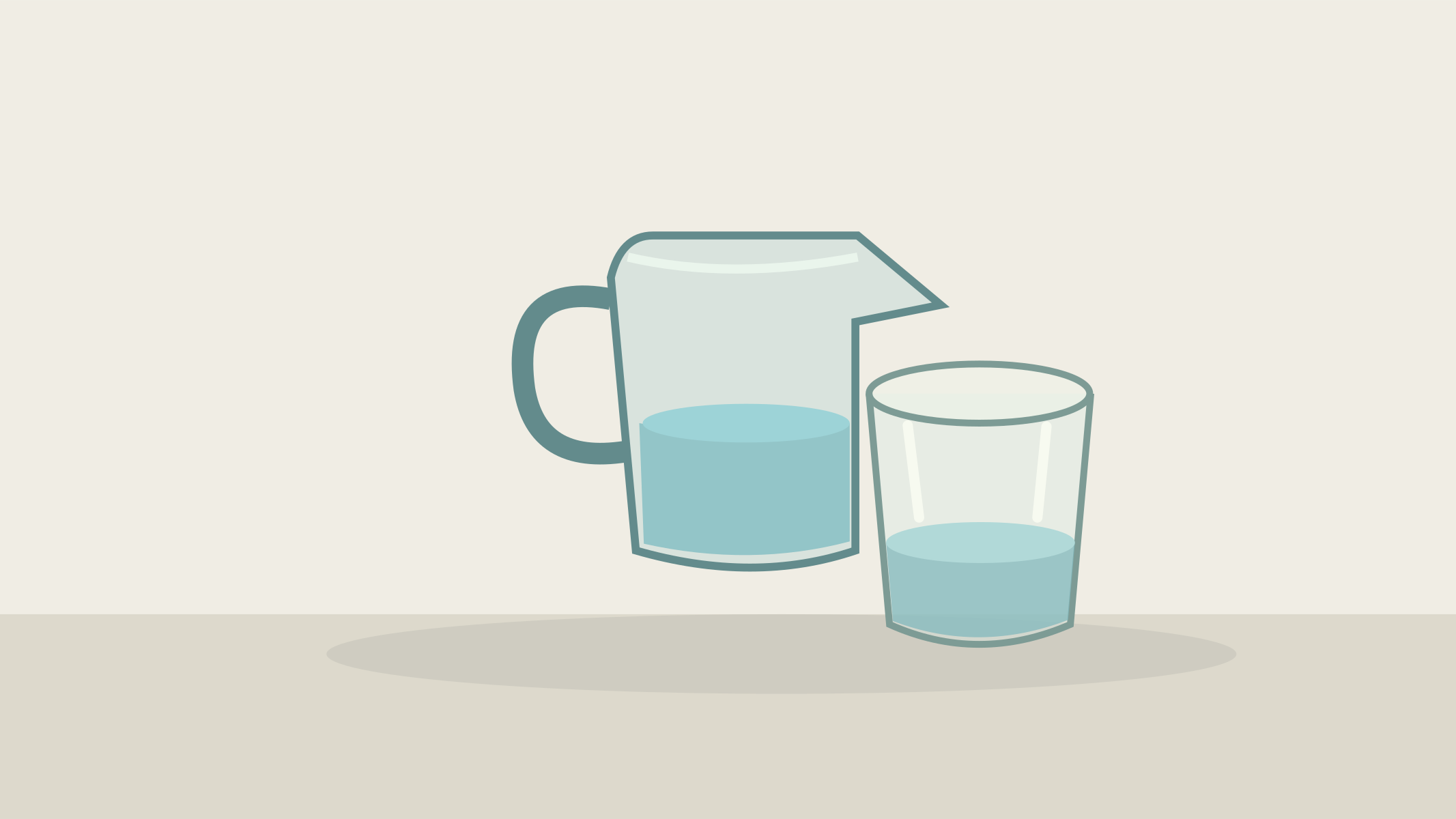
Task and boundary
Create a single small pour from a jug into a glass with visible liquid-level continuity. The original illustration and checks describe an untested visual method, not a fluid simulation or measured volume transfer.
Prepare your own input
For an actual attempt, prepare a photo or drawing you own or have permission to use. Match the visible starting arrangement, contact gaps, fixed supports and identifying marks described below. Adapt the prompt’s object, color and style names to your image. If a necessary contact or movement space is missing, fix the input before submitting. The on-page illustration is a reading example; you can plan the action without running a generation.
- Choose an input showing the jug spout, glass opening and initial liquid level without overlap. The on-page glass example begins partly filled, leaving headroom.
- Use a plain background behind the stream and glass rim. Strong reflections can hide whether liquid enters the opening or crosses the wall.
- Keep the receiving glass on a clear tabletop and the camera fixed. Ask the jug to tilt alone, without adding a hand pickup or camera move.
- Define a modest rise below the rim and an upright jug ending. Do not use this practice to prove exact milliliters, pouring speed or conservation measurements.
Set up one image task
Use MiniMax H3 base image-to-video with your prepared image. If needed, enable Add end frame to expose First Frame, put only that image in First Frame and leave Last Frame empty. Check the actual available settings and current credit estimate before manual submission. The prompt is text you can copy; it does not upload your image or start a task. No exact duration, resolution, endpoint or successful result is guaranteed by these instructions.
Complete prompt
Start with your prepared, authorized image of the jug and partly filled glass. The glass stays fixed on the tabletop with its rim and base unchanged. The jug tilts slightly once and releases a narrow continuous stream from its spout into the open center of the glass. The stream crosses the opening inside the rim, never through the side wall. As liquid enters, the receiving level rises gradually and remains below the rim, with only a small surface ripple. The jug then returns toward upright, the stream stops, and the glass holds its new level. Keep one jug, one glass, fixed camera and lighting; no overflow, no splash burst, no second pour.
Operating sequence
1. Confirm the entry route
Trace a clear route from the spout to the glass opening in the source. If the rim is hidden behind the jug, adjust the input before asking for pouring.
2. Separate the three states
Brief the action as tilt, short pour, then stop. Leave the glass stationary in all three states so a lifting glass cannot disguise an incorrect stream intersection.
3. Sample the receiving level
Compare before flow, mid-flow and after stop against the same part of the glass. The level should rise during entry and remain at the new height; screen reflections alone do not count as more liquid.
4. Review the stopping transition
Inspect the moment the jug returns toward upright. Check that the stream ends rather than continuing from a dry spout, and that the glass wall and rim stay intact.
Inspect an actual result
For each criterion below, record the time or frame, visible observation and judgment in your own notes: pass, fail or inconclusive. Fill observed values only after inspecting an actual output; the intended ending is not evidence that the transition occurred.
- There is only one jug and one receiving glass.
- The glass base stays in contact with the same tabletop location.
- The stream originates at the visible jug spout.
- The stream passes into the glass opening inside the rim.
- The receiving level rises progressively during entry rather than falling or teleporting.
- Liquid remains contained below the rim without passing through glass walls.
- After the jug returns toward upright, flow stops and the higher level settles.
Change one failure at a time
- The stream passes through the glass wall Change only the entry target to the open center inside the visible rim; keep the jug motion restrained.
- The liquid level jumps or falls while pouring Reduce only the requested poured amount and compare the same three sampling moments.
- The glass rises to meet the stream Change only the fixed-role sentence to name the base-to-table contact; keep the spout-to-opening route.
- Flow continues after the jug straightens Change only the ending to an explicit stopped stream before the final hold; remove continuous-pour language.
Ending and next step
End with the jug near upright, no active stream and a settled level below the rim. Preserve samples from each flow state and record visual continuity rather than an invented volume measurement.