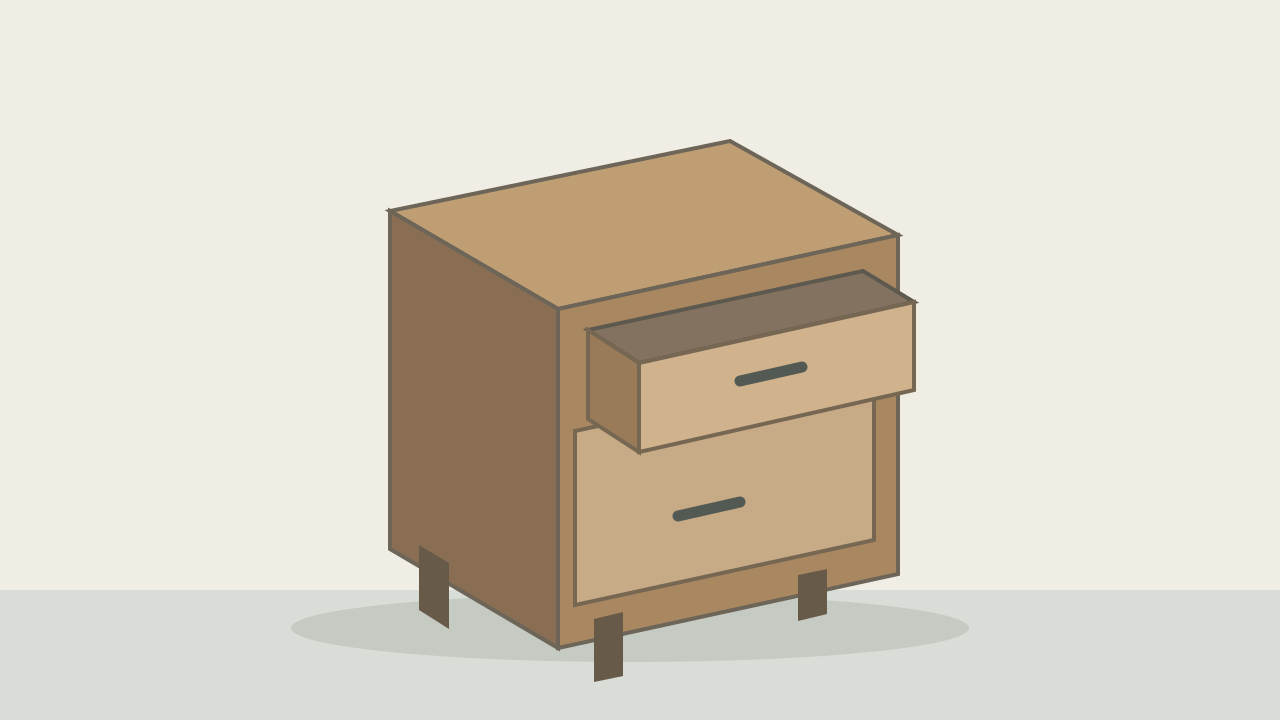
The cabinet moves with the drawer
Change only the fixed-role sentence to identify the feet and cabinet body; inspect their floor contacts on the retry.
Task template
Create one small drawer extension along its visible opening axis. The original cabinet source is a visual exercise, not evidence of tested H3 motion or accurate furniture mechanics.
Includes original practice inputs and a review checklist. This prompt has not been independently tested with the generation model.
Download the input image below and upload it manually in the generator; the button carries the prompt.
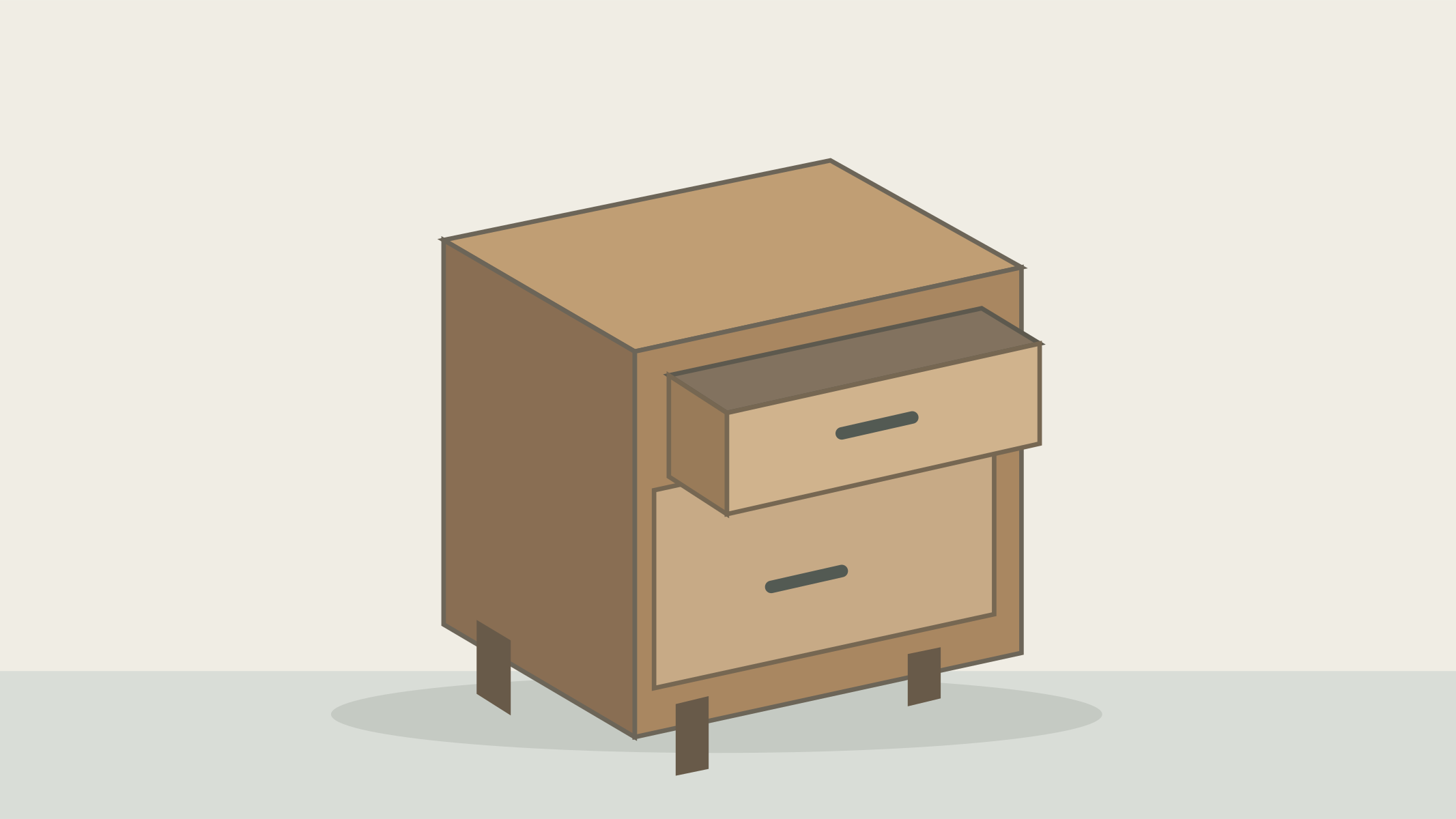
Begin from the uploaded cabinet image. The cabinet body and all four feet stay fixed on the floor. Only the upper drawer slides slowly straight outward along the direction shown by its visible side edge. The drawer moves as one rigid box; its front stays parallel to the cabinet opening and remains level. Keep a continuous connection into the cabinet, without tilting the front, stretching the handle or opening other drawers. Reveal a simple empty interior only. Stop after a short partial extension and hold. Locked camera and fixed light, no full removal, no rotation, no new contents.
Follow the visible side edge from cabinet to drawer front. Write straight outward along that axis rather than toward the viewer, which may suggest an unrelated screen direction.
Name the body and all visible feet as stationary. Compare their floor contacts at the start and end while allowing the moving drawer front to change screen position.
Pause as more of the drawer emerges. Its top edges should remain level and parallel to the opening; the cabinet rim should not melt, fold or follow the front.
End at a short partial extension. If the drawer becomes detached or a complicated rail appears, reduce only the travel depth and recheck the same connection.
Change only the fixed-role sentence to identify the feet and cabinet body; inspect their floor contacts on the retry.
Change only the motion to straight translation along the visible side edge; remove swing, hinge and rotate terms.
Reduce only the extension depth and name the moving part as one connected drawer box; inspect the rim transition.
Change only the interior requirement to plain and empty; use a supplied interior image or capture if actual contents are required.
Finish on a short partial opening with the cabinet still grounded. Save the rim-crossing frame alongside the start and final hold so a detached front cannot be hidden by an attractive ending.