Cloud drift: hold the horizon and foreground still
An original sky-and-land input for slow rightward cloud drift, with separate checks for clouds, horizon height and ground shape.
Move the visible clouds slowly toward frame right while the horizon, low hills and foreground tree remain fixed. The exercise keeps ordinary daytime lighting; it does not depict measured weather or promise a seamless sky loop.
This page presents an original method and illustrations. The prompt has not been independently tested with the generation model.
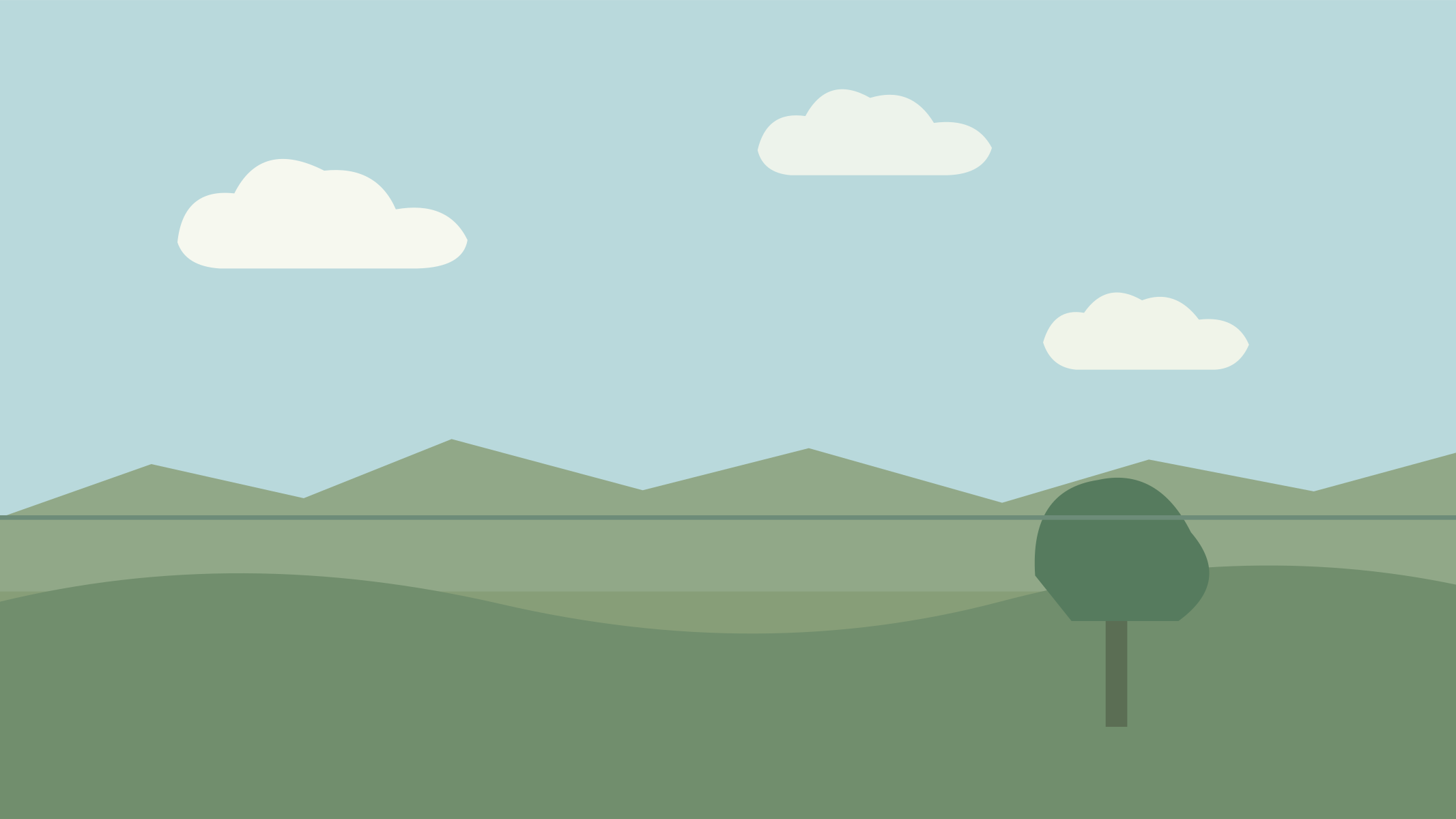
This page illustration explains the required composition; prepare your own authorized image with the relationships described below.
Prepare the input
- Prepare your own authorized daytime scene with separate cloud groups, a clear horizon, low hills and a foreground tree. Keep one cloud group distinct enough to follow against the fixed ground references.
- Choose slow rightward cloud drift with modest shape change. Do not combine it with sunrise, rapidly moving shadows or a time-lapse day-to-night transition.
- Record the horizon height and the tree silhouette before submitting. They are ground references, not moving cloud landmarks.
- Choose one cloud group to track in your own notes. The clean first frame is the upload input; the labeled two-time diagram stays outside the scene.
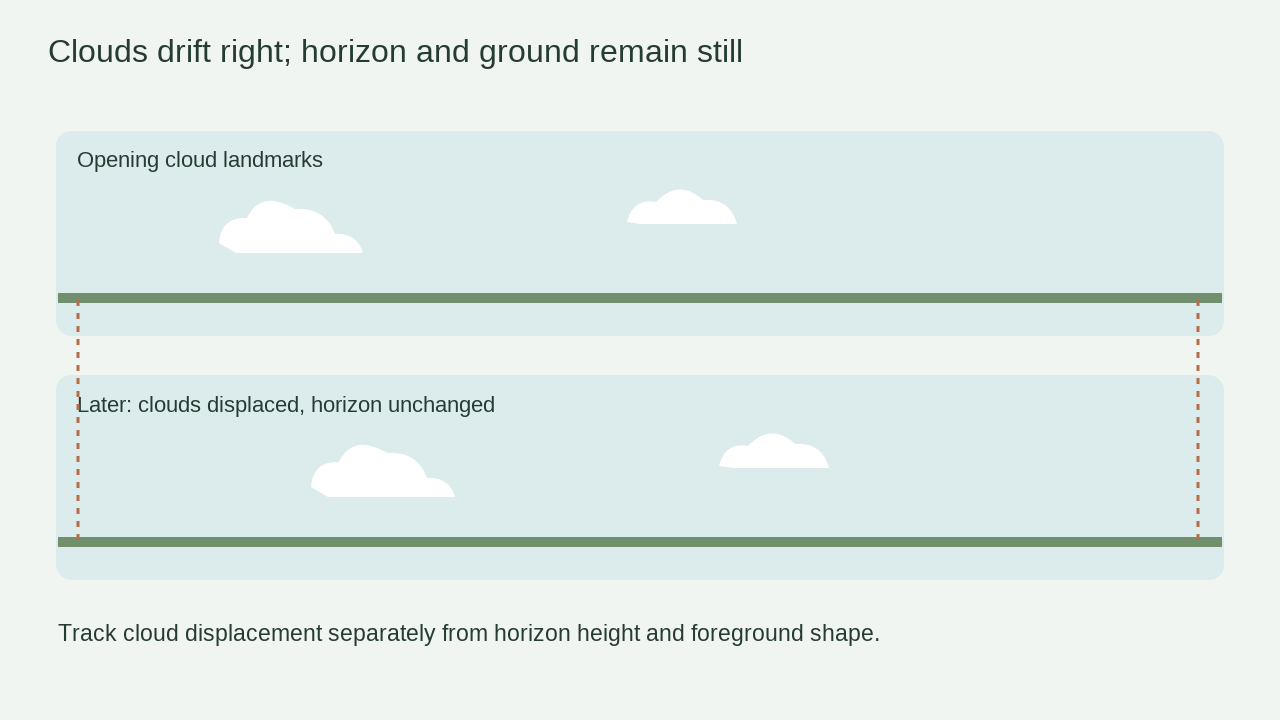
Authored comparison only, not a model output or an extra generation input.
Open image-to-video and choose MiniMax H3. Enable Add end frame to expose First Frame, upload your prepared image there and leave Last Frame empty. Match the complete prompt below to the objects and colors in your image before submitting. Check the current controls and credit estimate; opening the workspace does not upload or submit a task. Keep annotated page diagrams out of the input slots.
The link carries the original page prompt; adapt it to your prepared image before submitting.
Prompt and procedure
Use the uploaded landscape as the first frame. The visible cloud groups drift slowly toward frame right across the daytime sky, with only soft natural changes along their edges. Keep the horizon at the same height, and keep the low hill outlines, foreground tree and ground completely still. The camera stays fixed without a pan, tilt or zoom. Daylight and ground shadows remain steady; do not introduce sunrise, sunset, birds or a new weather event. End with the same view and the clouds still drifting gently in the same direction.
Separate the sky and ground references
Mark one cloud group for displacement and record the horizon and tree as fixed. A single changing cloud shape cannot by itself establish direction.
Specify drift without a camera pan
Keep the camera fixed and ask only clouds to travel right. If the tree also slides left, the clip may be panning rather than preserving the required ground layer.
Inspect cloud edges and horizon together
Pause in the middle to compare cloud-group position and the hill contour. Allow soft cloud-edge evolution, but reject a horizon that rises, melts or bends with the sky.
Review the continuing endpoint
Check that drift direction persists to the last interval and that exposure remains daytime. Save the final visible displacement without claiming a start-to-end loop join.
Check the result
Watch the complete actual result, then compare opening, middle and ending against each check below. In your own notes record the timestamp or frame, visible evidence, pass/fail/uncertain judgment and reason. Do not fill results from an illustration; an occluded or unreadable relationship remains uncertain.
- The tracked cloud group progresses toward frame right.
- Cloud-edge changes remain soft without abrupt duplication or teleporting.
- The horizon stays at the same screen height.
- The low hill contours do not change shape.
- The foreground tree and ground remain in their original locations.
- Camera framing and daytime illumination remain steady.
- The ending continues the same cloud direction without a new weather event.
Troubleshooting and ending
The entire landscape pans left
Change only the camera-and-ground clause to fixed framing and stationary ground. Recheck the tree before adjusting cloud speed.
Clouds boil in place without drifting
Strengthen only the rightward translation request and choose one identifiable cloud group for review; do not add time-lapse language.
The sky turns into sunset
Remove only time-of-day progression words and keep steady daytime lighting. Inspect the ground illumination as well as sky color.
End on the unchanged landscape with continuing cloud drift. Keep cloud displacement and fixed-ground checks separate; a usable loop or a real weather claim requires evidence beyond this practice draft.
Related reading
- Small camera arc around a chair: trace all four floor contacts
- Character three-view reference: separate front, side and back files
- Curtain breeze: move the cloth, fix the window
- Desk lamp tilt: move one head around its visible joint
- Doorway push-in: stay within the visible space
- Drawer opening: translate the drawer and keep the cabinet fixed