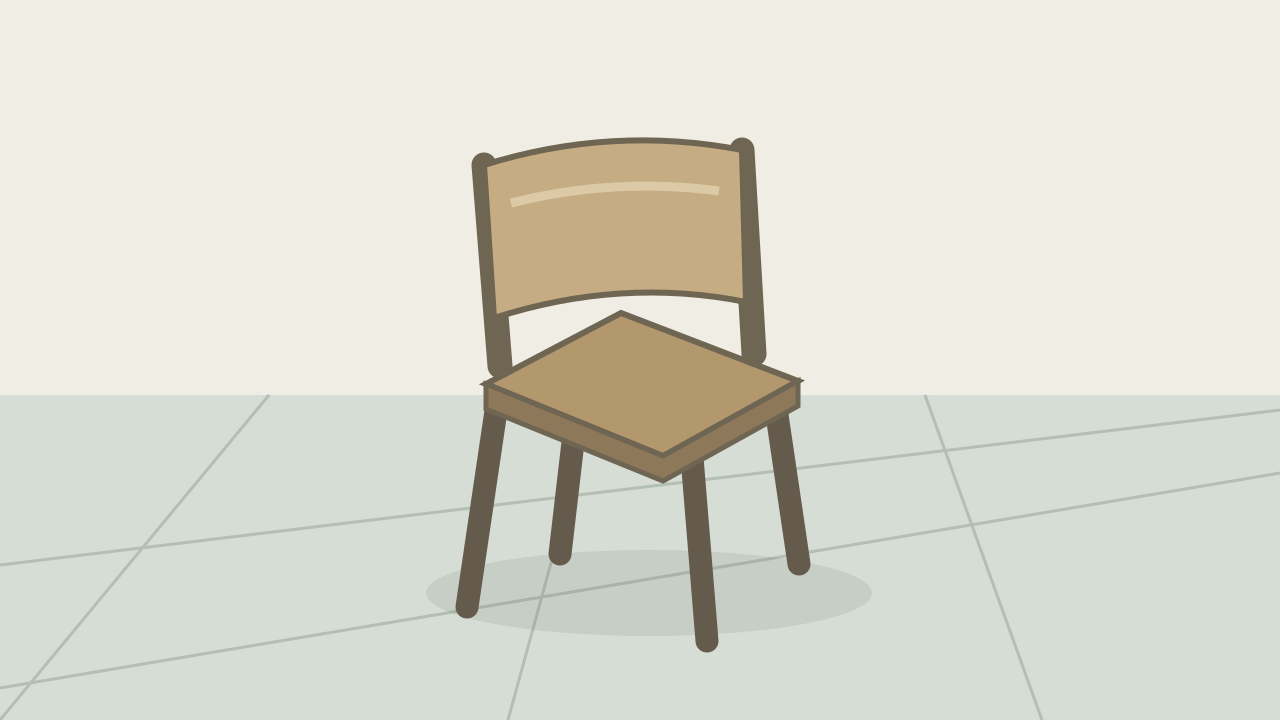
The chair rotates like a turntable
Change only the fixed-chair sentence to its orientation relative to floor seams; keep the short camera arc.
Task template
Keep one chair grounded while the camera moves along a short arc at constant height. This original exercise has not been model-tested and does not recover exact three-dimensional furniture geometry.
Includes original practice inputs and a review checklist. This prompt has not been independently tested with the generation model.
Download the input image below and upload it manually in the generator; the button carries the prompt.
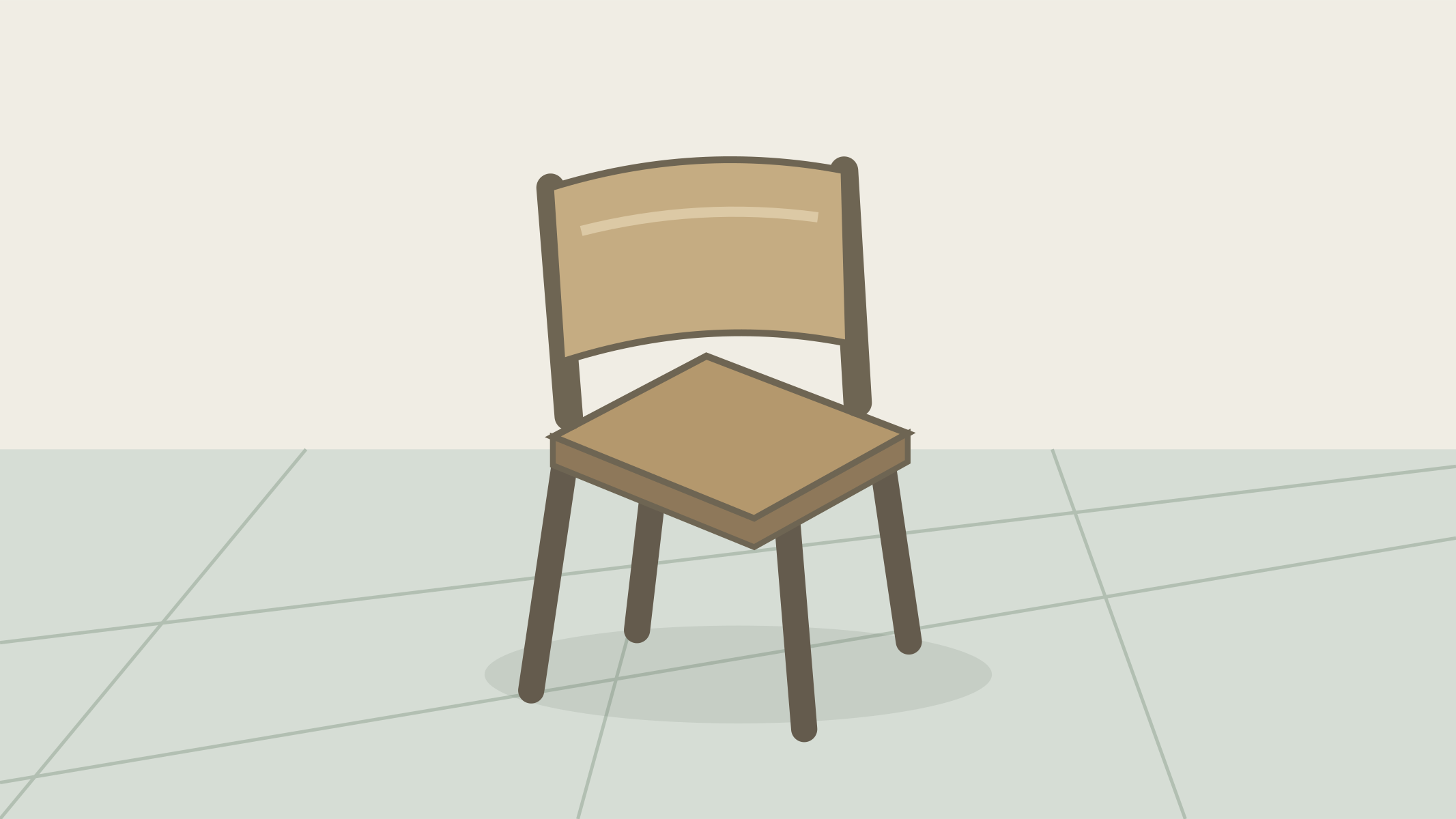
Start from the uploaded chair scene. The single chair stays fixed on the floor with all four feet continuously planted. The camera moves slowly on a short smooth arc toward a slightly more frontal view, keeping the same height and a similar distance from the chair. The floor seams change perspective naturally with the camera. Keep the chair facing the same direction relative to those seams; it does not rotate on the floor. Preserve four legs, the connected seat and back, and coherent overlaps as the view changes. End with a still hold while the feet remain grounded. No chair slide, no folding, no new furniture, no zoom.
Identify front-left, front-right, rear-left and rear-right tips in the source. Track them as parts of one chair, not as four marks that must remain at fixed screen coordinates.
Ask for a short arc at constant height and similar distance. Name the chair orientation relative to the floor seams as fixed to distinguish the arc from a turntable effect.
At mid-arc, trace each leg from its seat attachment to its foot. Some projected overlap can change; a new leg appearing, a tip floating or a leg merging into a seam fails the check.
Use nearby floor seam intersections to judge whether the chair walked or slid. If the arc exposes too much unsupported geometry, reduce only the arc extent and repeat the four-foot trace.
Change only the fixed-chair sentence to its orientation relative to floor seams; keep the short camera arc.
Reduce only arc extent so less unseen structure is exposed; trace the same rear leg again.
Change only the contact requirement to all four foot tips continuously planted; inspect at mid-arc rather than just the ending.
Change only the path description to similar camera distance and constant height, preserving space around every foot.
End on the slightly more frontal view with four grounded leg paths still traceable. Keep start, mid-arc and end contact notes; do not infer exact dimensions from the generated perspective.