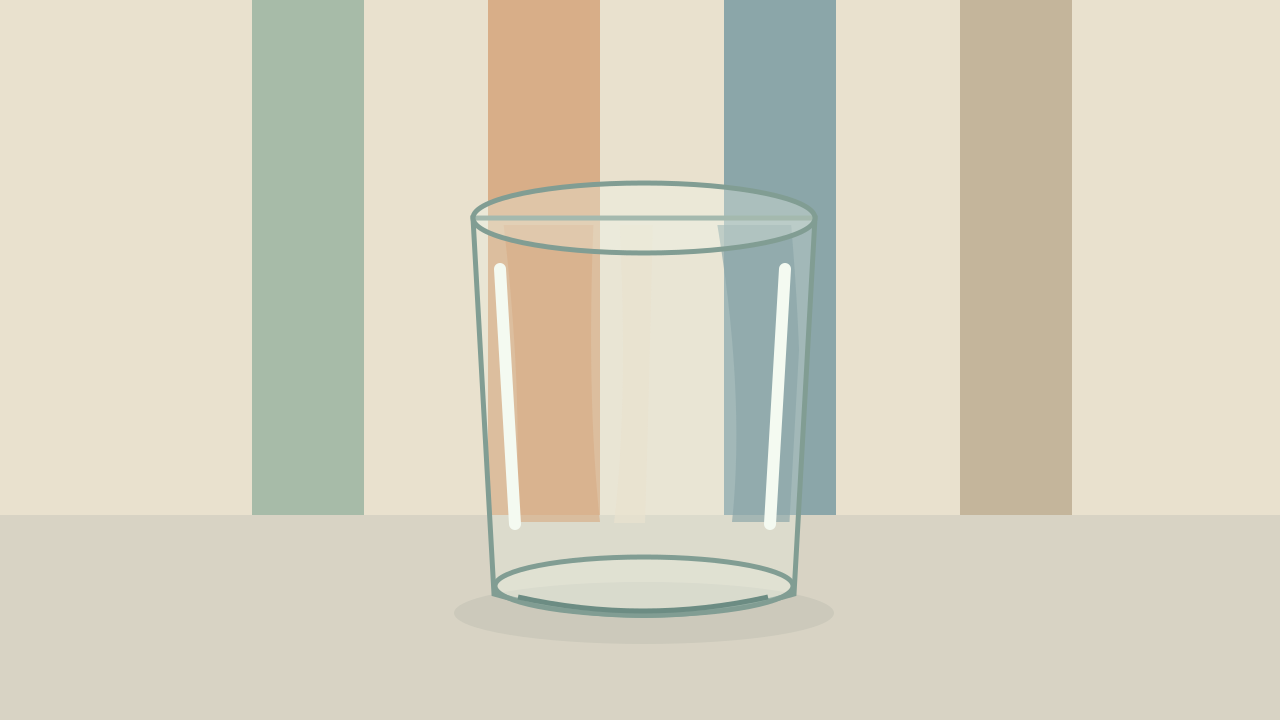
The glass fills with an opaque color
Change only the material instruction to an empty transparent vessel with the same background visible through it; keep the small slide.
Task template
Describe a small viewpoint change through a stationary transparent object and inspect coherent background relationships. The original graphic source is an untested exercise, not an H3 optical benchmark or an exact refraction simulation.
Includes original practice inputs and a review checklist. This prompt has not been independently tested with the generation model.
Download the input image below and upload it manually in the generator; the button carries the prompt.
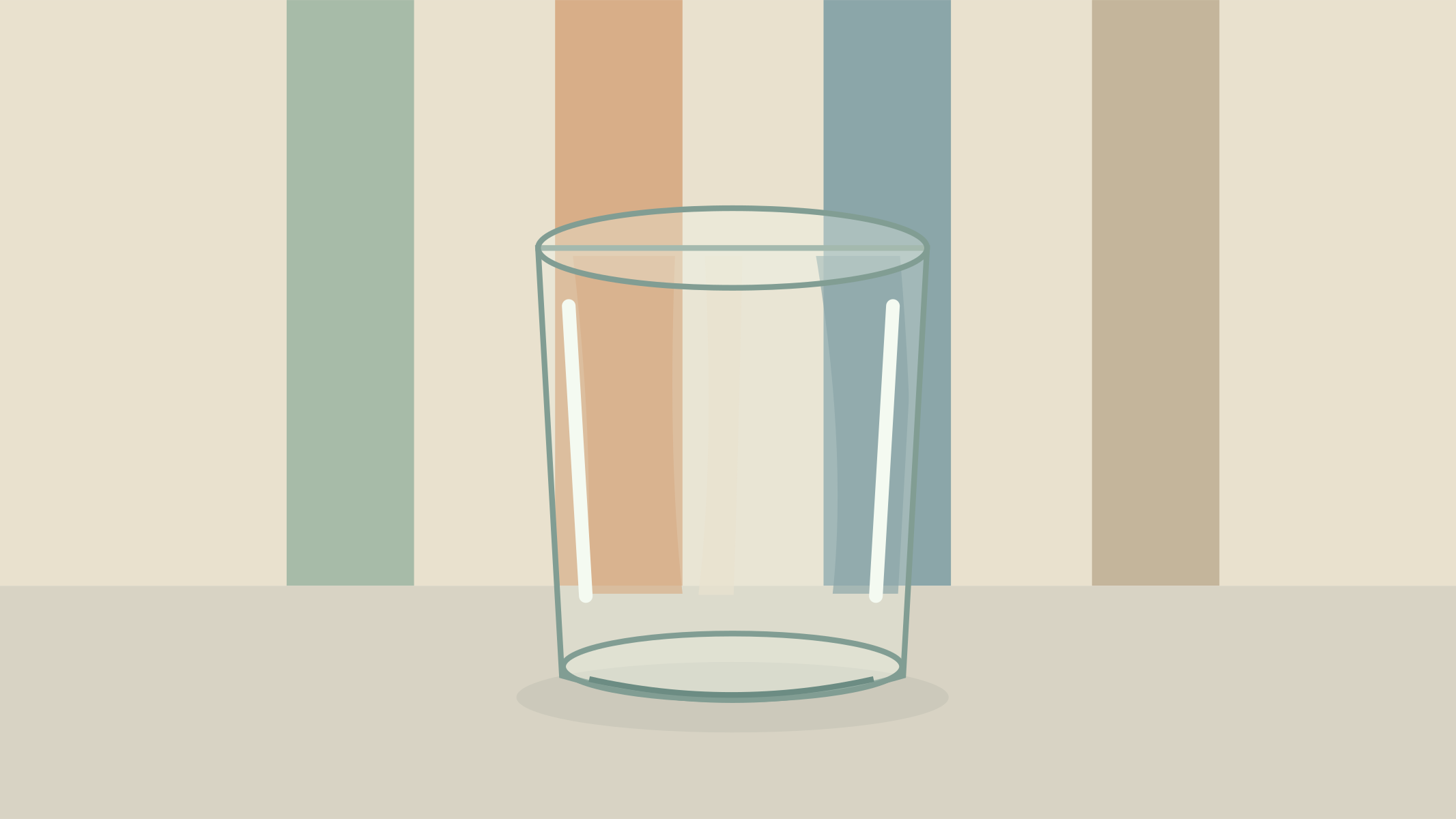
Start from the uploaded empty clear tumbler in front of the broad vertical background bands. The tumbler remains fixed and upright on the tabletop. The camera slides slowly a very short distance to the right at the same height. The background bands shift coherently with the changing viewpoint, both outside the tumbler and as seen through its transparent walls; the view through the curved glass may be gently displaced and distorted but remains recognizable as the same background. Keep the rim, base and wall thickness coherent, with no liquid, frosted filling or new interior pattern. Stop the camera and hold. Fixed light, no glass rotation, no background animation, no text.
Locate a broad band visible beside the vessel and another visible through its middle. Keep those identities in the brief; the source should support comparison without relying on a tiny printed label.
Ask for a tiny rightward translation at constant height. Keep tumbler and background stationary in the scene, so the viewpoint change is the sole reason their projected relationship changes.
Follow one band as its visible region approaches a side wall. A displaced or distorted image through the glass is reasonable, but it should not become unrelated colored material painted inside the vessel.
At the ending, inspect rim ellipse, lower edge and table contact as well as the background. If the glass becomes opaque or its outline deforms, reduce only the camera travel before adding lighting effects.
Change only the material instruction to an empty transparent vessel with the same background visible through it; keep the small slide.
Change only the background-role sentence to a stationary scene viewed through the walls; remove animated-pattern language.
Reduce only the camera travel and compare the same rim ellipse and base again.
Use a source with a clearer separation between vessel and background and broader bands; retain the tiny slide before increasing travel.
Finish with a still clear vessel and recognizable bands behind it. Save paired inside/outside crops and the rim/base check; report visual continuity without claiming exact optical reconstruction.