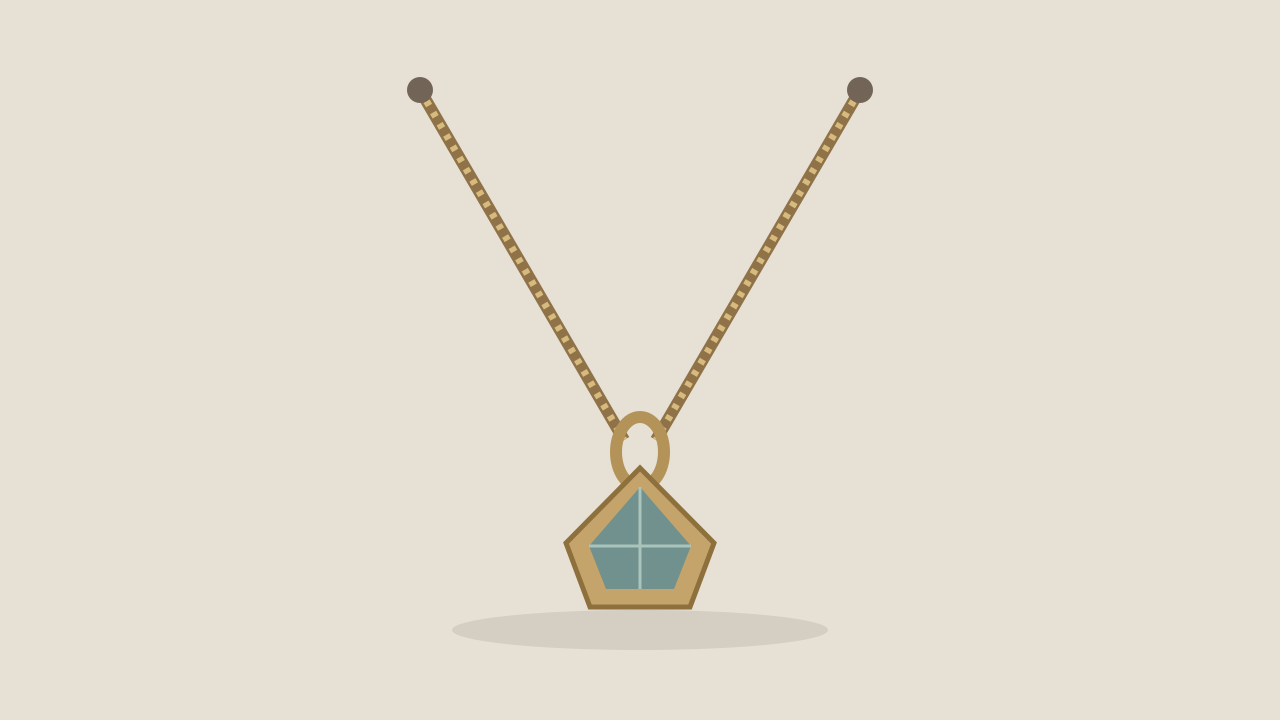
The chain detaches at the bail
Change only the excursion to a smaller sway and recheck the same bail region at the turning point.
Task template
Ask for one small side sway and a settled pendant. The supplied jewelry illustration is an original exercise source; no H3 generation or physically calibrated pendulum behavior is claimed.
Includes original practice inputs and a review checklist. This prompt has not been independently tested with the generation model.
Download the input image below and upload it manually in the generator; the button carries the prompt.
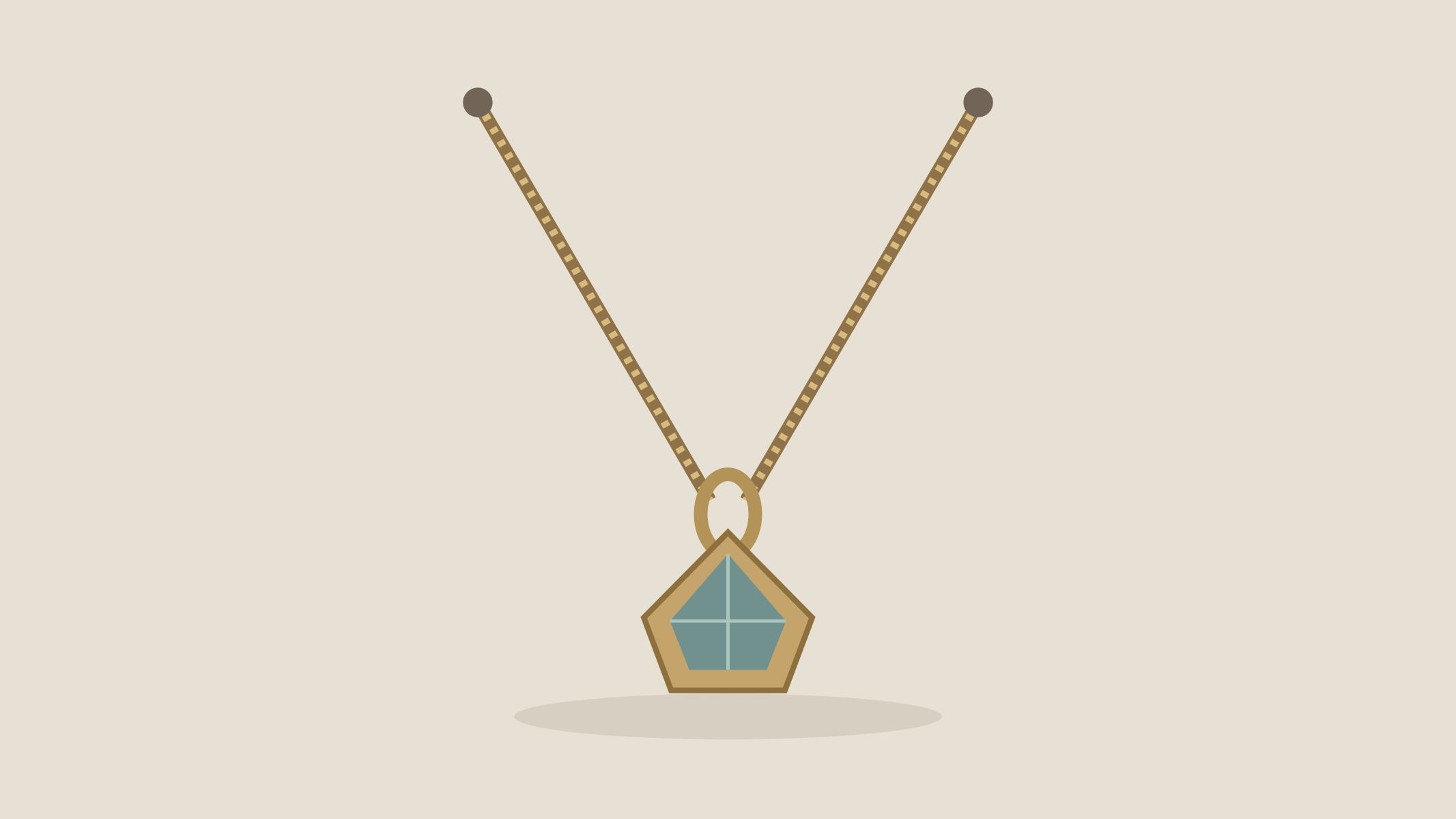
Start from the uploaded suspended pendant. The two upper chain suspension points stay fixed, and the camera remains still. The pendant and its connected lower chain make one small gentle sway to the right, reach a visible turning point, then return toward the center and settle. The chain stays continuous through the pendant bail throughout the motion. The bail remains attached to the same top edge of the pendant; no part separates or passes through another. Preserve the pendant outline and chain thickness. Keep the background and light fixed. One restrained motion, no repeated swinging, no spin, no extra jewelry.
Trace from one upper chain point through the bail to the other side. Check that the starting image has an uninterrupted path; a decorative line crossing the pendant is not enough to define an attachment.
Specify a single rightward sway with one turning point and a return toward center. Leave the camera still so the chain relationship can be judged without perspective changes.
Pause when the pendant is furthest right. The bail should still sit on the same pendant edge, and both chain sides should connect smoothly rather than swapping or stretching into a rigid bar.
Compare the end with the start for pendant outline and chain thickness. If the sway repeats or the attachment fails, change the excursion request before adding richer materials or shine.
Change only the excursion to a smaller sway and recheck the same bail region at the turning point.
Name both upper suspension points as the fixed role; keep the camera and lighting instructions unchanged.
Remove only rotational language and request a small side sway in the visible plane; compare front-face visibility.
Change only the ending to return toward center and settle after the first turning point; remove loop wording.
End after the single sway has settled and retain a close crop of the bail at start, turning point and end. Keep the result labeled as a visual jewelry motion study.