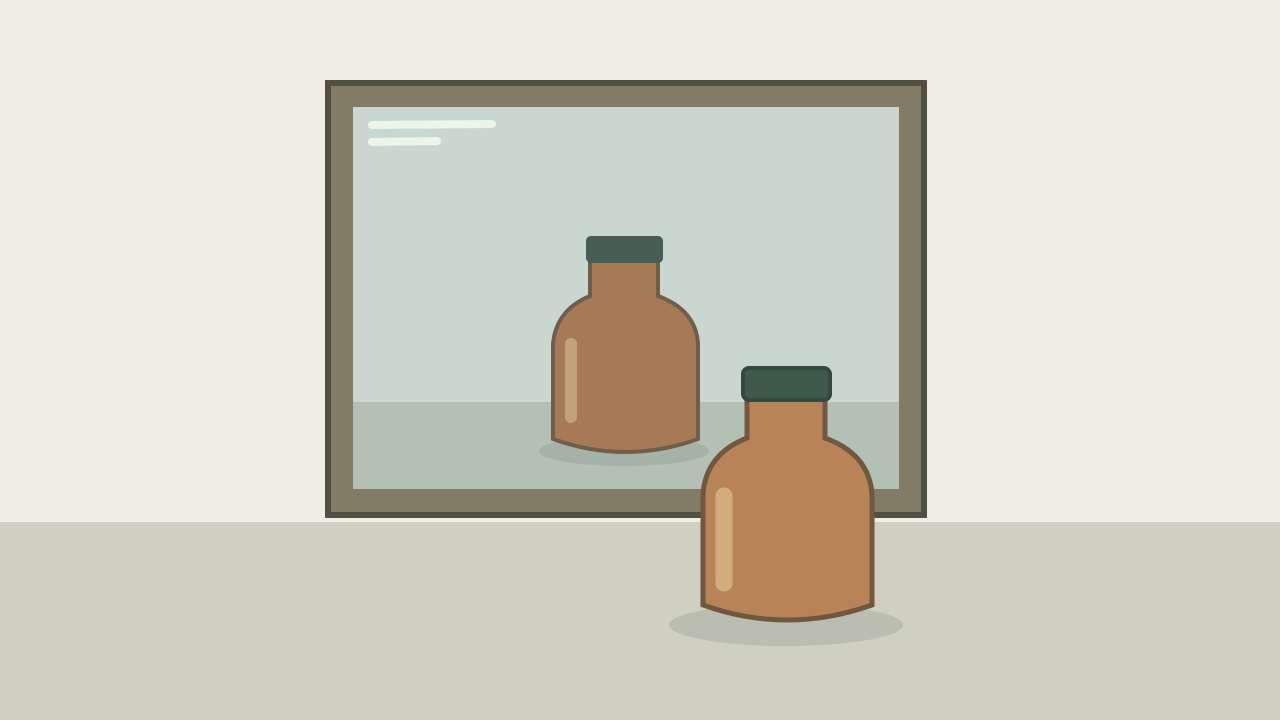
A second physical bottle appears
Change only the role assignment to one bottle and its image confined to the glass; keep the short slide.
Task template
Request a short bottle slide with a corresponding mirror reflection and matched ending. The original illustration is a visual planning input; this method has not been tested on H3 and does not certify geometrically exact reflections.
Includes original practice inputs and a review checklist. This prompt has not been independently tested with the generation model.
Download the input image below and upload it manually in the generator; the button carries the prompt.
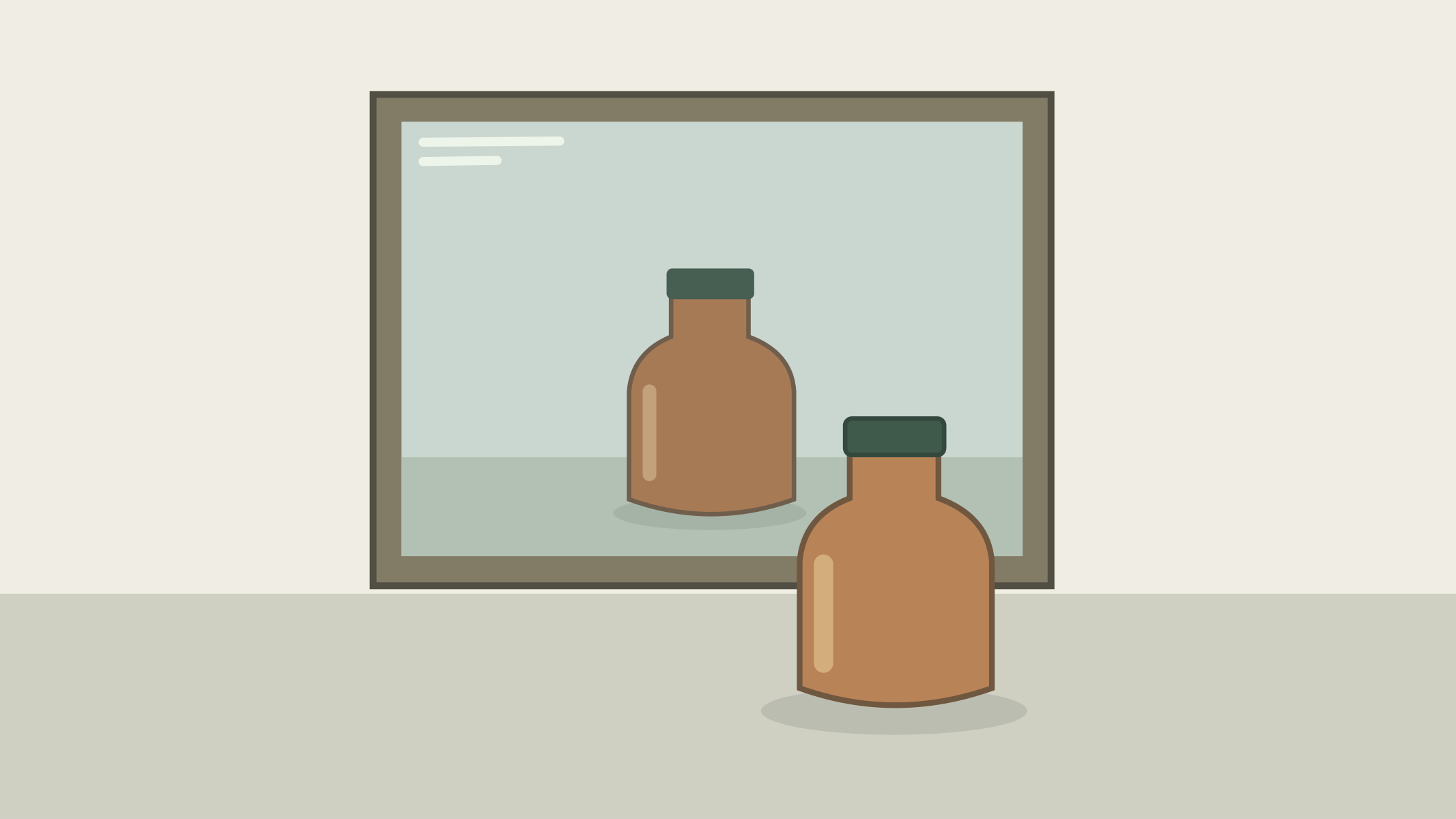
Start from the uploaded scene with one physical bottle on the tabletop and its one reflection inside the framed mirror. The mirror, tabletop, camera and lighting stay fixed. The physical bottle slides slowly a short distance to the right while remaining upright and in contact with the table. Its corresponding reflected image moves coherently inside the mirror for the same action and stops when the bottle stops. Preserve the bottle silhouette, neck proportions and single cap in both views. Keep reflected content confined to the glass area without spilling across the frame or becoming an extra physical bottle. Finish with both views still. No camera move, no duplicate product, no changing mirror frame.
Count one physical bottle on the table and one image inside the mirror before running. Treat the reflected bottle as linked content, not a second actor with its own action.
Write one rightward slide with an upright bottle and a simultaneous reflected response. Keep the mirror and camera fixed so their movement cannot explain a drifting reflection.
Check the reflection nearest the frame at mid-slide. It should stay confined to the glass; it must not paint over the frame, appear on the wall or continue as a physical bottle in front of the mirror.
Sample just before motion, during the slide and the final hold. Check shared start/stop timing and coherent cap/neck shape. If exact reflected geometry is required, move to capture or compositing rather than labeling a plausible view as verified.
Change only the role assignment to one bottle and its image confined to the glass; keep the short slide.
Change only the timing sentence to shared motion and stop; inspect the transition into the hold.
Reduce only the slide distance to preserve more space within the glass, then recheck the boundary.
Change only the fixed-role sentence to lock mirror frame and camera; keep bottle travel unchanged.
End with the upright bottle and its reflected image both still, each in the correct region of the scene. Record continuity and clipping results separately from any unresolved geometric accuracy.