
The hand crosses through the knit or detaches from the corner.
Reduce the opening distance and make the first-frame contact more visible. Retry a single corner action before requesting any larger unfolding.
MiniMax H3 · Original practice template
A first-frame exercise for one small unfolding action. Separate fabric movement from hand movement, inspect contact points, and use a cut when a large reveal needs another shot.
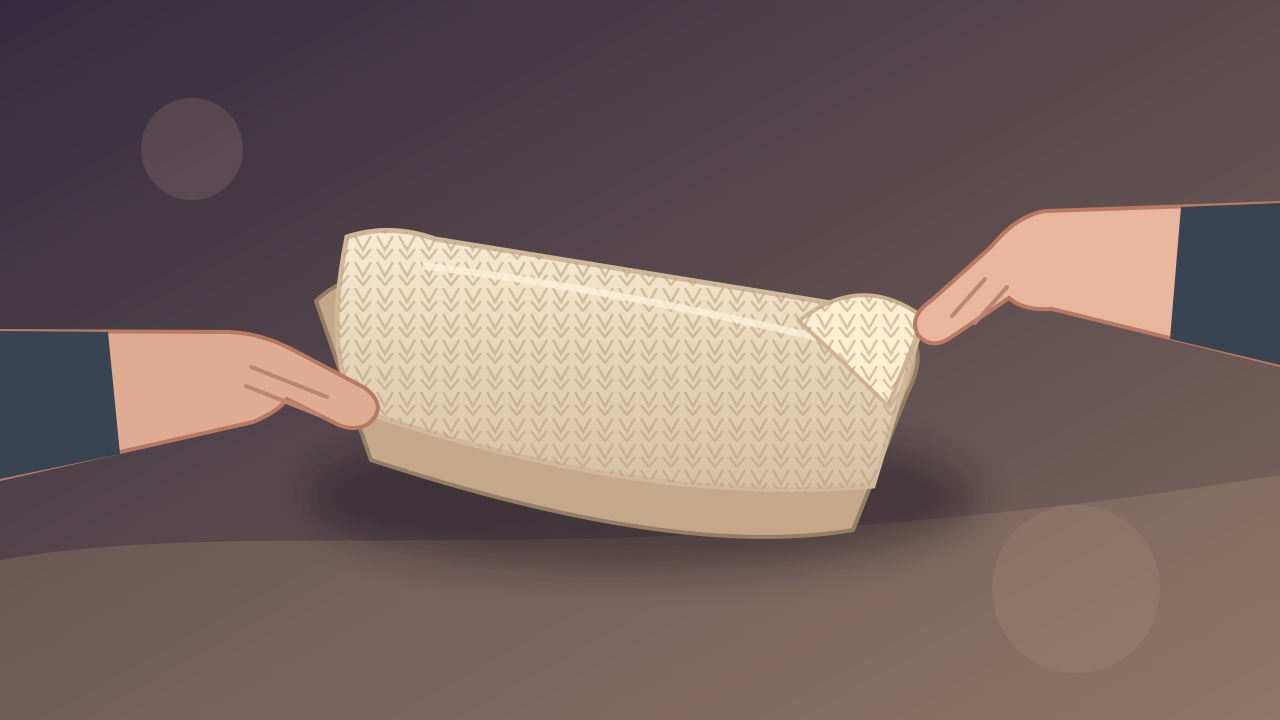
Create a quiet close-up in which one folded corner of a knitted textile opens slightly while the other hand steadies the fabric. The exercise tests a visible action and texture continuity, rather than a complete garment reveal.

A fixed close-up of a folded cream knitted textile on a warm tabletop, with two stylized hands already touching it. Preserve the illustrated appearance and composition of the input frame. The left hand holds the lower fold still. The right hand gently draws only the upper right corner outward by a small amount, opening one fold. The fabric follows the contact point with a slight soft bend. Keep the visible knit marks recognizable and the textile thickness consistent. Finish with both hands still touching the fabric. Soft steady light, no camera movement, no new objects, no complete garment reveal, no printed text.Download the prompt text
Before uploading, identify the left-hand contact as the anchor and the upper right fold as the moving part. Keep the camera and background fixed so a change in fabric shape is not confused with a change in framing.
Use the supplied first frame for image-to-video and try the prompt with a modest unfolding motion. Set duration and other options in the current generator interface; this exercise does not assume that every provider exposes the same controls.
Pause the result near the start, midway, and end. First check that the moving hand stays connected to the same corner. Then compare knit marks near the anchored fold, where there should be little movement.
If the hand slides through the fabric, reduce the pulling distance and simplify the action wording. If contact is stable but the pattern flickers, reduce fabric deformation. Do not simultaneously add camera motion or a full reveal.
For a large unfolding sequence, use this small action as one shot and prepare a second first frame for the wider reveal. Join the shots after editing; do not rely on one generation to preserve unseen garment construction or exact hand anatomy.
Reduce the opening distance and make the first-frame contact more visible. Retry a single corner action before requesting any larger unfolding.
Remove large stretching or twisting instructions. Keep a bigger area of the textile still, and compare that area before changing other settings.
Treat the illustration as a motion-planning exercise. For product delivery, use a clearer authorized input with simpler hand contact, shorten the interaction, or cut before the anatomy error.
State the limited end state again: one opened fold with no full reveal. Prepare a separate real reveal frame if the finished product needs to be shown.
Keep the best small action only if it passes the contact and texture checks. A product sequence can continue with a separately prepared reveal shot; the unseen knit structure should come from your source material, not a generated invention.
This page provides an original prompt, input illustration and review method. A corresponding generated result has not been independently produced. The illustration is a practice input.