A second slice appears on landing
Change only the object-role sentence to the same single slice throughout; keep the landing target unchanged.
Task template
Describe one low-height ingredient drop with one clear landing and a settled ending. The original still is a staged practice input; it does not demonstrate a tested H3 drop or physically measured impact.
Includes original practice inputs and a review checklist. This prompt has not been independently tested with the generation model.
Download the input image below and upload it manually in the generator; the button carries the prompt.
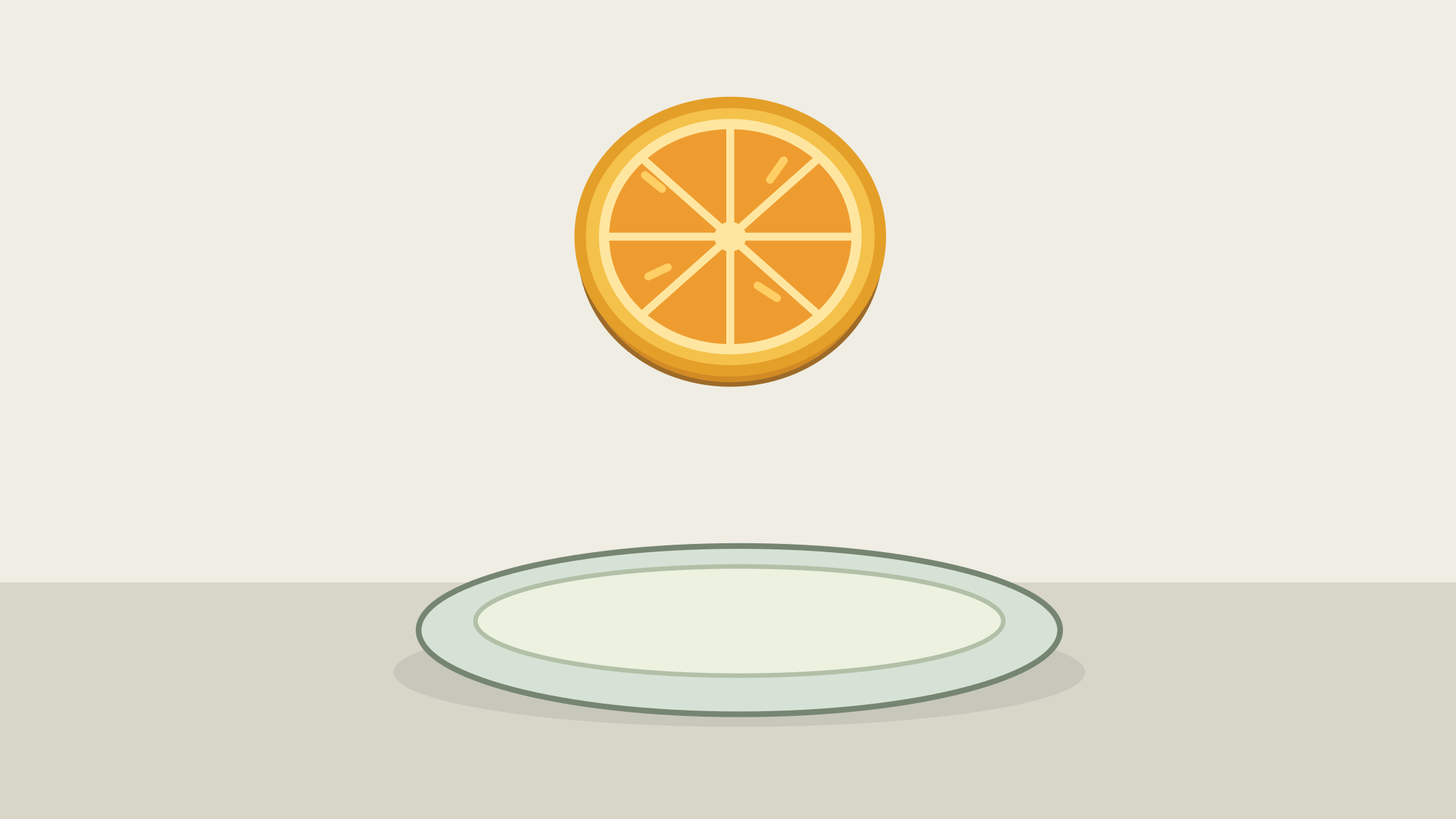
Begin from the uploaded single orange slice suspended a short distance above the empty plate. The camera and plate remain still. The one slice descends straight down a short distance onto the open center of the plate, keeping its round outline, rind thickness and visible segment pattern coherent. It makes one clear gentle contact with the plate and comes to rest there without bouncing up, splitting or cloning. Keep the slice face largely visible during the fall. The plate remains intact and the slice does not pass through its surface. End on the single settled slice. No cutting, no extra fruit, no splash or added text.
Count one rind outline and one segment pattern, and confirm a visible air gap above the plate. Remove extra ingredients from the input rather than relying on a negative list.
Specify straight down, one contact, then rest. Avoid slow-motion explosion, dynamic toss or looping drop language that requests additional behaviors.
Advance around the moment the lower rind reaches the plate. There should be no gap after rest, no penetration through the plate and no second slice replacing the falling one.
Check rind thickness and segment arrangement before and after landing. If the slice becomes a wedge or spreads flat, reduce only the requested drop height and keep the final rest condition.
Change only the object-role sentence to the same single slice throughout; keep the landing target unchanged.
Reduce only the fall distance and emphasize a final surface contact; inspect the first-contact frames again.
Remove only the spin/toss wording and keep the face largely visible during a straight descent.
Change only the ending to one gentle contact and rest; remove elastic or looping motion language.
Finish with one slice visibly supported inside the plate rim. Retain the frame immediately before contact and the first resting frame as evidence for the contact check.