Eyes and head turn together
Change only the sequence clause to hold the head forward for a brief visible glance before it follows; keep movement amplitude and input unchanged.
Task template
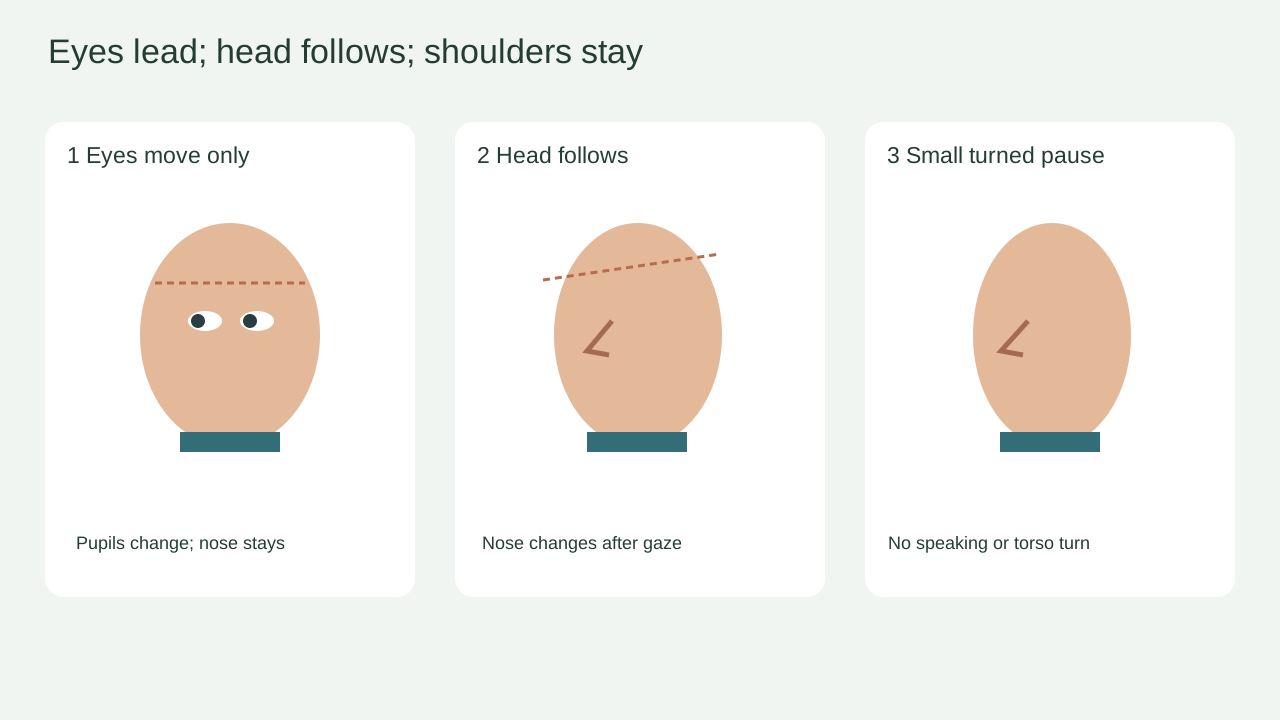
Brief two modest actions in a readable order: the eyes glance toward frame left while the head stays forward, then the head follows slightly and pauses. Timing remains a requested visual sequence, not a verified model control.
Includes original practice inputs and a review checklist. This prompt has not been independently tested with the generation model.
Download the input image below and upload it manually in the generator; the button carries the prompt.

Use the uploaded portrait as the first frame. Keep the camera and the adult’s shoulders still. First, the eyes make a small glance toward frame left while the nose and head remain facing forward. After that glance is visible, the head turns gently a short distance toward frame left to follow the gaze. Keep the same face, hairstyle and collar, with the mouth relaxed and closed. End in a quiet slightly turned pose. Do not add speech, a large body turn or a second glance in the opposite direction.
Write “frame left” in both action clauses. Check the opening pupils and nose as separate landmarks so the direction can be judged without guessing the adult’s anatomical left.
Put the glance before the head follows. In review, find at least a visible interval in which pupil position changes while the nose direction remains close to the opening; do not invent a precise timecode in advance.
Inspect the head turn for a changing nose profile and jaw outline, while the collar and shoulder line remain stable. Reject a shoulder swivel that replaces the requested head action.
Watch the final eyes and mouth, then replay the entire transition. Record whether the order was legible; a matching last pose alone cannot show that eyes led the action.
Change only the sequence clause to hold the head forward for a brief visible glance before it follows; keep movement amplitude and input unchanged.
Reduce only the glance amplitude. Compare both eyes during the eye-only interval before adding head detail.
Strengthen only the fixed shoulder-and-collar requirement, then check whether the nose can change angle without the clothing turning.
Finish with a small settled turn and write whether the eye-leading sequence was observable. This practice does not establish a real person’s attention, emotion or intention.